Ice remembers everything.
It does not forget a footprint. It does not erase a wool glove, a copper wedding band, or the precise tilt of a shoulder beneath an avalanche. It simply packs it tight, seals it in a crystalline vault, and walks at the glacial pace of an inch a year. Downward. Always downward.
For three decades, a family somewhere in the Alps lived with a blank space at the table. Not an empty chair, exactly—time forces you to clear those away eventually—but a shape. A ghost silhouette defined by what was missing. They knew the mountain had taken him. Everyone said so in the autumn of 1996, when the first heavy snows locked the high passes before he could descend. The search parties went out with dogs and metal poles, probing the white silence until the weather turned them back. The mountain shrugged, closed its white seams, and kept its secret.
Until last week.
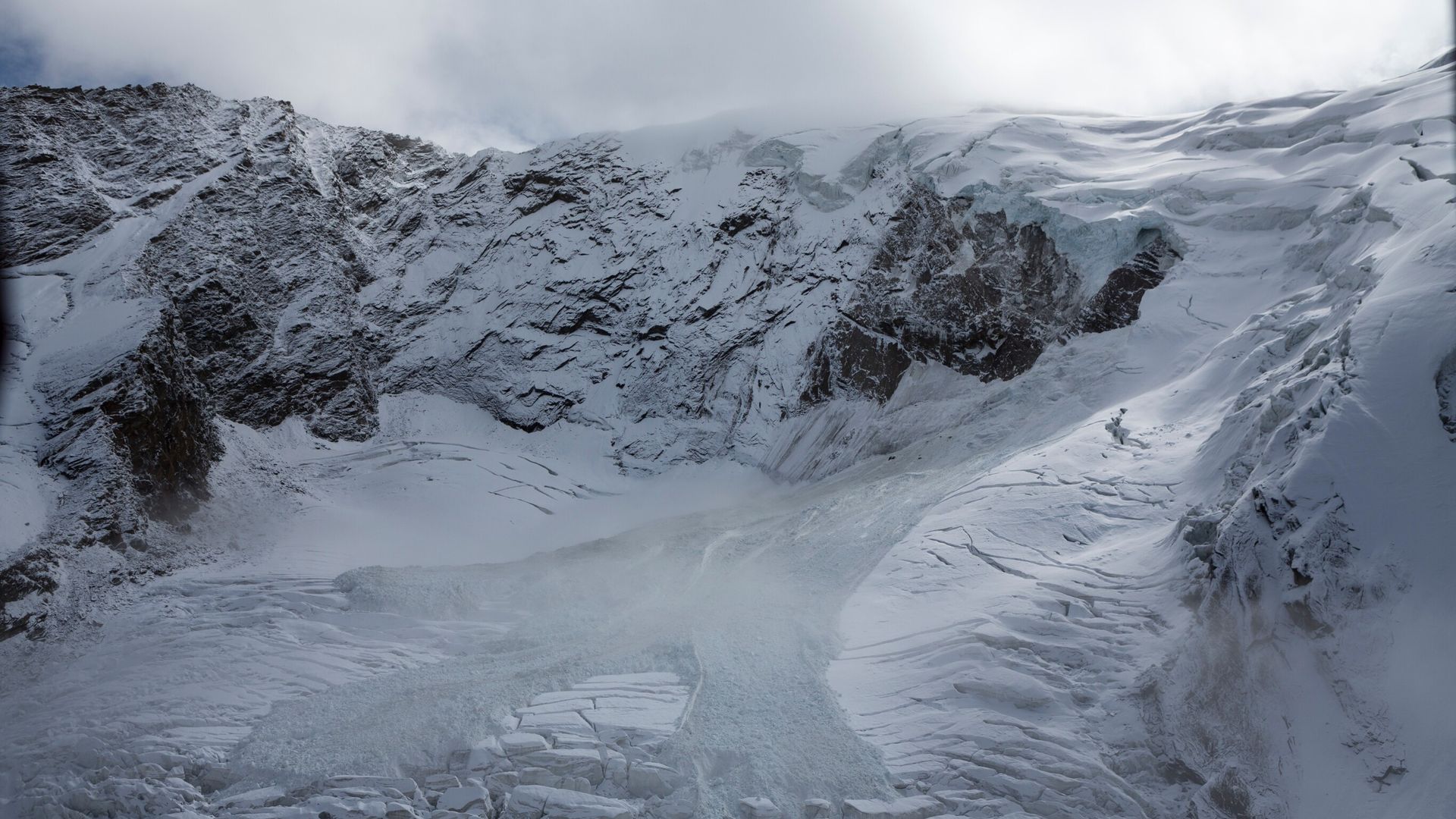
Climate change is an abstract spreadsheet of rising temperatures and shifting carbon metrics until you stand at the terminal moraine of a shrinking alpine glacier and watch a human femur slide out of the blue-gray slush.
Statistics tell us that the world's glaciers are retreating at unprecedented rates. The European Alps alone have lost a staggering percentage of their ice volume over the last fifty years. Glaciologists measure this in gigatons and meters of water equivalent. They map the recession lines with satellites and laser altimetry. But the ledger of a melting glacier is written in flesh and bone.
Consider what happens when an ancient ice sheet finally exhales.
For decades, climbers and guides have noticed the subtle shift. The ice is softer. Crevasses open in places that used to be safe. And every summer, as the tongue of the glacier bleeds water into the valleys below, the dead come home. It is a macabre homecoming. Hikers missing since the late twentieth century are walking out of the ice, perfectly preserved, their modern nylon gear looking startlingly bright against the ancient, dirty snow. They look like they were swallowed yesterday.
I remember talking to a mountain rescue veteran in Zermatt years ago, a man with skin the color of old saddle leather and eyes bleached pale by UV glare at ten thousand feet. He spoke about the ice not as a geological formation, but as a filing cabinet.
"You don't lose things in a glacier," he told me, leaning over a mug of lukewarm coffee. "You just loan them."
When a body is locked in moving ice, it undergoes a strange kind of suspension. The extreme cold and lack of oxygen halt decay. The massive pressure of millions of tons of packed snow acts as a giant preservative. When the remains of two missing hikers—lost together in the nineties—were finally washed free by a retreating Swiss glacier, forensic teams did not just find bones. They found notebooks with legible ink. They found watches ticking until their batteries died years later in the dark. They found human stories frozen mid-sentence.
We treat history as something written in books, bound in leather, stored in libraries where dust settles quietly on the edges. We forget that the earth itself is an archive.
Think of the sheer, crushing weight of thirty years. Three decades of birthdays missed. Thirty Christphers or Marias growing old in the minds of siblings who refused to let them age. Entire generations born who only knew these lost souls as faded photographs framed on a mantelpiece—sepia ghosts haunting the background of family lore.
And then, a couple of alpinists out for a weekend trek notice something dark against the ice. A boot. Just a Vibram sole sticking out of the mud and gravel.
Forensic anthropology meets raw grief in these high places. DNA samples are cross-referenced with cold-case missing persons databases that date back to the days before digital records. Police departments pull dusty paper files from metal cabinets. Officers who were fresh out of the academy in 1996, now retired with graying hair and bad knees, get a phone call from a precinct in the shadow of the peaks.
We found him.
The emotional mechanics of such a discovery are staggering. Closure is a modern buzzword, often used cheaply to package human suffering into a neat narrative arc. But true closure is messy. It is violent. It is the sudden resurrection of a grief you spent twenty-five years learning how to live around.
Imagine waking up on a Tuesday morning, forty years old, having built an entire life atop the tectonic plates of an unresolved loss. Your father vanished when you were ten. You learned to shave without him, walked down the aisle without him, taught your own children to ride a bicycle without him. You built a fortress of acceptance around the absence.
Then the phone rings. The ice has given him back.
He is coming home in a refrigerated transport, not a stretcher. He is wearing the exact clothes he wore on the morning he kissed your mother goodbye at the front door, while you were still upstairs pulling your socks on.
The mountain does not care about our need for tidy endings. It only obeys gravity. As global temperatures continue to climb, the alpine ice fields will continue to purge their contents. Hundreds of climbers, World War I soldiers caught in high-altitude skirmishes, and ill-fated trekkers are still trapped in the deep blue heart of the European ranges. Every warm summer brings a new harvest of the lost.
This is the hidden cost of a warming planet. We talk endlessly about sea levels rising to swallow coastal cities, about islands slipping beneath the waves, about forests turning to ash in mega-fires. We rarely talk about the high country coughing up its dead. We rarely talk about the ghosts returning to the valleys to demand a final accounting.
When the ice finally melts away from a human hand, exposing skin that looks like parchment and fingernails still intact, it forces us to look backward even as we race forward into an uncertain ecological future. It reminds us that nothing is truly lost forever. The earth holds onto our footprints, our tragedies, and our bones, waiting for the day the temperature changes, waiting for the moment the frost lets go, ready to hand the story back to those who were left behind to wonder.