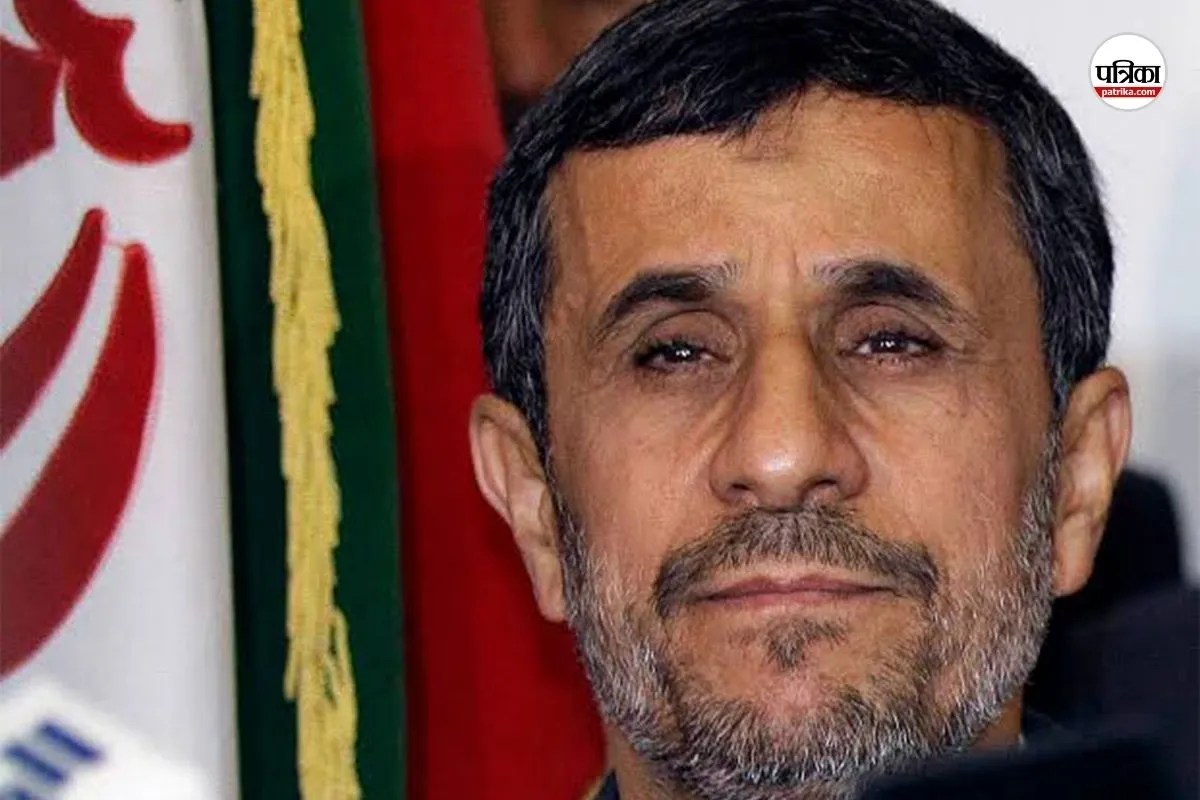
Israel’s foreign intelligence agency, the Mossad, spent years executing a highly classified, multi-phased operation to overthrow the Islamic Republic and install its former arch-enemy, Mahmoud Ahmadinejad, as the leader of a post-regime Iran. Code-named Operation Puss in Boots, this audacious plot culminated on February 28, 2026, during joint US-Israeli military strikes. Though the plan ultimately collapsed under the weight of tactical disagreements and Ahmadinejad's own sudden disillusionment, details of this geopolitical thriller are now coming to light, revealing how close the Middle East came to a radically different, yet potentially chaotic, reality.
The premise sounds like the work of a feverish novelist. Yet, a massive joint investigation by international outlets has laid bare the mechanics of an operation that divided the Israeli security establishment and ultimately left the former Iranian president under the heavy hand of house arrest by the Islamic Revolutionary Guard Corps (IRGC). Building on this theme, you can also read: Diplomatic Damage Control is Killing Maritime Safety Standards.
The Perfect Enemy and the Unlikely Asset
For nearly a decade, Mahmoud Ahmadinejad was the face of Iranian belligerence. During his presidency from 2005 to 2013, he denied the Holocaust, promised the destruction of the Jewish state, and accelerated Tehran's nuclear enrichment programs. To the West and Israel, he was a dangerous ideologue. Analysts at Associated Press have provided expertise on this situation.
But intelligence work requires looking past public posture to find personal vulnerability.
By 2022, Mossad analysts tracking internal Iranian dynamics noticed a profound shift in Ahmadinejad's behavior. Sidelined by the supreme leader, Ali Khamenei, and barred from running for office again, the former president had grown deeply bitter. He began criticizing the ruling clergy for economic mismanagement and the crushing weight of international sanctions. Behind closed doors, he had reached a quiet, treasonous conclusion. He believed that Iran’s pursuit of a nuclear weapon had transformed from a strategic shield into an economic chokehold that was slowly killing the country.
This disillusionment coincided with a physical and social makeover. Ahmadinejad trimmed his untamed beard, abandoned his trademark cheap beige windbreaker for tailored suits, and quietly began intensive English lessons. He even appeared to undergo cosmetic procedures to soften his weathered face.
He was no longer just a retired politician. He was preparing for a second act, and Israel decided to write the script.
The Budapest Connection and Guatemala Cover
The cultivation of Ahmadinejad was a global intelligence operation that stretched from Central America to Eastern Europe.
The first tentative contact occurred in 2023 during Ahmadinejad's trip to an environmental conference in Guatemala. Iranian security officials had initially blocked him from traveling, but a highly coordinated public campaign and a sudden sit-in at the airport forced Tehran's hand. Under the cover of Latin American diplomacy, Mossad operatives made their first approach, testing his willingness to engage with external actors.
The relationship deepened dramatically the following year.
In June 2025, Ahmadinejad traveled to Budapest to attend an academic climate conference at the Ludovika University of Public Service. The invitation had been arranged by a senior Hungarian official at the behest of Israeli intelligence, offering the perfect cover. It was here that David Barnea, then the director of the Mossad, arrived in secret to meet the former Iranian president.
Barnea was so invested in the meeting that he skipped a high-level war cabinet meeting in Israel, leaving his deputies to handle pressing tactical matters in Gaza while he personally sat across the table from a man who had once called for his country’s annihilation. During these secret sessions, the Mossad offered Ahmadinejad a path back to the presidency. The deal was simple. Israel would facilitate the fall of the clerical regime, and Ahmadinejad would step into the vacuum to lead a reformed, non-nuclear, nationalist Iran.
Israel paid for Ahmadinejad’s housing and travel expenses, funding a shadow campaign that allowed him to maintain his network of loyalists inside Iran. Ahmadinejad, believing he could not return to power through domestic means, accepted foreign intervention as his only option.
The Mechanics of Operation Puss in Boots
The plan was not merely about political backing. It was a massive military and intelligence blueprint aimed at systematically dismantling the Islamic Republic’s power structure.
Operation Puss in Boots was designed to strike when the regime was at its weakest. The plan integrated several moving parts:
- Internal Sabotage: Activating localized networks to destroy infrastructure and disrupt communication lines.
- Minority Mobilization: Arming and training Kurdish militia factions in northern Iraq to launch a coordinated uprising.
- Regional Encirclement: Securing logistical corridors and drawing neighboring Azerbaijan into the conflict to pressure Iran's northern borders.
- The Decapitation Strike: Utilizing precise military action to remove the supreme leadership, leaving the IRGC leaderless and confused.
Ahmadinejad was the final piece of the puzzle. He was a populist figure who still held sway over working-class Iranians. Unlike exiled monarchists or Western-backed dissidents, he possessed domestic credibility. He was intended to serve as a transitional leader, calming a panicked population and preventing the country from slipping into a multi-sided civil war once the clerical leadership was removed.
Dissent in the Ranks of the IDF
While Prime Minister Benjamin Netanyahu and Mossad leadership pushed the plan forward, the Israeli military establishment viewed the operation with deep dread.
The chief of the Israel Defense Forces (IDF), Eyal Zamir, along with senior Military Intelligence officials, argued that the plan was built on fundamental flaws. They pointed out that predicting complex political transitions during a violent regime collapse was an exercise in futility. History was littered with failed intelligence operations that tried to hand-pick foreign leaders, only for those leaders to be rejected as traitors or turn on their sponsors.
Tzachi Hanegbi, then serving as Israel's national security adviser, went further, reportedly dismissing the operation's political blueprints as "science fiction".
Three days before the planned military offensive was set to begin, the internal friction turned into a crisis. General Zamir ordered a unilateral halt to the military preparations, refusing to commit IDF resources to what he viewed as a reckless gamble. But the military’s resistance was short-lived. Netanyahu overrode his generals, insisting that the strategic opportunity to reset the Middle East balance of power was too valuable to abandon.
The Night the Plan Fell Apart
On February 28, 2026, the combined military forces of the United States and Israel launched a massive air campaign against strategic targets across Iran. Among the initial targets was a highly specific, non-nuclear site: the personal compound of Mahmoud Ahmadinejad in Tehran.
The strike was not designed to kill him. Instead, Israeli missiles targeted the barracks housing his IRGC minders and destroyed his armored transport vehicles. In the chaos of the explosions, a specialized team of four Mossad agents successfully extracted Ahmadinejad from his home, placing him into a secured vehicle and moving him to a pre-arranged safe house within the capital.
But the operation began to unravel almost immediately.
As the air strikes intensified, Ahmadinejad watched his country's infrastructure burn. He realized that this was not a targeted surgical strike to remove a few aging clerics, but a devastating war that would leave Iran fractured and weak. The sheer scale of the foreign intervention terrified him. He grew deeply skeptical of Israel’s long-term intentions, realizing he would likely rule over a ruin as a heavily guarded puppet rather than a sovereign leader.
Sensing that he had made a catastrophic error, Ahmadinejad refused to cooperate further. Under circumstances that remain classified, he walked out of the Mossad safe house, abandoning the extraction plan and leaving his handlers behind.
Without its central political figure to anchor the transition, and with Kurdish forces failing to launch their planned offensive, the broader regime-change apparatus stalled. The clerical regime, though battered by the strikes, scrambled to maintain control. In the days that followed, the Assembly of Experts quickly convened under pressure from the Revolutionary Guards to appoint Mojtaba Khamenei, the son of the late supreme leader, as the new leader of the state.
Ahmadinejad was quickly located by the IRGC intelligence services. He was not executed—doing so would risk turning him into a martyr for his remaining working-class supporters—but was instead placed under strict, isolated house arrest. Today, his compound is heavily fortified, not to protect him from Israeli airstrikes, but to ensure that the man who tried to rewrite the map of the Middle East never speaks to the outside world again.

