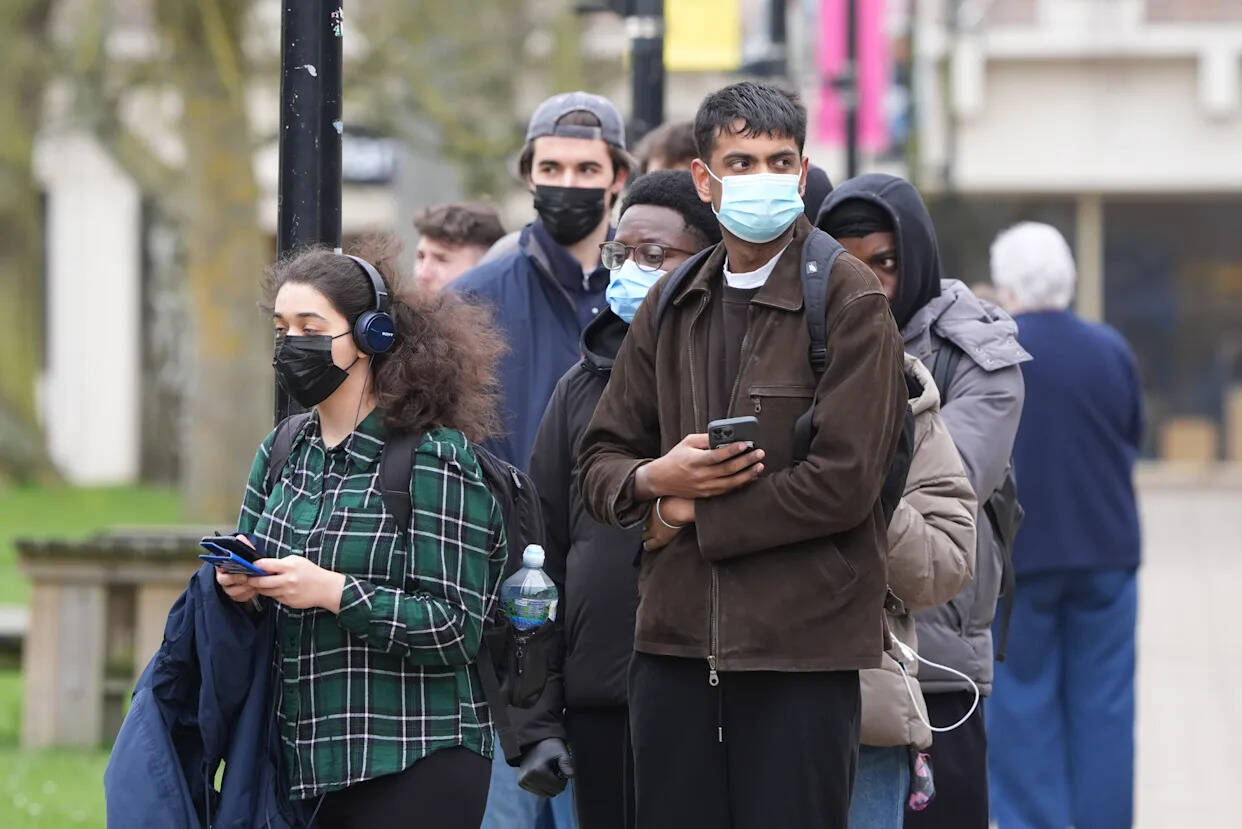
The silence in the Berkshire school run this Tuesday was different. It wasn’t the usual sleepy quiet of children clutching toast or teenagers staring blankly at phone screens. This was the heavy, pressurized silence of a breath being held.
In three schools across the county, the air changed the moment the emails hit the parents' inboxes. The subject lines were clinical. The content was terrifying. Meningitis. The word itself feels jagged, a sharp reminder of how quickly a normal Tuesday can dissolve into a frantic search for symptoms. It is a biological ghost that haunts the periphery of every parent’s mind, and now, it had walked through the front doors of the classroom.
Consider Sarah, a hypothetical but representative mother of two in Maidenhead. She stands in her kitchen, the glow of her smartphone illuminating a face tight with sudden, visceral fear. Her son had a slight headache this morning. Or did he? Was he more tired than usual, or was that just the result of a late night playing video games? This is the invisible stake of an outbreak. It isn’t just the clinical diagnosis of the few; it is the psychological siege of the many.
The Microscopic Intruder
Meningitis does not care about school boundaries or local government districts. It is an inflammation of the protective membranes covering the brain and spinal cord, often triggered by a bacterial or viral infection. In the case of the Berkshire cluster, the focus is on the bacterial variety—the kind that moves with a devastating, lightning-fast efficiency.
When we talk about an "outbreak," the mind jumps to cinematic visuals of hazmat suits and yellow tape. The reality is far more subtle and far more distressing. It’s a teenager feeling "under the weather" at 10:00 AM and being in intensive care by dinner time. The bacteria, Neisseria meningitidis, can live harmlessly in the throats of about one in ten people. They are carriers, walking through the corridors, sharing laughs, sharing drinks, and entirely unaware that they are transporting a hitchhiker that, in the wrong host, becomes a killer.
The jump from carrier to victim is a roll of the genetic and immunological dice. For most, the bacteria never breach the bloodstream. But when they do, they cross the blood-brain barrier, and the clock starts ticking with a ferocity that few other diseases can match.
The Symptom Lottery
The problem with identifying this intruder early is that it masquerades as the mundane. It begins as the flu. It looks like a hangover. It feels like a late-season cold.
Parents in Berkshire are currently performing a frantic mental checklist every time their child sneezes. They are looking for the "classic" signs, but the classic signs are often the late signs. The stiff neck, the light sensitivity, the agonizing headache—these frequently appear only after the infection has taken a firm hold.
The most famous indicator, the non-blanching rash that doesn't disappear under a glass, is actually a sign of septicaemia—blood poisoning. By the time that purple bloom appears on the skin, the battle is already in its most desperate phase. Medical experts are urging parents to trust their gut. If a child seems "wrong" in a way that defies description, the time for waiting is over.
A Community Under Watch
The response in Berkshire hasn't just been medical; it has been a logistical ballet of public health. Close contacts are being identified. Antibiotics are being distributed as a preventative shield. The goal is to break the chain of transmission before the bacteria can find another vulnerable doorway.
But while the doctors deal with the biology, the community deals with the panic. Rumors travel faster than bacteria. On WhatsApp groups and at the school gates, the narrative shifts from factual updates to heightened anxiety. People wonder if the schools should be closed. They question if the cleaning protocols are enough.
The truth is that closing a school is rarely the answer for a meningitis outbreak. The bacteria don't survive long on desks or door handles; they need the warmth and moisture of human breath and touch. The danger isn't the building. The danger is the proximity of people.
The Weight of the Wait
There is a specific kind of exhaustion that comes with hyper-vigilance. For the families in Berkshire, the next few days are a gauntlet. Every forehead felt for a fever is a moment of prayer. Every "I’m tired, Mum" is a cause for a heart to skip a beat.
We often view health news as a series of data points. Three schools. X number of cases. Y number of vaccines administered. But the real story is found in the darkened bedrooms where parents sit by the side of sleeping children, watching the rise and fall of their chests, waiting for the morning to come without a fever.
It is a reminder of our collective fragility. We build these lives of schedules, exams, and extracurricular activities, only to be reminded that everything rests on the integrity of a microscopic membrane.
The schools remain open, for now. The bells ring, the registers are called, and the lessons continue. But under the surface of the ordinary, a county is on guard. They are learning, painfully and personally, that the most important thing a community can do in the face of a threat is to stay informed, stay calm, and look out for the smallest among them.
The red pen marks the calendar, not for a deadline or a holiday, but for the end of an incubation period. Until then, Berkshire watches. It waits. It hopes for the mundane to return. Because in the shadow of an outbreak, there is nothing more beautiful than a boring, healthy Tuesday.


