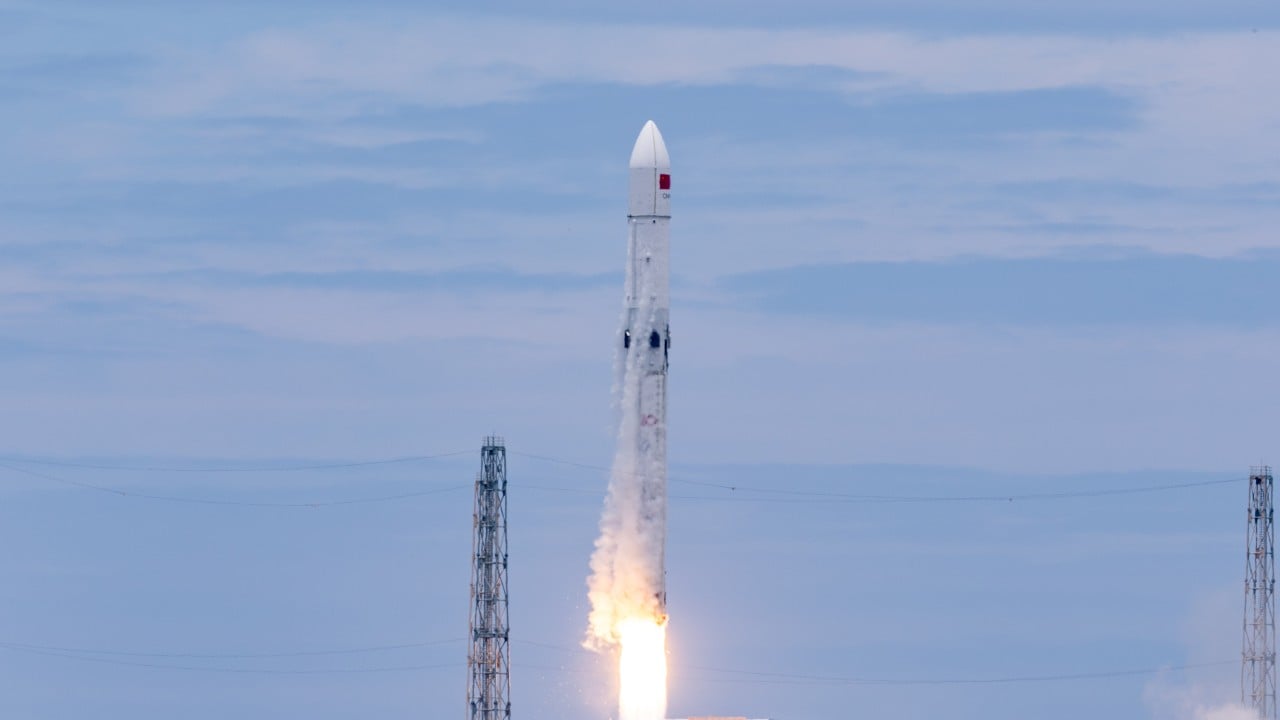
We love talking about the flashy side of the new space race. We obsess over autonomous lunar landers, helium-3 mining, and shiny stainless-steel starships glistening on launchpads. But the brutal reality of rocket science is far more mundane.
Getting to the Moon does not just require brilliant software or daring astronauts. It requires mastering the punishing physics of heavy manufacturing. Specifically, it comes down to a deceptively simple piece of hardware: the massive, ultra-thin metal dome caps that seal giant rocket fuel tanks.
If you cannot build these giant metal bowls to near-impossible tolerances, your rocket does not fly. If your rocket does not fly, you do not get to the Moon. Right now, both the United States and China are hitting the physical limits of metallurgy trying to perfect these components. It is a quiet, frustrating bottleneck that could determine which nation establishes the first permanent presence at the lunar south pole.
The Brutal Physics of the Mass Fraction
To understand why a giant metal cap is causing sleepless nights in Washington and Beijing, you have to look at the tyranny of the rocket equation.
A rocket is basically a giant, fragile balloon filled with explosive liquid propellant. Around 90% of a rocket’s total mass at launch is fuel. The actual structure of the vehicle—the skin, the engines, the guidance systems, and the payload—has to fit into the remaining 10%.
Inside those massive tanks, liquid oxygen and liquid hydrogen (or methane) are stored at bone-chilling cryogenic temperatures. These liquids are highly pressurized. The tanks must be strong enough to hold back those immense forces while surviving the violent vibrations of launch. Yet, they must also be incredibly thin.
If the tank walls or the dome caps at either end are even a fraction of a millimeter too thick, the rocket becomes too heavy to lift itself into orbit. You are constantly balancing on a knife-edge between a rocket that is too heavy to fly and one that structurally collapses under pressure.
The Problem With Welds
Historically, rocket manufacturers built these giant dome caps by welding smaller, pie-shaped metal segments together. It looks like a giant metallic beach ball cut in half.
But every weld is a vulnerability.
When you melt metal to join two pieces together, you change its microscopic structure. The welded joint is almost always weaker, heavier, and more brittle than the surrounding metal. Under the extreme pressure of launch and the freezing cold of liquid propellants, those welds are where cracks start.
To compensate for this weakness, engineers have to make the welded areas thicker. That adds weight. In the high-stakes game of deep-space travel, every extra pound of structural weight means one less pound of scientific gear, life support, or fuel you can take to the Moon.
Enter Monolithic Spin Forming
The holy grail of rocket manufacturing is to eliminate the welds entirely. Instead of piecing together a dome cap like a puzzle, you start with a single, flat sheet of high-strength aerospace alloy and spin it at high speeds while giant rollers press it over a mold.
This process, called spin-forming, produces a single, continuous piece of metal with no welds. It is incredibly strong, remarkably light, and aerodynamically perfect.
But doing this at scale is a nightmare.
The dome caps for heavy-lift rockets like NASA’s Space Launch System (SLS) or China’s Long March 9 are massive. We are talking about single pieces of metal stretching up to 10 meters in diameter.
To spin-form a dome of that size, you need a machine the size of a multi-story building. You have to heat a massive slab of aluminum-lithium alloy to precise temperatures, spin it with unimaginable force, and shape it with microscopic accuracy. If the temperature drops by just a few degrees during the process, the metal tears. If the pressure from the roller is slightly uneven, the dome cap warps, rendering a million-dollar piece of alloy completely useless.
The US Playbook: SpaceX vs. Boeing
The American approach to this hardware bottleneck is split into two very different manufacturing philosophies.
On one side, you have Boeing and the traditional aerospace establishment building the Space Launch System. For the SLS, they use giant friction-stir welding machines to piece together the 8.4-meter dome caps. It is a proven, highly precise method, but it is slow, incredibly expensive, and pushes the limits of how light the vehicle can be.
On the other side is SpaceX. Elon Musk’s strategy with Starship bypassed the traditional aluminum-lithium route entirely. Instead of expensive, temperamental aerospace alloys that require specialized spin-forming, SpaceX opted for stainless steel.
Steel is much easier to weld and handle. However, because steel is heavier than aluminum, SpaceX has to make the walls of Starship incredibly thin—just about 4 millimeters.
Making a dome cap that is 9 meters wide but only 4 millimeters thick out of steel presents its own set of terrifying engineering hurdles. If you have ever tried to push down on the top of an empty soda can, you know how easily thin metal buckles under pressure. SpaceX had to develop proprietary hot-rolling techniques and internal ring stiffeners just to keep Starship’s giant domes from collapsing under their own weight during assembly.
China’s Massive Bet on Size
China is not taking a detour through stainless steel. They are doubling down on advanced aluminum alloys, and they are building some of the largest manufacturing equipment on Earth to do it.
The China Academy of Launch Vehicle Technology (CALT) has been quietly winning the manufacturing scale war. They successfully manufactured a seamless, 9.5-meter aluminum-alloy dome cap using advanced spin-forming techniques.
By eliminating the welds on a dome of that size, Chinese engineers can drastically reduce the dry weight of their next-generation heavy-lift rocket, the Long March 9.
This gives them a massive structural efficiency advantage. If China can consistently produce these giant, seamless caps without defects, their rockets will have a higher mass fraction. That means they can push more tonnage to the lunar surface per launch compared to traditional welded American rockets.
But scaling this up from a lab demonstration to a reliable assembly line is where the wheels often fall off. Metal has memory. When you deform a massive sheet of aluminum, it wants to spring back to its original shape. Managing that internal stress over a 10-meter span requires an astronomical amount of trial and error.
The Quiet Race Behind the Headlines
While politicians debate space policy and budgets, engineers in Huntsville and Beijing are arguing about metal grain structures, tool wear, and thermal expansion.
The nation that masters the reliable, high-yield production of these giant, ultra-thin dome caps holds the keys to the solar system.
- Yield rates are the real metric: It does not matter if you can make a perfect 10-meter dome cap if you have to scrap four failed attempts for every successful one. High scrap rates destroy launch schedules and balloon budgets.
- Inspecting the invisible: Finding a microscopic void or crack in a seamless metal cap that is several meters wide requires incredibly advanced non-destructive testing, like phased-array ultrasonic scanning. A single missed flaw means a catastrophic explosion on the pad.
- Supply chain fragility: The specialized machinery required to roll, spin, and heat-treat these massive metal components is built by only a handful of companies globally. A breakdown in one of these custom machines can halt an entire national space program for months.
What Happens Next
If you want to track who is actually winning the race to the Moon, stop looking at the conceptual animations of lunar bases. Instead, watch the factory floors.
Keep an eye on the structural test articles. When you hear about a rocket stage undergoing "cryo-proofing" or "hydro-burst testing," pay close attention. That is when engineers fill these giant tanks with liquid nitrogen or water and intentionally pressurize them until they explode.
Where the tank pops tells you everything. If it zips open along a weld seam or buckles right at the curve of the dome cap, the engineers still have homework to do. If it holds well past its design limit, someone just unlocked the path to the Moon.
The next time you watch a heavy-lift rocket roar off the pad, appreciate the sheer engineering wizardry keeping those giant metal balloons together. The entire future of humanity’s presence in deep space is riding on a couple of incredibly thin, perfectly spun caps of metal holding back the vacuum of space.