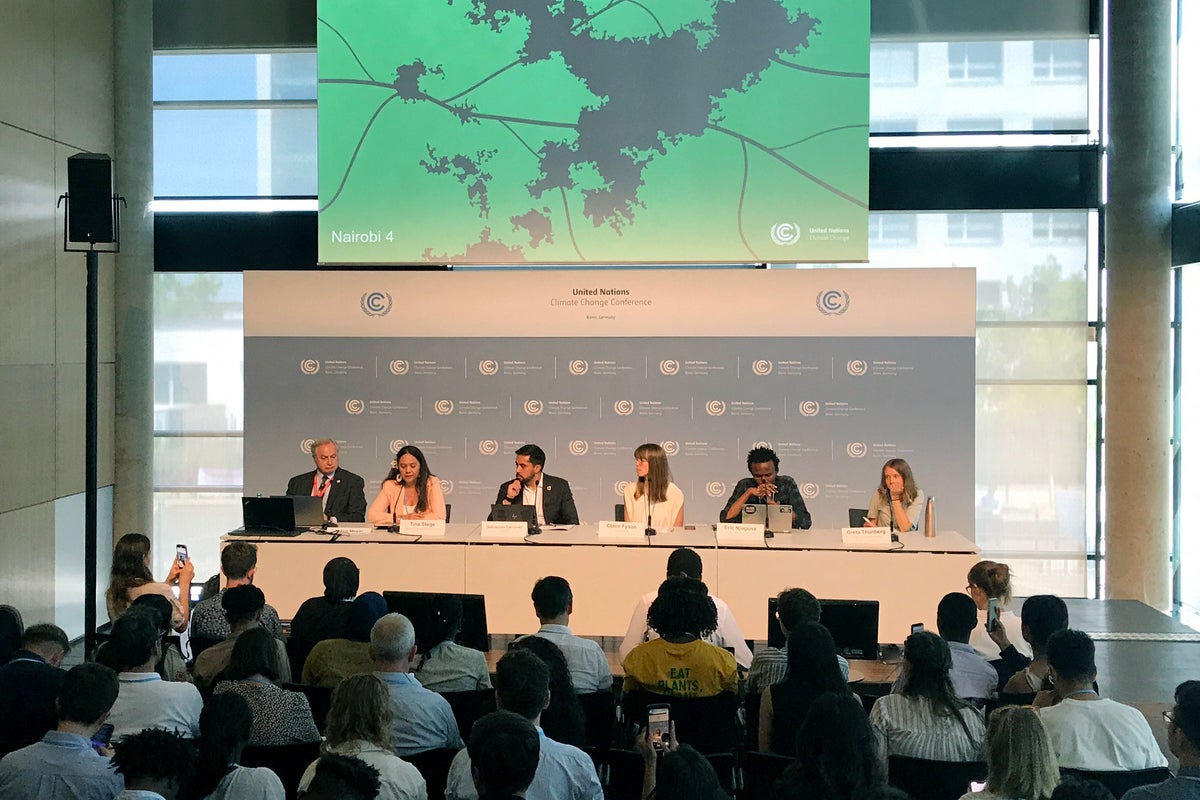
The air inside the World Conference Center in Bonn, Germany, is conditioned to a crisp, predictable temperature. Under the bright lights, delegates from across the globe gather in tailored suits, clutching sleek laptops and thermal coffee mugs. They speak in a dense, specialized language of carbon credits, mitigation targets, and adaptation frameworks. Outside, the Rhine flows quietly. Inside, the future of the planet is being negotiated.
But if you look closely at the rows of seats reserved for the nations most vulnerable to rising seas and scorching droughts, you will notice a striking pattern of empty chairs.
Those chairs are not empty because of a lack of political will. They are empty because of a piece of paper. Specifically, the lack of a Schengen visa. While diplomats from wealthy nations breeze through border control with passport privileges, scientists, activists, and policymakers from the world’s poorest countries are being locked out of crucial United Nations climate talks by a wall of European bureaucracy.
The contrast is stark. The very people who are living the climate crisis today are the ones denied entry to the rooms where its solutions are being debated.
The Paper Wall
Consider a hypothetical negotiator named Althea. She is a brilliant environmental scientist from a small island nation in the Pacific or a drought-stricken region of Sub-Saharan Africa. She has spent months analyzing soil degradation and rising sea levels in her home province. Her community funded her travel, scraping together scarce resources because they believed her voice could sway international policy. She is an expert. She has a formal invitation from the United Nations.
Now, imagine Althea standing in a crowded visa application center, thousands of miles from Bonn.
She has submitted bank statements, employment letters, flight itineraries, and proof of accommodation. She has paid fees that amount to a significant portion of her monthly salary. Then, she waits. Weeks turn into months. The conference date approaches. The opening plenary begins.
Then comes the email. Refused. The reason? The immigration office is not convinced she will return home after the conference. Or perhaps the processing time simply outlasted the calendar, leaving her passport trapped in a consulate drawer while her colleagues in Germany take the floor.
This is not a rare, unfortunate accident. It is a systemic barrier. During recent climate intersessional meetings in Bonn, dozens of delegates from developing nations—particularly across Africa, South Asia, and Latin America—reported that their visas were delayed or outright denied.
The irony is thick enough to choke on. The citizens of these nations have contributed the least to global greenhouse gas emissions, yet they bear the brunt of the damage. When the time comes to demand accountability and secure funding for survival, they are told their paperwork isn't in order.
The True Cost of Exclusion
When these voices are silenced, the conversations in Bonn change flavor. They become clinical. Abstract.
Without the raw, lived experience of people who watched their crops fail last month, climate negotiation degenerates into a game of numbers and economic forecasting. Wealthy nations can afford to view climate change as a future line-item budget issue. For the global south, it is a matter of current, daily survival.
"When you exclude the global south from the negotiating table, you aren't just missing a few votes," says one frustrated West African delegate who managed to secure a visa only after high-level diplomatic intervention. "You are erasing the reality of the crisis."
The numbers back up the frustration. Historically, visa approval rates for citizens of developing nations traveling to the Schengen area are notoriously low compared to their affluent counterparts. When a European country hosts a UN summit, it assumes a responsibility to facilitate the entry of all recognized participants. But the machinery of domestic border control rarely coordinates with the grand ideals of international climate diplomacy.
The result is a two-tier system.
- Tier One: Delegates from wealthy nations who travel effortlessly, backed by robust administrative support and powerful passports.
- Tier Two: Delegates from vulnerable nations who must navigate a stressful, expensive, and often humiliating bureaucratic labyrinth, with no guarantee of success.
This disparity distorts the outcomes of the talks. Decisions regarding loss and damage funds—money meant to compensate poor countries for climate destruction—are negotiated with a severe power imbalance. It is hard to fight for your people's survival when you are stuck calling into a high-stakes meeting via an unstable Zoom connection from a different time zone.
Bureaucracy as a Tool of Disenfranchisement
The administrative hurdles are bafflingly complex. To apply for a visa to Germany, many delegates must travel to a neighboring country just to visit an embassy or a third-party processing center. This adds thousands of dollars in unbudgeted travel and lodging expenses to delegations that are already severely underfunded.
Let us be completely honest about what this is. It is a form of structural exclusion.
Host countries often point to security protocols and immigration laws, arguing that the rules must apply equally to everyone. But when the rules consistently filter out one specific group of people—the poor, the brown, the vulnerable—the system is not working equally. It is acting as a gatekeeper.
The United Nations framework relies on the principle of consensus and equity. Every country, no matter how small, is supposed to have an equal say. But equity cannot exist without access. If a nation cannot physically enter the room, its sovereignty at the negotiating table is a fiction.
Shifting the Ground Beneath Our Feet
The solution to this crisis does not require a breakthrough in green technology or a multi-billion-dollar fund. It requires political will and bureaucratic reform.
If European cities wish to remain the prestigious hubs of global diplomacy, their governments must create dedicated, expedited visa pathways for accredited UN delegates. Passports should be processed with the urgency that the climate crisis demands. Better yet, the international community must reconsider where these summits are held. Moving critical talks to regions with less restrictive visa regimes would immediately rebalance the power dynamics.
The negotiations in Bonn are meant to lay the groundwork for the larger UN Climate Change Conferences. They are the engine room where the real policy text is hammered out. Every voice left outside that room makes the final agreements weaker, less fair, and less effective.
As the sun sets over the Rhine, the delegates in Bonn pack up their briefcases and head to evening receptions. They discuss global solidarity over plates of hors d'oeuvres. Meanwhile, somewhere in Nairobi or Dhaka or Apia, a scientist closes her laptop in frustration, staring at an empty inbox, realizing that her expertise has been defeated by a stamp that never arrived.