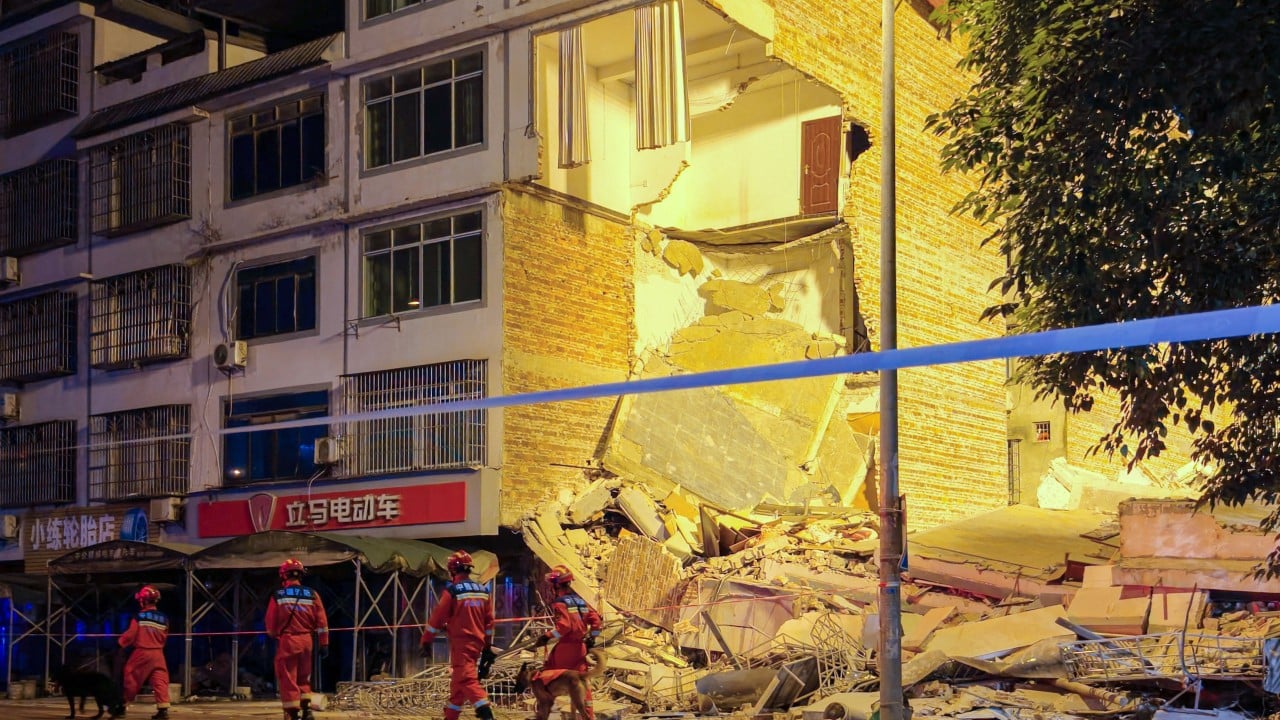
A magnitude 5.2 earthquake struck the Liuzhou region of Guangxi early Monday morning, killing two people, collapsing 13 buildings, and triggering the evacuation of 7,000 residents in the mainland. Despite the epicenter being located 550 kilometers away, the Hong Kong Observatory registered more than ten distinct tremor reports from local residents. The event registered a Local Intensity of II on the Modified Mercalli Intensity Scale, demonstrating that Hong Kong high-rises act as structural amplifiers for distant seismic waves.
This phenomenon catches residents by surprise every few years. The sudden, brief swaying of a chandelier or a mild sensation of dizziness on the 40th floor of a housing estate prompts frantic calls to the government. Hong Kong sits on a stable structural plate, meaning it does not experience devastating epicenter activity, but its unique vertical architecture makes it highly sensitive to mid-magnitude events hundreds of kilometers inland.
The Mechanical Pipeline of a High-Rise Tremor
When an earthquake hits a depth of 8 to 10 kilometers in a region like Guangxi, it releases energy in the form of seismic waves.
Primary waves and secondary waves travel through the crust, losing strength as they cover hundreds of kilometers. By the time these waves cross the border into Hong Kong, their high-frequency energy has dissolved into the ground. What remains are low-frequency, long-period surface waves.
The bedrock of Hong Kong barely notices them. A person walking down Hennessy Road at midnight would feel absolutely nothing.
The story changes entirely inside the territory’s vertical housing estates. High-rise buildings possess their own natural frequency of vibration. A short, squat structure vibrates quickly, while a tall, slender skyscraper sways slowly. When the long-period seismic waves traveling from Guangxi match the natural swaying frequency of a 50-story concrete tower, a mechanical handshake occurs.
This is resonance. The building acts like a tuning fork, amplifying the minor ground movement.
A tremor that is imperceptible on the street level becomes noticeable on the upper floors. Residents at rest feel the building lean and reset, a movement lasting only a few seconds but enough to register on the human equilibrium.
The Engineering Design behind the Sway
To understand why this happens, look at the structural blueprints of the city. Hong Kong building codes do not mandate explicit, independent seismic design criteria in the same manner as Tokyo or San Francisco. They do not need to. Instead, the city’s structures are built to withstand a different, more frequent environmental threat.
Typhoons.
The wind-load requirements in Hong Kong are among the strictest in the world. To survive a direct hit from a Super Typhoon, skyscrapers must be built with immense lateral stiffness.
Engineers use thick reinforced concrete shear walls and robust core structures to ensure that buildings can resist thousands of tons of lateral wind pressure. A building designed to survive 250 kilometer-per-hour gusts possesses a massive amount of inherent structural capacity.
This wind-resistant engineering serves a dual purpose. It protects the building against seismic forces.
When a distant earthquake sends waves through the city, the stiff concrete cores absorb the energy safely. The building sways because it is flexible enough to dissipate the force without cracking. The movement felt by residents is not a sign of structural failure. It is evidence that the tower is working exactly as intended. A completely rigid building would snap under pressure; a flexible building sways to survive.
Evaluating the Actual Structural Threat
The immediate question that follows any felt tremor is whether the city's older housing stock is at risk. Hong Kong features thousands of densely packed residential towers built in the 1970s and 1980s. These structures have aged under intense subtropical humidity and heavy usage.
The short answer is no. A magnitude 5.2 earthquake at a distance of 550 kilometers poses zero threat to the structural integrity of Hong Kong buildings.
The energy that reached the city on Monday morning was a fraction of what would be required to cause even minor cosmetic cracking in a standard concrete pillar. The Modified Mercalli Intensity II rating signifies an event that is felt only by individuals who are completely still, typically on higher floors. It does not cause structural displacement.
The true vulnerability in Hong Kong during these moments is human panic. Because tremors are rare, residents lack the immediate muscle memory found in active seismic zones. People do not know whether to run outside, take cover under a table, or stay put.
In a high-rise environment, running down dozens of flights of stairs during a live event is frequently more dangerous than staying inside a structurally sound apartment. The building is engineered to take the strain. The human occupants simply have to wait out the resonance.
The Mainland Reality and Regional Warning Systems
While Hong Kong processed a handful of phone calls, the situation at the epicenter in Liunan District, Liuzhou, required an immediate regional response.
The localized damage was severe because the epicenter was shallow, sitting between eight and ten kilometers beneath the surface. This shallow depth meant the full force of the magnitude 5.2 energy hit local structures before it could dissipate.
The response required the coordination of multiple layers of mainland administration. The Ministry of Emergency Management and the State Council activated a Level-IV emergency response, while regional authorities deployed a Level-III response.
Firefighters, police, and specialized search-and-rescue units targeted Shangdeng Village in Taiyangcun Township, where the 13 building collapses occurred. Heavy machinery cleared a landslide that blocked the Liuzhou beltway, while rescue K9 teams searched the debris for trapped residents.
This stark contrast highlights the regional dynamics of southern China. A single geological event can cause localized destruction, trigger landslides, and upend thousands of lives in one province, while simultaneously serving as a minor engineering curiosity 550 kilometers away in a global financial hub.
The event serves as a reminder that Hong Kong's infrastructure is intimately linked to the broader geography of the mainland. The city's safety relies on maintaining building codes that inadvertently insulate it from regional shocks, transforming a potentially terrifying natural event into a series of brief, harmless vibrations on the upper floors of the city.