The ground didn't just shake in the southern Philippines. It ruptured with a violence that hasn't been seen in that specific region for half a century. When the 7.8 magnitude Mindanao earthquake struck at 7:37 AM on Monday, June 8, 2026, it instantly shattered what was supposed to be a celebratory morning. It was the very first day of the new school year. Children across the region were standing in courtyards for morning flag-raising ceremonies when the concrete beneath them began to roll.
The immediate fallout is grim. At least 37 people are dead, nearly 500 are injured, and over 32,000 citizens are displaced from their homes. But if you think this is just another tragic entry in the long list of natural disasters hitting Southeast Asia, you're missing the bigger picture. This earthquake exposed a dangerous gap between rapid urban growth and structural engineering reality.
The Anatomy of the Mindanao Disaster
The epicenter was located roughly 20 kilometers off the coast of Sarangani province, fueled by the sudden movement of the Cotabato Trench. According to Teresito Bacolcol, director of the Philippine Institute of Volcanology and Seismology (PHIVOLCS), this is the most powerful tremor triggered by this specific undersea depression since the catastrophic 1976 earthquake.
The energy released was massive. Tremors registered as far away as Manado on the Indonesian island of Sulawesi, 420 kilometers from the origin point. Within two hours of the initial shock, a magnitude 6.5 aftershock hammered the region again, complicating early rescue initiatives.
General Santos City, a bustling coastal economic hub of 720,000 residents known as the tuna capital of the country, took a direct hit. The city quickly fell into a total blackout, with water lines severed and electricity grids knocked entirely offline. Thrown into a state of calamity, the city's streets became a maze of fallen concrete, smashed glass, and downed power cables.
Where the Fatalities Occurred
The loss of life reflects two distinct structural vulnerabilities: urban structural failure and rural geological instability.
- Sarangani Province (18 Deaths): The majority of these casualties occurred in the mountainside town of Glan, where the shaking triggered massive landslides that completely buried residential homes.
- General Santos City (13 Deaths): Fatalities here resulted directly from engineering collapses, including the failure of commercial complex walls and falling debris in heavily built-up areas.
- Other Regions: The remaining deaths were distributed across South Cotabato, Davao Occidental, and Balut Island, primarily caused by collapsing residential walls.
Structural Integrity vs Rapid Growth
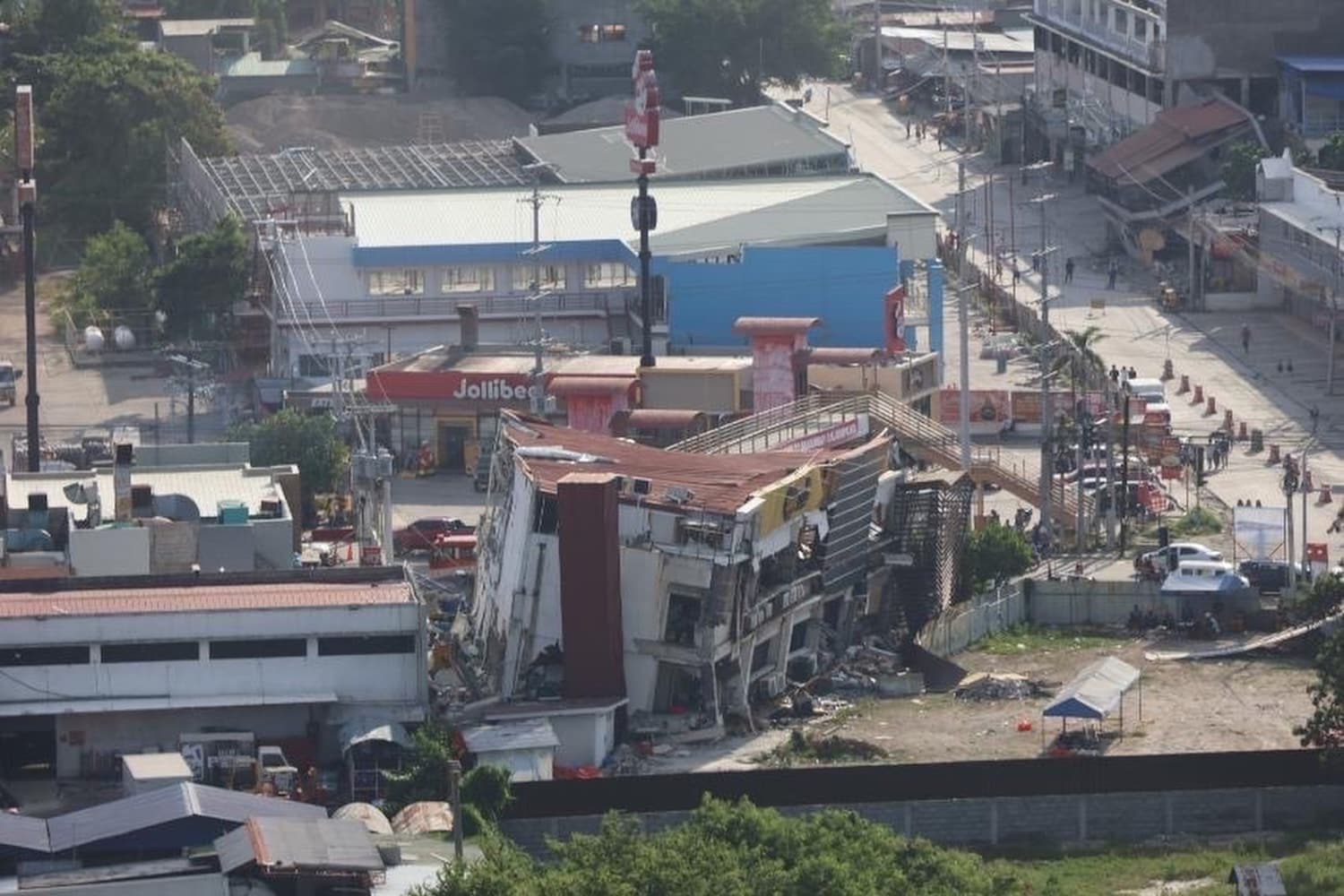
Look at the footage coming out of General Santos City and the picture becomes clear. The upper floor of a prominent Jollibee fast-food restaurant completely collapsed. The outer concrete facades of modern commercial complexes dropped straight into the streets. In Davao del Sur, portions of a high school building gave way.
This shouldn't happen during a manageable seismic event if building codes are strictly implemented.
The hard truth is that over the last decade, regional hubs like General Santos have grown faster than local inspection teams could handle. When a 7.8 magnitude quake hits, it acts as an immediate auditor of structural integrity. It exposes shortcut construction methods, subpar concrete mixes, and unreinforced masonry walls.
Right now, roughly 6,000 public school buildings across the affected provinces are locked down. Government engineers cannot allow classes to resume until every single structure undergoes a comprehensive safety inspection. The Office of Civil Defense explicitly stated they can't risk sending children back into buildings that might have hidden foundational cracks, especially with powerful aftershocks continuing to roll through.
The Psychology of Tsunami Panic and Healthcare Strain
The devastation wasn't just physical. It was psychological. Immediately after the main shock, tsunami alerts went live across the southern Philippines, northern Indonesia, and the Malaysian state of Sabah.
Memories of the 1976 tragedy, where an 8.1 magnitude quake in the same trench generated 30-foot waves that killed 8,000 people, run deep in the cultural memory of Mindanao. Thousands of families fled their homes for higher ground out of sheer terror, rather than waiting for formal government orders.
Ultimately, the ocean only produced waves measuring 1.4 meters above tide level. The physical tsunami damage was minimal, ruining just six stilt houses in a coastal village. But the evacuation itself contributed heavily to the chaos that displaced 32,000 individuals into cramped emergency shelters.
Tents Over Emergency Rooms
The medical crisis after the quake revealed a profound lack of confidence in local infrastructure. Richard Gordon, chairman of the Philippine Red Cross, reported that multiple hospitals sustained significant structural cracking.
As a result, doctors had to treat hundreds of lacerations, fractures, and trauma cases inside outdoor tents. Why? Because the patients—and the medical staff themselves—were terrified the hospital ceilings would collapse on them during an aftershock. When a community is afraid to enter a hospital during a medical crisis, your emergency infrastructure is broken.
What Needs to Happen Right Now
President Ferdinand Marcos Jr. deployed top defense and mitigation officials from Manila to Mindanao, declaring that the national government will not abandon the southern region. While emergency food packs and temporary construction materials are arriving, long-term survival demands systemic changes.
If you are a property owner, local official, or resident in a high-risk seismic zone, waiting for the next disaster is a losing strategy. Here are the immediate tactical steps required to prevent the next mass displacement event.
1. Mandatory Structural Audits of Pre-2010 Buildings
Local governments must enforce immediate seismic retrofitting on all commercial and educational structures built before strict modern revisions to the National Building Code of the Philippines. Priority must go to multi-story public spaces and schools.
2. Micro-Zoning for Landslide Vulnerability
The 18 deaths in Glan highlight the danger of mountain communities building on unstable slopes. Mountainous provinces need clear zoning laws that forbid residential construction on slopes prone to liquidation and seismic landslides.
3. Decentralized Emergency Utilities
General Santos City lost all water and power instantly, leaving survivors without drinking water in the brutal tropical heat. Municipalities must invest in solar-powered water filtration stations and decentralized micro-grids for neighborhoods, ensuring emergency hubs don't depend on a single vulnerable main power line.
Emergency crews are still clearing debris from blocked mountain roads to reach isolated villages. The international airport in General Santos remains closed to commercial traffic, prioritizing humanitarian flights. The immediate crisis will fade, but the structural lessons of this 7.8 magnitude wake-up call cannot be ignored. Shoddy construction isn't just an eyesore. It is a death sentence.