The air inside the stadium doesn't smell like popcorn or stale beer. Not up here. If you sit close enough to the glass of the luxury suites, the world smells faintly of expensive leather, mint leaves, and the crisp, distinct scent of brand-new money.
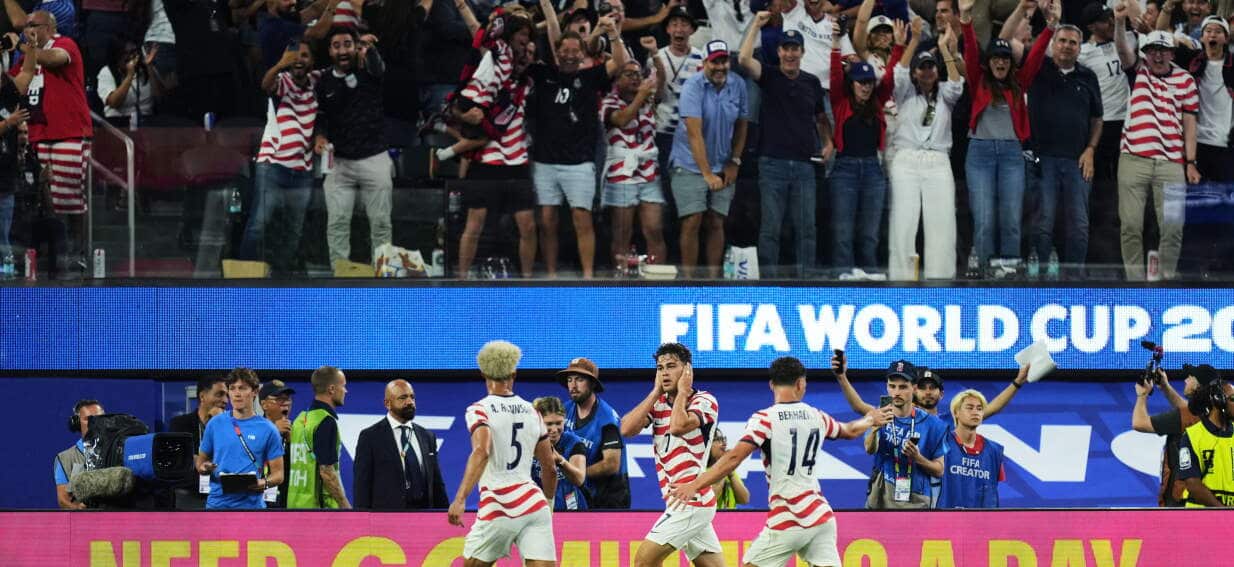
Below, on the grass, twenty-two athletes are sweating through their jerseys. They have trained their entire lives for this exact ninety-minute window. Their hamstrings are stretched to the absolute limit. Their lungs burn. But as the camera pans away from a crucial corner kick to linger on a man in a crisp white linen shirt sitting in row four, you realize the uncomfortable truth of modern athletics.
The game on the field is only half the show. The real theater is happening in the stands.
When the United States hosts a massive sporting event, the attraction isn't just the tactical brilliance of a 4-3-3 formation. The draw is the human gravity of the people watching it. We are living in an era where the spectators have become more valuable than the spectacle.
The Gravity of the Front Row
Consider the anatomy of a modern stadium broadcast. A striker breaks past the defensive line. The crowd gasps. The ball rattles the crossbar and flies into the stands. In the old days, the television director would cut to a replay of the footwork, analyzing the angle of the strike.
Not anymore.
Today, the camera instantly pivots to Tom Cruise.
We watch him lean over to whisper something to David Beckham. We watch the slight nod, the shared smile, the effortless posture of men who are completely aware that seventy thousand pairs of eyes in the stadium—and seventy million more at home—have just stopped looking at the ball to look at them.
This isn't accidental. It is a highly engineered ecosystem of attention.
For a sport to truly conquer the American market, it requires more than just athletic excellence. Soccer, historically, struggled in the States because it lacked the built-in mythology of baseball or gridiron football. It needed a translation layer. It needed cultural translators.
When Beckham sits in the stands, he isn't just a retired midfielder enjoying a match. He is a walking validation engine. His presence tells the casual viewer that this event matters, that this specific patch of grass is the epicenter of global cool for the next two hours. Cruise brings the Hollywood cinematic sheen. Suddenly, a standard group-stage match feels like a summer blockbuster premiere.
The Economics of Being Seen
Why do we care so much about who is sitting in the VIP lounges?
The answer lies in our psychological need for tribal validation. Humans are hardwired to look to the tribe's elite to determine where value resides. If the people who can be anywhere in the world choose to be here, then here must be the most important place on earth.
Think about the ticket prices. A regular fan scrapes together hard-earned savings to buy a seat in the upper deck, where the players look like brightly colored ants. They pay hundreds of dollars for the privilege of being in the same zip code as greatness.
Meanwhile, the celebrities are handed front-row passes for free.
It feels deeply unfair on the surface. Yet, from a purely financial perspective, Tom Cruise’s face on the stadium big screen is worth more to the organizers than the combined ticket sales of an entire section in the nosebleeds. His presence is a silent, incredibly potent endorsement. It transforms a simple sports game into an elite cultural gala.
This creates a strange, inverted reality. The fans in the cheap seats are paying to watch the players, but they are also paying to be in the room where the elite gather. The stadium becomes a microcosm of modern society: a tiered pyramid where status is measured by your proximity to the field, and the ultimate status is having the field look up at you.
The Invisible Pressure on the Grass
Now, look back down at the pitch.
Imagine being a twenty-three-year-old midfielder. You grew up playing on dusty fields in South America or European suburbs. You know every scout in the world is watching your tape. That pressure is familiar; you've lived with it since you were ten years old.
But then you look up during a throw-in. You see a Oscar-winning actor pointing at you. You see a global fashion icon discussing your positioning.
The psychological weight shifts. The match stops being just a sporting contest and becomes a performance art piece. The stakes are no longer just three points in a tournament standings table; the stakes are your placement in the global entertainment hierarchy.
This shift changes how the game is played. Players become brands. Celebrations are choreographed for social media clips that will be shared by the famous onlookers. The border between sports and show business doesn't just blur—it completely dissolves.
The Shift in the American Sporting Soul
America has always treated sports differently than the rest of the world. In Europe or South America, a stadium is a secular cathedral. It is a place of raw, often ugly, communal passion. The fans sing for ninety minutes straight. The atmosphere is thick with tension, history, and local identity.
The American model treats the stadium as a content studio.
The game is simply the baseline narrative around which experiential entertainment is built. You have the halftime shows, the kiss cams, the gourmet food options, and, crucially, the celebrity roll call.
By filling the stands with international stars, American organizers are successfully exporting this entertainment-first model to the rest of the world. They are proving that you don't need a century of deep-seated club rivalry to make a match feel monumental. You just need the right guest list.
It works. It is undeniably effective. It generates billions of dollars, attracts massive sponsorships, and turns regional sports into global juggernauts.
But as you watch the television broadcast cut back to Cruise and Beckham for the fourth time in ten minutes, you can't help but feel a slight pang of nostalgia for the raw simplicity of the sport. You realize that the beautiful game is no longer just about the ball hitting the back of the net.
It is about who is clapping in the luxury box when it happens.