The blue light of a smartphone screen at 2:00 AM does something strange to the human face. It aging you. It carves shadows under the eyes and paints the skin in a pale, ghostly hue. For anyone sitting in a crowded departure lounge or nursing a lukewarm coffee at a kitchen table half a world away, that glow is currently the only anchor to reality.
We look at maps of the world and see neat, colorful shapes separated by thin black lines. We call them countries. But from thirty-five thousand feet in the air, those lines do not exist. Instead, pilots see a different geography altogether: wind currents, weather fronts, and, increasingly, zones of invisible heat. When geopolitical tensions flare between nations like the United States and Iran, the sky above the Middle East transforms from a routine highway into a complex labyrinth of caution.
For the average traveler, a flight ticket is a promise. It is a contract for a seamless transition from Point A to Point B. But behind that piece of digital paper lies a massive, roaring engine of global logistics that must constantly pivot when the world below begins to tremble.
The Quiet Panic of the Departure Gate
Consider a traveler named Amit. He is not a politician, a military strategist, or an aviation expert. He is a software consultant from Bengaluru heading to London, with a tight layover in Dubai. His daughter’s wedding is in three days. He has the suits packed. He has the gifts wrapped in gold paper.
Now, he is staring at his phone in the transit lounge.
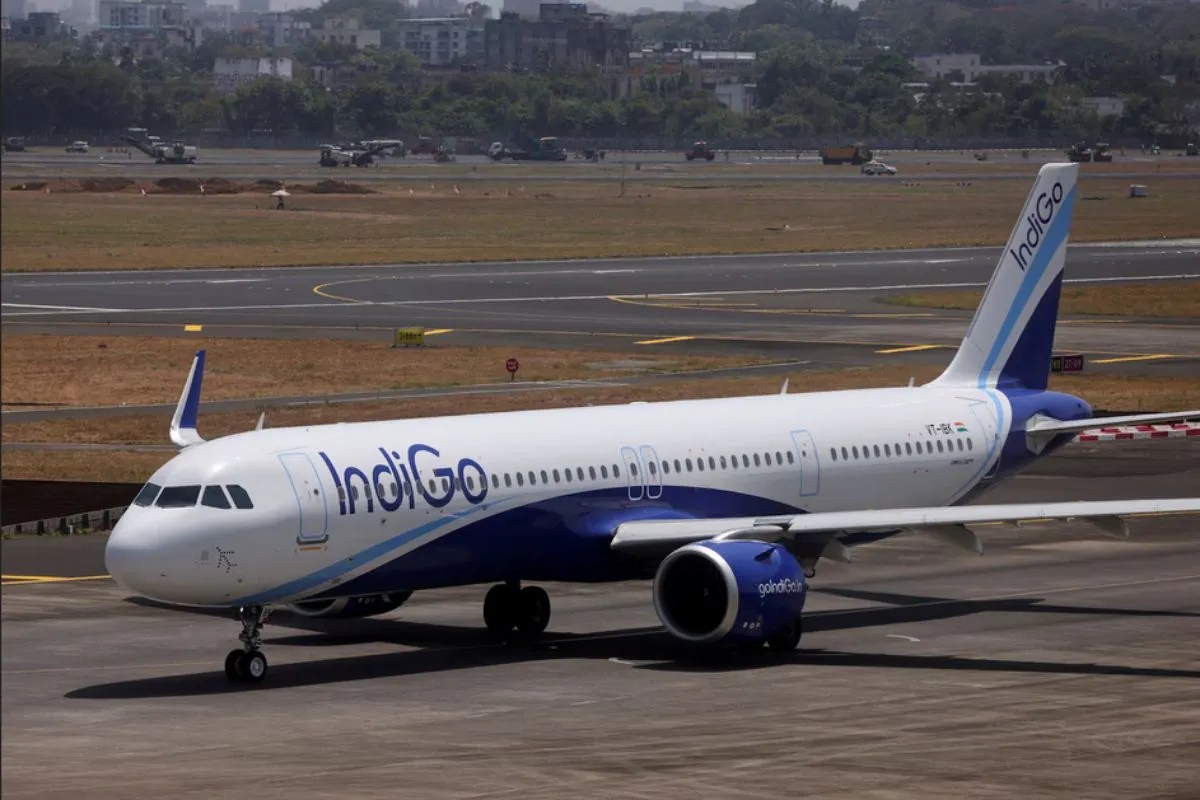
A notification pops up from IndiGo, India’s largest domestic carrier, which also bridges the gap to the Gulf for millions of passengers every year. The message is polite, sanitized, and brief. It advises travelers heading toward or through Middle Eastern airspace to monitor their flight status online before leaving for the airport.
To the untrained eye, it looks like standard corporate compliance. To Amit, and to anyone who understands the fragile nature of modern travel, it is a flashing yellow light. It means that somewhere over the horizon, dispatchers and route planners are staring at live tracking screens, calculating fuel burns, and rewriting flight paths in real time.
The air corridors linking South Asia to Europe and the West are some of the busiest on the planet. They are the arteries of global commerce. When those arteries constrict due to regional instability, the ripple effect is instantaneous. Flights get redirected. Routes stretch longer. Fuel stops are added.
Suddenly, a journey is no longer just about checking in and falling asleep to an in-flight movie. It becomes a lesson in geopolitical geography.
The Anatomy of an Airspace Detour
To understand why a simple travel advisory carries so much weight, we have to look at how a flight is actually born. Long before the wheels leave the tarmac, a team of flight dispatchers analyzes the upper atmosphere. They look for the most efficient path, balancing speed against fuel consumption.
When a conflict escalates, certain airspace becomes a no-go zone. This isn't always because a civilian aircraft is a target; it is because the risk of miscalculation climbs too high. Air traffic control systems in conflict zones can become degraded, military exercises can crowd the frequencies, and GPS spoofing can play tricks on navigation systems.
So, the airlines do the only logical thing: they go around.
But going around is not as simple as turning a steering wheel to the left. If a flight from Delhi to Istanbul has to avoid Iranian airspace, it must find a completely new corridor. It might have to skim further south over Saudi Arabia or push further north through Central Asia.
Every extra degree of latitude adds miles. Every mile burns tons of aviation turbine fuel. A flight that usually takes seven hours might suddenly take nine. If the aircraft was fueled only for a seven-hour journey with standard reserves, it now faces a mandatory refueling stop in a city the passengers never intended to visit.
This is the hidden cost of a fractured sky. It is measured not just in airline spreadsheets, but in missed connections, expired visas, and the slow, grinding anxiety of passengers stuck on a tarmac in a foreign city, watching the clock tick away.
Why the Digital Status Page is Your Best Friend
There was a time when a flight delay meant standing in a physical line three hundred people deep, waiting for a tired gate agent to stamp a paper coupon. Those days are gone, but the human instinct to panic remains exactly the same.
Airlines like IndiGo issue these online advisories because information is the only real antidote to chaos. In the digital age, a flight status tracker is not just a feature on a website; it is a live-updating ledger of a battle against time and geography.
When a carrier urges you to check your flight status online before leaving your house, they are trying to prevent a bottleneck at the terminal. If a flight is delayed by four hours because the inbound aircraft had to skirt an entire subcontinent to avoid a closed corridor, arriving at the airport at the usual time accomplishes nothing. It merely transfers your anxiety from your living room sofa to a hard plastic chair at Terminal 3.
The real challenge for travelers is learning to read between the lines of these updates. A status that says "Delayed" without a clear reason during a geopolitical crisis rarely means a mechanical issue or a late crew. It usually means the airline is waiting for a slot in a crowded, narrow corridor that every other international carrier is also trying to use at the exact same moment.
The Human Network Behind the Screen
We often view airlines as faceless entities—massive fleets of blue and white metal moving through the sky. But when the geopolitical temperature rises, the burden falls squarely on human shoulders.
Think of the operations control center. It looks like a miniature version of NASA's mission control. Wall-to-mouth screens show the positions of hundreds of aircraft moving like slow-motion ants across a digital globe. When an advisory goes out, these rooms become incredibly quiet. The chatter drops. The focus sharpens.
Logistics experts are playing a high-stakes game of chess. If Plane A is delayed coming out of Doha because of a rerouting bottleneck, Plane B, which was supposed to use that exact aircraft for a flight to Mumbai, is now stranded. The crew will time out, meaning they will hit their legal limit of working hours and must be replaced. A single closed corridor in the Middle East can throw off a domestic schedule in India six hours later.
This interconnectedness is beautiful when it works, but it is terrifyingly fragile when it breaks.
For the traveler, the best strategy is radical acceptance coupled with hyper-vigilance. The sky will open up again, the routes will eventually straighten out, and the weddings will still happen, even if the father of the bride arrives with wrinkled clothes and a pale face.
The next time you see a dry, brief travel advisory pop up on your feed, do not just swipe it away. Recognize it for what it is: a warning that the world is shifting beneath our feet, and a reminder that the shortest distance between two points is no longer a straight line, but a path carved by caution, calculation, and patience. Turn on your notifications. Keep the battery charged. Watch the screen.