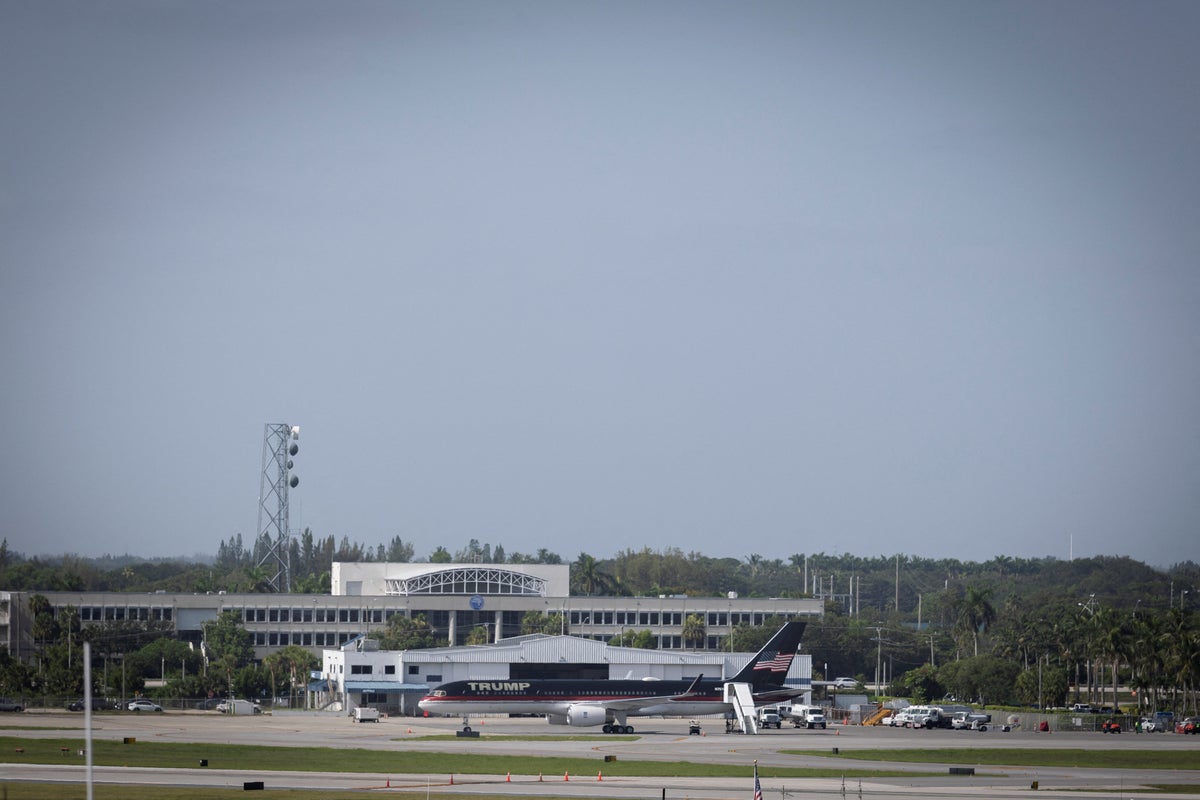
The institutional redesignation of an international airport involves far more than updating highway signage; it introduces structural friction across a deeply interconnected global logistics network. When the state of Florida mandated the transition of Palm Beach International Airport into the President Donald J. Trump International Airport, it initiated a dual-track operational overhaul. The process exposes a profound decoupling between public-facing political branding and the rigid, data-driven systems governing international aviation infrastructure.
The execution of this transition reveals that aviation assets operate on two distinct structural layers: the symbolic layer and the operational data layer. While local municipalities can alter physical iconography rapidly, the underlying databases that route aircraft, passengers, and baggage adhere to strict global governance models designed to minimize systemic volatility. This structural division introduces measurable data risks and operational friction across the global supply chain.
The Dual-Layer Timeline Friction
The core logistical bottleneck of the renaming process stems from a temporal mismatch between regulatory frameworks. The transition does not occur simultaneously across all aviation systems; instead, it is split into distinct regulatory phases. This creates a 40-day data misalignment period between July 9, 2026, and August 18, 2026.
+-------------------------------------------------------------------------+
| SYSTEM SYNCHRONIZATION TIMELINE (2026)                                  |
+-------------------------------------------------------------------------+
| Phase 1 (July 9):                                                       |
|   - Legal Name Change Execution                                         |
|   - FAA Locational Identifier: PBI -> DJT                               |
|   - ICAO Operational Identifier: KPBI -> KDJT                           |
+-------------------------------------------------------------------------+
| Phase 2 (Interim Period: July 9 – August 18):                           |
|   - Operational Desynchronization Window                                |
|   - Flight Crews & ATC use DJT / KDJT                                   |
|   - Passenger Ticketing & GDS Legacy Layer uses PBI                      |
+-------------------------------------------------------------------------+
| Phase 3 (August 18):                                                    |
|   - IATA Passenger Code Transition: PBI -> DJT                          |
|   - Global Distribution Systems Realignment Complete                     |
+-------------------------------------------------------------------------+
The first phase, effective July 9, updates the Federal Aviation Administration (FAA) Locational Identifier and the International Civil Aviation Organization (ICAO) code from KPBI to KDJT. This data layer is consumed exclusively by pilots, air traffic controllers, and flight dispatchers. The second phase, managed by the International Air Transport Association (IATA), delays the passenger-facing three-letter code transition from PBI to DJT until August 18.
This deliberate delay is mandated by the technical architecture of Global Distribution Systems (GDS) such as Amadeus, Sabre, and Travelport. Passenger reservation networks require extended lead times to purge legacy code structures without dropping active passenger manifests or misrouting interline baggage. The 40-day window represents a calculated compromise between legislative mandates and system stability, during which an asset possesses two functional identities simultaneously.
Data Mitigation and Systemic Hard Coding
To prevent catastrophic routing failures during this desynchronization window, major air carriers operating at the station—including Delta, United, American Airlines, JetBlue, and Southwest—have built temporary software bridges. In database management, altering a primary key identifier like an airport code risks breaking relational links across downstream tables, such as cargo routing, weight and balance calculations, and crew scheduling.
The operational solution requires implementing a temporary translation layer within airline Passenger Service Systems (PSS). When a consumer queries the legacy identifier on a commercial interface, the software employs an internal mapping rule that routes the query to the active operational database. This translation layer acts as an artificial shock absorber, ensuring that ticket inventories and baggage tags remain synchronized despite the architectural divergence occurring at the federal level.
Brand Dilution and Workforce Labor Arbitrage
Beyond the digital infrastructure, the renaming reveals an operational reality concerning labor autonomy and corporate brand management. While the airport carries a new political title, major airlines have granted explicit conversational leeway to flight crews and cabin staff regarding in-flight announcements. Flight attendants are permitted to use localized, geographic terminology—such as welcoming passengers to "West Palm Beach"—rather than reciting the full official name.
This policy reflects a optimization strategy designed to mitigate two specific operational liabilities:
- Political Polarization and Consumer Friction: Frontline workers are instructed to minimize conversational triggers that could alienate portions of a captive customer base, thereby reducing the probability of in-flight disturbances.
- Acoustic and Syllabic Efficiency: In aviation safety ecosystems, communication clarity is paramount. Minimizing verbal complexity during high-workload phases, such as post-landing taxi operations, reduces cognitive load and standardizes cabin announcements.
By decoupling the legal name from standard cabin nomenclature, airlines execute a form of labor arbitrage. They satisfy regional statutory compliance through official documentation while preserving a neutral consumer experience inside the aircraft cabin.
Legal and Commercial Restraints on Trademark Asset Monetization
The financial structure of the renaming is governed by a strict Naming Rights and License Agreement executed between the Palm Beach County Board of County Commissioners and the trademark holders. Because the nomenclature involves a protected personal brand, specific commercial boundaries were required to insulate public funds from private revenue streams.
The contractual architecture prevents the trademark holder from collecting royalties, licensing fees, or direct revenue shares from retail, food, or beverage concessions operated within the terminal footprint. Conversely, the airport authority retains the right to utilize the name, image, and likeness associated with the designation exclusively for regional logistical marketing and promotional initiatives. The capital expenditure required to execute the physical transition—including highway signage overhauls on Interstate 95 and terminal rebranding—is legally firewalled from local property tax revenues. Funding is extracted entirely from localized airport enterprise funds, passenger facility charges, and specific state transportation appropriations.
The long-term operational success of the station depends heavily on the execution of the August 18 IATA cutover. To insulate your operations from the remaining desynchronization window, software systems handling regional logistics must continue to treat the legacy passenger identifier as the primary active key for consumer-facing interfaces, while preparing programmatic updates to shift all relational databases to the new identifier precisely at the IATA deadline.