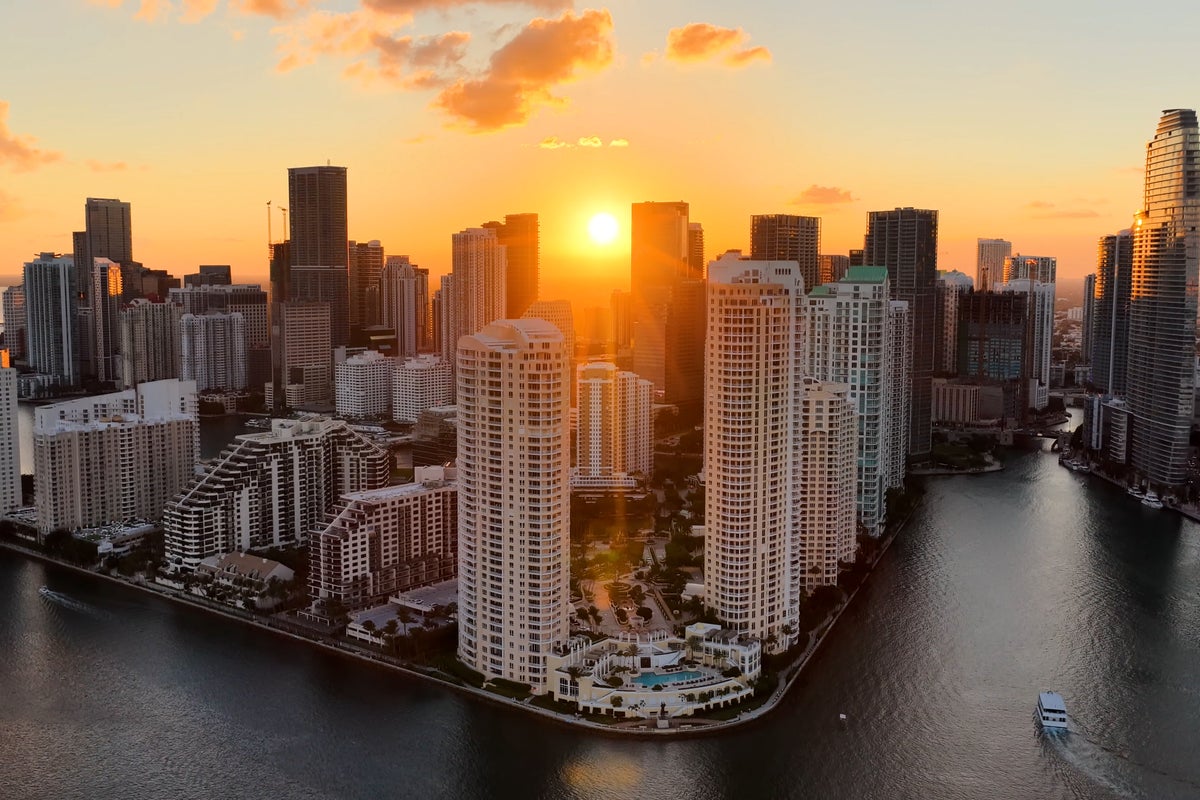
Miami officials are currently begging property managers to lock their roof hatches and install more cameras. They are treating 19-year-olds with GoPros like they are a localized insurgency. The prevailing narrative is one of "public safety," "liability," and "protecting the brand of the city." It is a tired, bureaucratic reflex that fails to understand the physics of modern attention.
The city wants to "crack down." The property owners are "pleading" for help. They are both wrong.
If you own a luxury high-rise in Brickell or Edgewater, those vertigo-inducing Instagram reels aren't a security breach. They are the most effective, zero-cost marketing assets your building will ever generate. While you are spending $20,000 a month on a PR firm to place a "lifestyle" article in a magazine no one reads, a kid in a hoodie just gave your penthouse views to four million people for free.
The Liability Myth is a Paper Tiger
The first thing every legal department screams about is liability. "What if they fall?" "What if they sue?"
Let's look at the actual legal mechanics. Florida’s premises liability laws are not nearly as soft as the "sue-happy" stereotype suggests. Under Florida Statute § 768.075, a property owner generally owes no duty of care to a trespasser except to refrain from "willful or wanton injury." If a social media influencer picks a lock, bypasses a security door, and scales a crane, they are a "discovered" or "undiscovered" trespasser.
The idea that a building is financially ruined because a thrill-seeker took a risk is a ghost story told by insurance brokers to hike your premiums. In reality, the legal precedent for "attractive nuisance" rarely applies to adults—or even savvy teenagers—engaging in intentional, illegal acts of daredevilry. The risk isn't on the balance sheet; it's in the imagination of the board members.
Security Theatre vs. Actual Security
Most high-rises are currently engaging in what I call "Security Theatre." They add another bored guard to the lobby and put a sturdier padlock on the roof. It’s useless.
I’ve consulted with developers who spent six figures on "anti-climb" paint and motion sensors, only to have a kid with a $500 drone and a suction cup bypass the entire system. You aren't fighting a criminal element; you are fighting a creative one.
The "crackdown" mentality is a cat-and-mouse game that the mouse always wins because the mouse has more time and better tech. By turning your building into a fortress, you aren't stopping the stunts; you are simply increasing the "clout" value of the stunt. The harder it is to get to the top of the Waldorf Astoria residencies, the more views the person who finally makes it will get. You are inadvertently subsidizing the incentive.
The Luxury of Scarcity and the New Aesthetic
The "Miami Brand" is built on three pillars: sun, sin, and status.
When a video goes viral of someone hanging off a balcony at 1,000 feet, it reinforces the exact "living on the edge" aesthetic that makes people pay $4,000 a square foot for a glass box in the sky. It creates an aura of unreachable height and world-class scale.
Compare two buildings:
- Building A: A sterile, quiet tower where nothing ever happens and the roof is a graveyard of HVAC units.
- Building B: The "Impossible Tower" that keeps appearing in viral videos, looking like something out of a futuristic heist movie.
In the global marketplace for ultra-wealthy buyers—people in London, Dubai, and Hong Kong—Building B is the one that feels like it’s at the center of the world. It’s the same reason developers used to hire base jumpers to launch off buildings during "topping out" ceremonies in the 90s. It was a spectacle then; it’s a "stunt" now because the city can’t control the distribution.
Stop Pleading and Start Partnering
Instead of begging the police to patrol the 50th floor, property owners should be leaning into the verticality.
If you have a roof that everyone wants to climb, you don't have a security problem; you have an asset problem. You have a space that is clearly more valuable than you realized.
- Monetize the Access: Create "Content Hours" where professional creators can access the roof under supervision, with a waiver, for a fee.
- Controlled Risk: If the goal is "stunt" footage, provide the rigging. A person harnessed to a rail looks just as terrifying on a wide-angle lens as someone free-climbing, but the insurance company can actually sleep at night.
- The "Walled Garden" Strategy: Give the creators what they want—the view—in exchange for what you want: the credit. Force a "location tag" requirement and a "no-damage" clause.
The Wrong Question
People ask: "How do we stop people from climbing our buildings?"
The real question is: "Why is our marketing so boring that we’re afraid of the people making it interesting?"
The crackdown is a loser's game. It’s an admission that the building is a commodity, a box, a risk to be mitigated. The winners are the ones who understand that in the attention economy, a "security breach" is often just a very loud knocking on the door of your next buyer.
Don’t lock the roof. Build a better balcony.