The sun in the eastern Democratic Republic of Congo does not merely shine. It hammers. It turns the corrugated iron of the shipping containers scattered across the hills into ovens. Outside, the air smells of charcoal smoke and damp earth. Inside, the air does not move at all. It is thick with the scent of rusted iron, unwashed skin, and the sharp, metallic tang of fear.
For a journalist in North Kivu, the "office" is rarely a desk with a lamp. It is a motorcycle ride through a landscape where the lines of control shift like desert sands. One moment you are documenting a community’s struggle to access clean water; the next, you are staring into the dull eyes of a boy holding an AK-47 who doesn't care about your press badge.
When the M23 rebels or any of the myriad armed factions operating in the region decide a story is inconvenient, they don't just issue a retraction. They use the containers.
These are the standard twenty-foot boxes that usually carry grain, sneakers, or machinery across the ocean. But here, they are repurposed as makeshift dungeons. To step inside is to leave the world of light and law. The heavy steel doors swing shut with a sound that feels like a final heartbeat. Darkness follows. Total. Heavy. Absolute.
The Architecture of Silence
Consider the physics of a shipping container in the tropics. Steel conducts heat with terrifying efficiency. During the day, the temperature inside can soar past 40°C. The walls become too hot to touch. Without ventilation, the oxygen thins, and every breath feels like pulling wool into your lungs. At night, the process reverses. The heat vanishes, replaced by a damp, bone-seeping chill that makes the metal sweat.
Advocacy groups like Reporters Without Borders and local press freedom organizations have been documenting this specific brand of brutality for months. It is a calculated method of breaking a human being without leaving the obvious scars of a whip or a blade. It is sensory deprivation mixed with physical roasting.
A journalist trapped in such a box isn't just being punished for what they wrote. They are being used as a signal. The message to their colleagues is clear: This is the price of a sentence. This is the cost of a photograph.
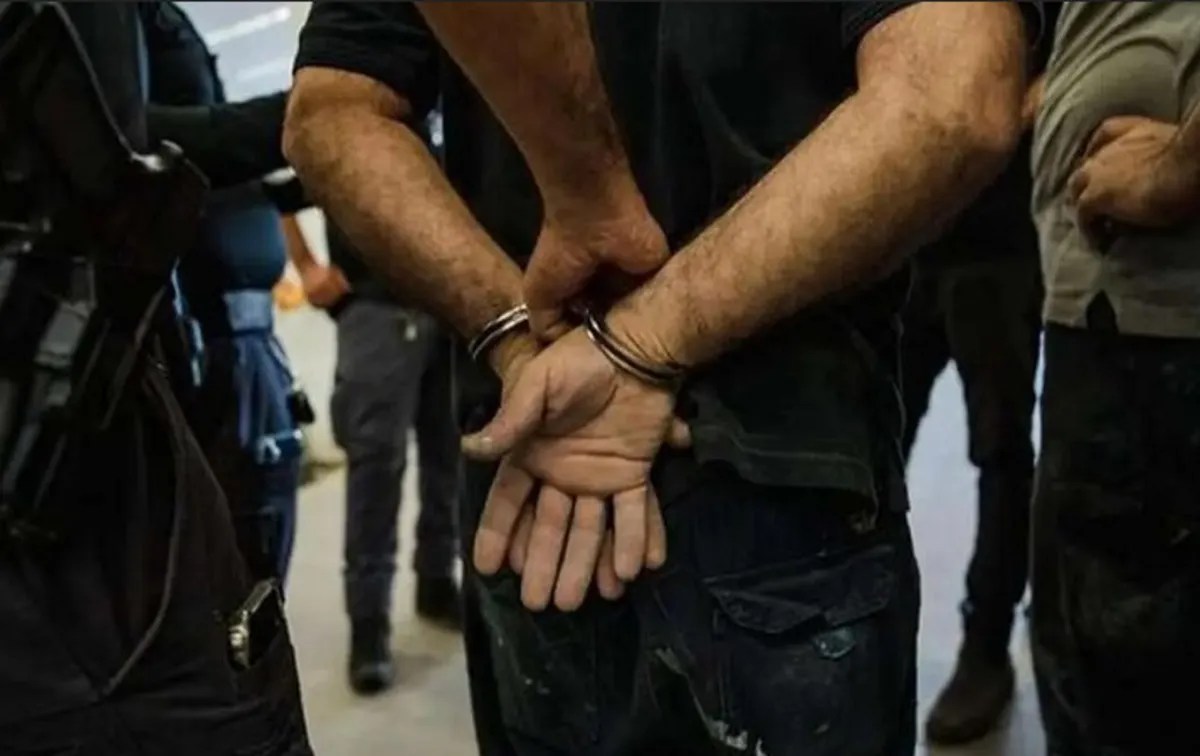
Imagine a reporter we will call Jean—a hypothetical composite of the many voices currently muffled by the conflict. Jean was picked up near Rutshuru. He wasn't a spy. He was a guy with a notebook and a cheap digital camera. He wanted to know why a specific village had been emptied of its inhabitants. When the soldiers took him, they didn't ask questions. They shoved him into the darkness of a rusted Maersk container and padlocked the door.
For the first hour, you scream. You believe someone will hear. You believe in the international treaties and the sanctity of the press. By the fourth hour, when the sweat has soaked through your shirt and the floor is slick with condensation, you stop screaming. You conserve breath. You realize that the world outside has moved on, and you are now just a ghost in a box.
The Invisible Stakes of the North Kivu Conflict
The war in eastern Congo is often framed as a "complex humanitarian crisis," a phrase so dry it practically invites the reader to look away. But the complexity is actually quite simple: greed and survival. The soil here is some of the richest on the planet, packed with the minerals that power the smartphone or laptop you are using to read this.
Because the stakes are so high—control over mines, transit routes, and borders—the truth is the most dangerous commodity available.
When rebels use containers to hold journalists, they are attacking the only mechanism left that connects the suffering of a Congolese farmer to the conscience of a consumer in London or New York. If there is no one to report the displacement, the displacement didn't happen. If there is no one to photograph the mass grave, the earth remains silent.
Statistics tell a part of the story, but they lack the weight of the metal. Since the resurgence of the M23 insurgency, the number of "red zones" for journalists has expanded. Local radio stations, which serve as the heartbeat of these communities, are being forced to broadcast rebel propaganda or face the container.
The rebels understand something that we often forget in the West: information is not just "content." It is a weapon. By locking up the messengers, they are disarming the public.
The Psychology of the Lock
Why containers?
Practicality plays a role. They are portable, nearly indestructible, and easy to find in a region that has been a crossroads of global trade—and its leftovers—for decades. But the psychological impact is the real objective. A traditional prison cell has bars. You can see the sky, or at least a patch of dirt. You can hear the guards.
A container is a void. It is designed to move cargo, not to sustain life. Being held in one is a form of dehumanization that strips away the prisoner’s identity as a human being and reclassifies them as an object, a piece of freight to be stored until it is no longer useful.
In these conditions, time becomes elastic. Without a watch or a window, the difference between a day and a week dissolves. Journalists who have survived such detentions speak of the "singing metal"—the way the wind creates a low, humming vibration against the steel that eventually begins to sound like voices. It is a slow-motion psychological assault.
The pressure on these reporters is immense. They are often local residents. They have families in the very towns the rebels occupy. When they are released—if they are released—they carry the heat of that box in their minds. Many stop writing. Some flee the country. A few, the ones with a stubbornness that borders on the divine, go back to work. But they never forget the sound of the padlock.
The Broken Shield
We often talk about "press freedom" as a lofty, abstract ideal, something debated in air-conditioned halls in Geneva. In the DRC, press freedom is a physical struggle for breath.
The international community's response has been a series of "deep concerns" and "calls for restraint." These are the linguistic equivalent of a shrug. While diplomats draft memos, the containers remain. The rebels operate with a sense of impunity because they know that the world’s attention span is short and its hunger for cheap cobalt is long.
There is a profound unfairness in the way we consume news from places like Goma or Sake. We expect the truth to be delivered to our screens, but we rarely consider the physical infrastructure of that truth. We don't think about the motorcycle fuel, the bribes paid at checkpoints, or the risk of the box.
The reality is that the "dry facts" of an advocacy group's report are actually a scream for help. When they say journalists are being held in "brutal conditions," they mean men and women are sitting in their own waste in 100-degree heat because they thought the world should know about a village being burned.
The Weight of the Notebook
If you were to walk through one of these rebel-held areas today, you might see a container sitting innocently by the side of a dirt road. It might be painted blue or red, the logo of a shipping giant faded by the sun. It looks like a relic of commerce.
But if you look closer, you might see the small scratches around the door frame. You might imagine the person inside, tracing the rivets with their fingernails to stay sane.
The story of the Congo is often told through the lens of its victims—the displaced, the hungry, the wounded. But the story of the journalists is the story of the light itself. When the light is put in a box, the darkness becomes total.
We are not just bystanders to this. Every time we ignore a report because it feels "too far away" or "too complicated," we add another lock to the door. The truth doesn't just exist; it has to be hauled out of the darkness by people willing to risk the heat.
Jean, if he exists, is still waiting for the door to open. He is leaning his head against the hot metal, listening for the sound of someone—anyone—who remembers he is there. The metal is thick, and the hills are vast, but the silence is the loudest thing in the valley.
The door eventually opens for some, but they emerge into a world that is quieter than the one they left. They find that while they were in the box, the stories they were trying to tell have been buried under new layers of dust and indifference. The container doesn't just hold a person; it holds the very possibility of change, locked away where no one can hear it rattle.
The sun continues to beat down on the hills of North Kivu. The metal expands and contracts. And inside the boxes, the air remains still.