The kitchen counter used to be a minefield.
At 3:00 PM, the quiet hum of the refrigerator called out like a beacon. It was not a physical need for fuel. It was an insistent, buzzing static in the brain—a low-grade emergency demanding immediate attention. For millions of people, living inside a body that constantly screams for food is a silent, exhausting full-time job. You bargain with yourself. You white-knuckle your way through the afternoon. You feel the crushing weight of shame when the willpower inevitably cracks, as it almost always does.
Then, something shifted in laboratories thousands of miles away, rippling outward into pharmacies, boardrooms, and living rooms across the globe.
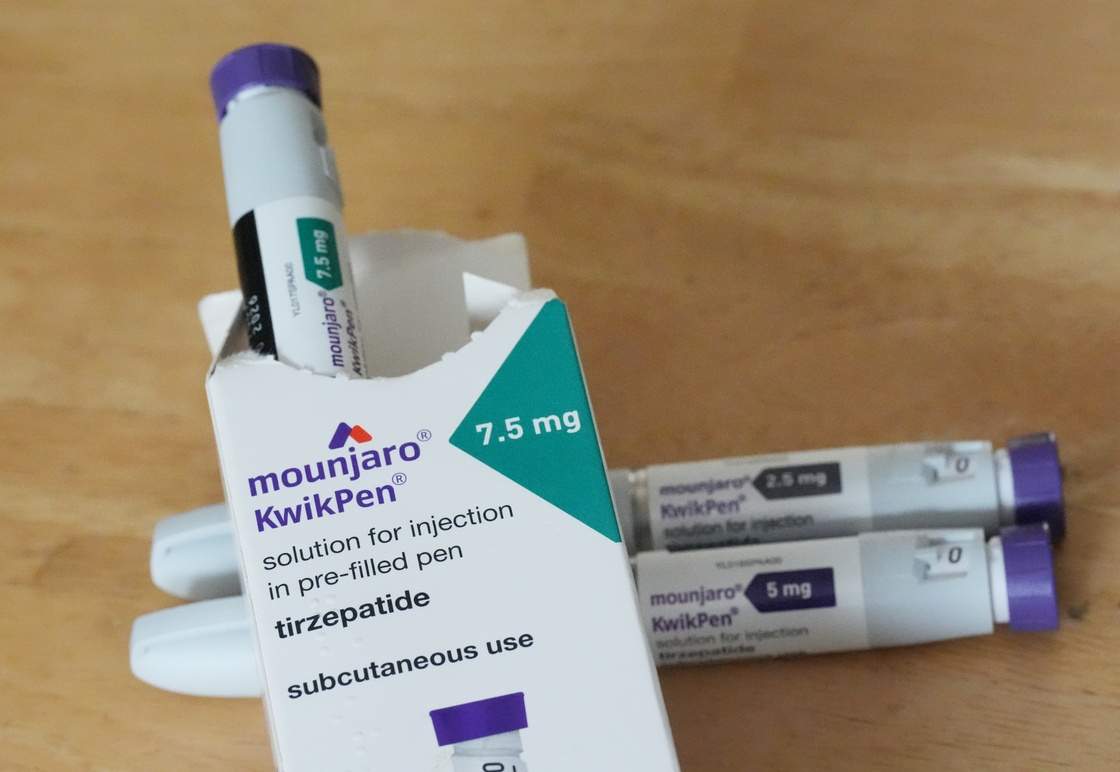
Step back for a moment. Look at the numbers. They are dizzying. Eli Lilly and Novo Nordisk, two pharmaceutical giants locked in a high-stakes commercial duel, are suddenly reporting financial surges that defy normal market gravity. Their quarterly sales figures read like telephone numbers. Billions of dollars are pouring in, driven almost entirely by a new class of medications known as GLP-1 receptor agonists. Drugs like Wegovy, Ozempic, Mounjaro, and Zepbound.
Wall Street calls it a boom. Investors call it a gold rush.
They are missing the human story entirely.
To understand why these companies are seeing unprecedented revenue growth, you have to look past the stock tickers and quarterly earnings reports. You have to look at the grocery carts, the restaurant tables, and the quiet sighs of relief from individuals who spent decades fighting their own biology.
The Biology of the Constant Noise
Imagine a radio left permanently tuned to a blaring, static-filled frequency. You cannot turn the dial. You cannot lower the volume. You just have to try to live your life while a screeching noise vibrates behind your eyes.
For decades, society told people struggling with weight that the solution was simple: turn down the volume yourself. Eat less. Move more. Exercise discipline.
It was a comforting lie because it made the problem easy to judge. If someone failed, it was a failure of character.
Science tells a radically different story. Our bodies possess ancient, deeply entrenched evolutionary survival mechanisms. When food was scarce, our ancestors needed strong hormonal signals to store fat and drive us to forage. The gut-brain axis—the communication network running between our digestive tract and our central nervous system—controls appetite with brutal efficiency. GLP-1, or glucagon-like peptide-1, is a natural hormone released in the gut after we eat. It whispers to the brain: We are full. We are safe. You can stop eating now.
In millions of people, that whisper was too faint to hear. The hormonal radio station was broken.
The new medications do not rely on sheer willpower. They amplify the natural whisper until it becomes a clear, steady voice. They slow down digestion, keeping food in the stomach longer, and they bind to receptors in the brain that regulate appetite and reward.
For the first time in their lives, many patients experience something shocking.
Silence.
When the Boardroom Meets the Kitchen Table
The financial success of Eli Lilly and Novo Nordisk is a direct reflection of this biological quiet. When a product solves a fundamental, agonizing daily struggle for a massive portion of the global population, demand outstrips supply in ways modern manufacturing has rarely seen.
Factories are running twenty-four hours a day. Delivery trucks are tracked like armored cars carrying bullion. Executives at both companies find themselves steering ships through uncharted economic waters, watching their market valuations swell past the GDPs of small nations. Eli Lilly’s market cap has climbed to staggering heights, fueled by the runaway success of its dual-action tirzepatide treatments. Novo Nordisk, the pioneer that first proved the viability of these compounds with semaglutide, has transformed Denmark’s national economy, single-handedly boosting the country’s GDP growth.
Yet, focusing solely on the corporate victory laps misses the profound societal transformation happening underneath.
Consider the restaurant industry. Wall Street analysts are nervously tracking shifts in food consumption patterns. Convenience store chains, snack manufacturers, and fast-food giants are quietly studying data to figure out why total grocery baskets are shrinking in households utilizing these treatments. When the biological drive for ultra-processed, hyper-palatable foods is muted, consumer habits change overnight. People buy fewer chips. They leave food on their plates.
This is not a temporary diet trend. This is a fundamental realignment of human consumption.
The Cost of the Miracle
Every profound medical breakthrough comes with a shadow.
These drugs are expensive. Out-of-pocket costs can easily eclipse a mortgage payment for families without comprehensive insurance coverage. This creates a bitter economic divide. On one side are individuals who can afford the monthly prescription, stepping into a life free from chronic food noise. On the other side are millions of people staring at a locked door, knowing the key exists but remaining entirely out of reach.
Supply shortages compound the anxiety. Patients who found stability suddenly find their local pharmacies out of stock, watching in real-time as their hard-won biological peace begins to fray while they wait weeks for a refill.
Side effects, too, are part of the ledger. Nausea, fatigue, gastrointestinal distress—these are not minor inconveniences for someone trying to function at a demanding job while adjusting to a completely rewired digestive system. The medical community is still learning the long-term effects of altering fundamental metabolic pathways. What happens after five years? Ten years? Twenty years?
We do not have all the answers yet. Honesty requires us to admit that we are writing the instruction manual while we read it.
The Shift in How We See Ourselves
Beyond the corporate balance sheets and the biological mechanics lies a cultural reckoning.
For generations, carrying excess weight carried a heavy social tax. It was blamed on laziness, lack of discipline, or moral failing. By reframing weight management as a complex interplay of hormones, genetics, and neurology, GLP-1 medications are slowly dismantling the cruel stigma that has plagued public health discourse for a century.
People are realizing that their bodies were not broken by choice.
A patient named Sarah, who spent thirty years cycling through every commercial diet on the market, described the sensation after her first month on treatment with striking clarity. She stood in front of her pantry, looked at a box of cookies, and felt nothing. No craving. No internal tug-of-war. No shame.
"It wasn't that I resisted the cookies," she said, her voice shaking slightly with the weight of the realization. "It was that I didn't even care they were there. For my whole life, I thought I was weak. Turns out, my alarm system was just stuck on high."
Stories like Sarah's are why the sales numbers are soaring. Companies do not create demand like this through marketing alone. Products that fundamentally alter the human experience sell themselves because the need is as old as humanity itself.
The pharmaceutical race between Eli Lilly and Novo Nordisk will continue to dominate financial news headlines for years to come. Patents will be contested, new formulations will enter clinical trials, and manufacturing plants will expand across continents.
Dust will settle on the quarterly reports. The stock prices will fluctuate.
But out in the world, millions of people are walking down grocery aisles, hearing the quiet inside their own minds for the very first time, and wondering who they might have been all along if the noise had never started.