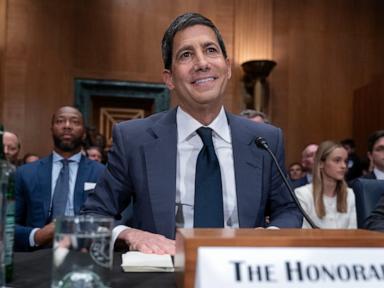
The Federal Reserve is currently navigating a dual-track transition where the inertia of existing monetary policy meets the acceleration of a regime change. Market participants are fixated on the immediate decision to hold interest rates steady, yet the true strategic inflection point lies in the handoff from Jerome Powell to Kevin Warsh. This is not a mere change in personnel; it represents a fundamental shift in the Fed’s reaction function, moving from a consensus-driven, data-lagged approach toward a more preemptive, rule-based framework. Understanding this transition requires deconstructing the Federal Open Market Committee (FOMC) through the lens of institutional credibility and the specific mechanics of "The Warsh Pivot."
The Policy Inertia Framework
The decision to maintain the federal funds rate at its current restrictive level is dictated by three structural constraints that Powell has prioritized during his tenure.
- The Inflation Gap Persistence: Core PCE (Personal Consumption Expenditures) remains stubbornly decoupled from the 2% target. Until the spread between the current rate and the target narrows to a statistically insignificant margin, the cost of an "early cut" (a Type I error in statistical terms) outweighs the risk of over-tightening.
- Labor Market Elasticity: While hiring has cooled, the lack of a systemic spike in unemployment provides the Fed with a "policy cushion." As long as the labor market does not hit a non-linear breaking point, the incentive to lower rates remains low.
- The Shadow of the 1970s: The institutional memory of Arthur Burns—who cut rates prematurely only to see inflation roar back—serves as a psychological ceiling on any dovish impulses within the current committee.
Powell’s final acts as Chair are focused on "landing the plane" without a terminal bounce. His strategy has been characterized by high transparency and slow-twitch muscle fiber. By signaling a hold now, he preserves the optionality for his successor while attempting to cement a legacy of price stability.
The Warsh Doctrine Quantitative vs. Qualitative Policy
Kevin Warsh represents a departure from the "Powell Era" of qualitative signaling. Warsh has historically advocated for a more disciplined, market-based approach to central banking. The "Warsh Doctrine" can be broken down into two primary components:
The Market Signal Feedback Loop
Unlike the current Fed, which often treats market volatility as a nuisance to be managed through "forward guidance," Warsh views market prices as the most accurate real-time data points available. Under his leadership, we should anticipate a Fed that reacts more sharply to credit spreads and inflation break-evens rather than lagging indicators like the previous month's jobs report. This shift reduces the "time-to-policy" lag, making the Fed more agile but potentially more volatile in the short term.
The Return to Rule-Based Policy
There is a high probability that a Warsh-led Fed will move closer to a modified Taylor Rule. This is a formula-based approach where:
$$i_t = r_t^* + \pi_t + 0.5(\pi_t - \pi^*) + 0.5(y_t - \bar{y}_t)$$
In this equation, $i_t$ is the nominal funds rate, $r_t^$ is the neutral real interest rate, $\pi_t$ is the inflation rate, and $y_t - \bar{y}_t$ is the output gap. While the Fed will never be purely algorithmic, Warsh’s preference for "sound money" suggests a higher $r_t^$ (the neutral rate) than what the market has grown accustomed to over the last decade.
The Liquidity Trap of Transition
The period between the announcement of a successor and the official handover creates a "lame duck" liquidity trap. Banks and institutional investors are currently recalibrating their risk models based on a new set of assumptions. This creates a friction point in the transmission of monetary policy.
The primary risk during this transition is the Expectation Mismatch.
If the market expects Warsh to be significantly more hawkish (to "prove" his inflation-fighting credentials), long-term yields will rise regardless of what the FOMC does in its current meeting. This tightening of financial conditions happens outside the Fed’s direct control, effectively doing the Fed's work for it—but with the risk of an uncoordinated over-correction.
The secondary risk is Institutional Brain Drain. A shift toward a Warsh-style leadership often results in a turnover of the Fed's research staff and regional presidents who were aligned with the previous regime's philosophy. This internal churn can lead to a temporary degradation in the quality of the Fed’s internal forecasting models.
Re-evaluating the Neutral Rate (R-Star)
One of the most significant analytical gaps in current reporting is the failure to define the shift in the "neutral rate." Powell has operated under the assumption that the neutral rate—the rate at which the economy neither expands nor contracts—is relatively low.
The Warsh entry suggests a reassessment of this variable. If the structural neutral rate has risen due to increased government spending and a deglobalizing supply chain, then the current "high" rates are actually less restrictive than they appear.
The math of the transition is clear:
- Powell’s Fed: Views 5%+ rates as "deeply restrictive."
- Warsh’s Fed: May view 5%+ rates as "modestly restrictive" or even "neutral."
This difference in perception dictates the entire path of the yield curve for 2026 and beyond. If Warsh believes the neutral rate is higher, he will keep rates elevated for longer than the market currently expects, even as inflation trends toward 2%.
The Geopolitical Dimension of Federal Reserve Leadership
The Federal Reserve does not operate in a vacuum. The transition to Warsh is also a signal to global markets regarding the strength of the US Dollar. A "hard money" Chair serves as a deterrent to currency debasement and provides a solid floor for the Greenback.
The relationship between the Fed Chair and the Treasury Department is the most critical variable for the 2026 fiscal year. While the Fed is technically independent, the coordination between monetary policy (interest rates) and fiscal policy (government spending) is what determines the actual inflation outcome. A Warsh-led Fed is likely to be more vocal about the inflationary risks of deficit spending, creating a tension between the central bank and the executive branch that has been largely absent during the Powell years.
This tension is not a bug; it is a feature of a robust checks-and-balances system. However, for investors, it means that "The Fed Put"—the idea that the Fed will always step in to save the market—is effectively dead.
Strategic Execution for a Regime Shift
The transition from Powell to Warsh necessitates a complete overhaul of portfolio sensitivity. The era of "lower for longer" and "gradualism" is concluding.
The first movement is to reassess duration risk. If the new regime prioritizes market signals over lagging data, the Fed may be faster to hike if inflation blips, and slower to cut if growth merely softens. This creates a "higher for longer" environment that is structural, not cyclical.
The second movement is to monitor credit spread widening. As the Fed moves away from its role as a volatility dampener, the market will have to find its own price for risk. This will lead to a widening of the spread between Treasury bonds and corporate debt, particularly in the high-yield sector.
The final movement is to position for a "Volatile Normal." The Warsh Fed will likely allow for more two-way risk in interest rates. The predictable, "telegraphed" moves of the Powell era will be replaced by a more reactive, high-conviction leadership style. Investors must transition from a mindset of "predicting the Fed" to "reacting to the market," as that is exactly what the new Chair will be doing.
The immediate hold on rates is the final chapter of a specific school of monetary thought. The real story is the opening of the next book, where the rules of the game are being rewritten to favor capital discipline over liquidity injections.