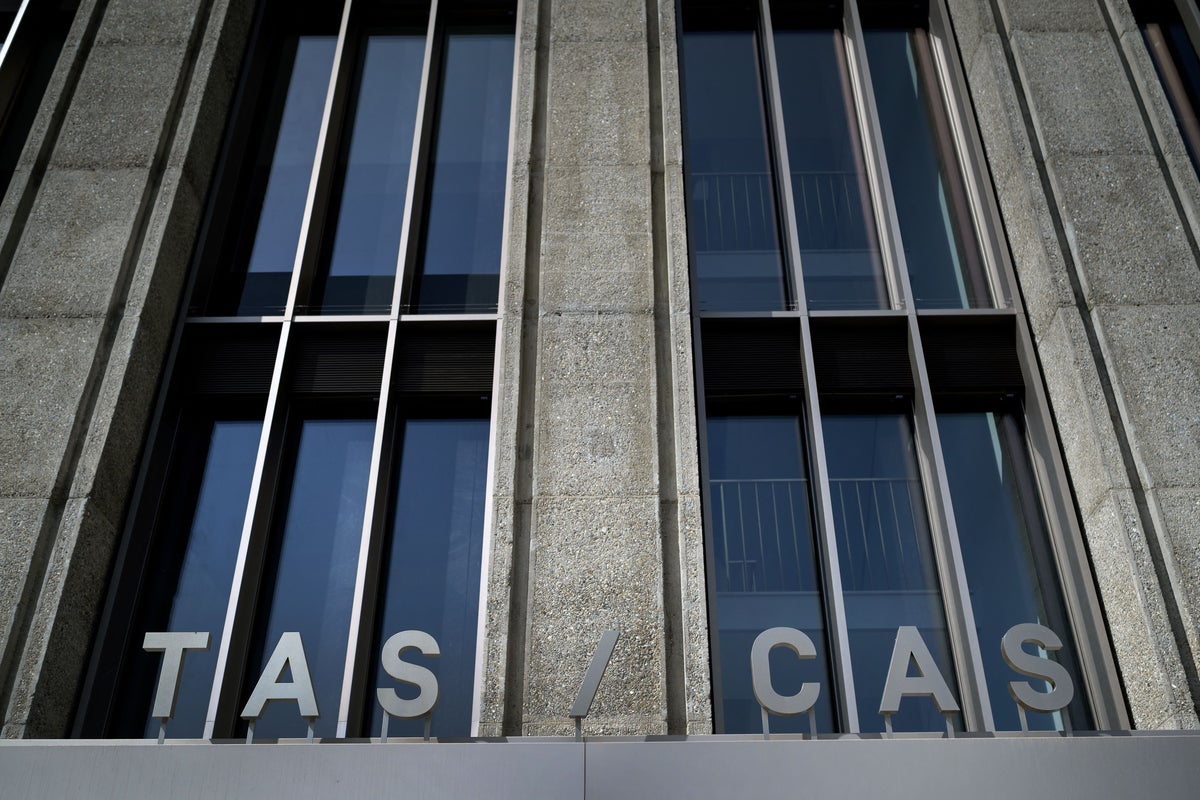
The legal challenge mounted by the Russian Athletics Federation against World Athletics at the Court of Arbitration for Sport (CAS) represents a fundamental clash between state sovereignty and the regulatory autonomy of international sports governing bodies. Far from a simple dispute over competitive eligibility, this case tests the limits of private law frameworks to enforce geopolitical sanctions. The core tension lies in whether an international federation can indefinitely exclude a national member based on external geopolitical actions without violating its own constitution or international anti-discrimination statutes.
Understanding the trajectory of this appeal requires deconstructing the regulatory mechanisms used by World Athletics and analyzing the legal standards applied by CAS in similar historical disputes. If you enjoyed this post, you might want to check out: this related article.
The Jurisdictional Framework of Global Sports Governance
International sports federations operate as private associations under Swiss law. This legal status grants them immense autonomy to establish rules, criteria for membership, and disciplinary frameworks. The validity of any sanction imposed by these bodies depends on adherence to three core legal principles:
- The Principle of Association Autonomy: Swiss association law grants governing bodies the right to determine who may participate in their activities, provided the rules are applied consistently and do not violate mandatory public policy (ordre public).
- The Doctrine of Proportionality: Any restrictive measure or disciplinary action must be necessary and suitable to achieve a legitimate objective. The restriction must be the least intrusive means available to protect the integrity of the sport.
- The Prohibition of Arbitrary Discrimination: Sanctions cannot be based solely on nationality unless there is a direct, demonstrable link between that nationality and a threat to the sport’s core mission, such as safety, neutrality, or fair competition.
The Russian appeal seeks to demonstrate that World Athletics exceeded its regulatory mandate by shifting from an anti-doping compliance framework—which governed the previous suspension from 2015 to early 2023—to a geopolitical exclusion framework following the outbreak of the conflict in Ukraine. For another angle on this event, check out the recent coverage from The Athletic.
The Dual Track Calculus of World Athletics Sanctions
World Athletics justified its blanket ban on Russian and Belarusian athletes by citing two primary pillars: the protection of competitive integrity and the guarantee of participant security. Examining the underlying mechanisms reveals how these justifications function under legal scrutiny.
The Integrity Pillar
The integrity argument posits that allowing athletes from a nation engaged in an active military conflict to compete compromises the political neutrality of international sport. World Athletics argues that sport cannot exist in a vacuum, and the presence of state-sponsored symbols or athletes associated with a military aggressor disrupts the peaceful environment required for international competition.
The vulnerability in this argument lies in the inconsistency of application. The international sports system features multiple ongoing geopolitical conflicts, yet blanket exclusions are rarely applied uniformly across all global flashpoints. To survive judicial review, World Athletics must prove that this specific conflict creates a unique, systemic threat to the global athletics framework that other conflicts do not.
The Security Pillar
The security argument is more pragmatic. It focuses on the logistical and physical risks associated with hosting events featuring Russian athletes. This includes potential boycotts by other nations, visa denials by host governments, public protests, and threats to the physical safety of the athletes themselves.
By framing the ban as a protective measure rather than a punitive one, World Athletics attempts to bypass the strict evidentiary standards required for disciplinary sanctions. Under Swiss law, a protective measure requires a lower burden of proof: the federation only needs to demonstrate a plausible risk to the orderly conduct of its events.
Legal Precedents and the Court of Arbitration for Sport Neutrality
The Court of Arbitration for Sport serves as the supreme court for global sport, and its decisions are governed by Swiss law. When reviewing appeals against federation bans, CAS panels traditionally defer to the technical and administrative expertise of the governing body, provided the decision-winning process was procedurally sound.
Historical precedents offer a blueprint for how the current appeal may be adjudicated:
- The 1992 Yugoslav Sanctions: Following United Nations Security Council Resolution 757, Yugoslav teams were banned from international sports. Crucially, individual athletes were permitted to compete as Independent Olympic Participants. World Athletics' refusal to grant a widespread "Neutral Athlete" pathway for this specific geopolitical ban marks a departure from this precedent, creating a significant point of contention in the appeal.
- The 2022 FIFA/UEFA Judgments: CAS upheld the suspension of Russian football clubs and national teams from FIFA and UEFA competitions. The panel ruled that the reactions of host nations and the refusal of other teams to play against Russia created an unmanageable logistical crisis. The court determined that the federations acted reasonably to ensure the continuity of their tournaments.
The structural prose of the FIFA ruling indicates that CAS prioritizes the functional survival of international competitions over individual athlete eligibility. If World Athletics can demonstrate that re-admitting Russian athletes would trigger widespread event cancellations or host-country visa blockages, CAS is highly likely to uphold the exclusion.
Institutional Risk and the Economic Realities of Federation Monopolies
The protracted exclusion of a major sporting power alters the economic and competitive dynamics of track and field. The suspension creates distinct operational distortions across the sporting ecosystem.
Talent Degradation and Competitive Inflation
The removal of an entire nation's elite athletic cohort artificially alters medal distribution and competitive depth. In specific disciplines where Russia historically held high performance density, such as high jump, pole vault, and race walking, the absence of these competitors lowers the absolute performance standard required to secure podium finishes. This creates a form of competitive inflation, where international titles are won against a depleted field, potentially diminishing the commercial value of the event.
Financial Asymmetry
Unlike commercial sports leagues, international track and field relies heavily on state-funded athletic programs to develop elite talent. By severing the pathway between domestic state funding and international commercial viability, the ban places an acute financial strain on the Russian domestic athletics ecosystem. The long-term implication is a structural degradation of training infrastructure and coaching expertise, which cannot easily be rehabilitated once sanctions are lifted.
Operational Playbook for National Governing Bodies Facing Indefinite Suspension
When a national sporting body is isolated from the global system, standard operational strategies fail. To preserve the integrity of its athletic pipeline during a prolonged legal appeal, a national federation must execute a structural pivot.
- Establish Parallel Competitive Circuits: The federation must replace international events with domestic or regional competitions that offer equivalent financial incentives to prevent athlete retirement. These circuits must replicate international anti-doping and timing standards to maintain performance validity.
- De-couple Elite Training from State Apparatus: To mitigate the institutional taint that drives international bans, the federation should transition elite athlete management to independent, privately funded clubs. This creates a legal and operational separation between the athlete and the sanctioned state structures, optimizing the chances of individual reinstatement via neutral status pathways if the blanket ban is modified.
- Litigate via Private Law Remedies: Beyond CAS, national governing bodies must explore antitrust and competition law challenges in specific national jurisdictions where events are hosted. If a federation can prove that an international ban constitutes an illegal restraint of trade or an abuse of a dominant market position under domestic economic laws, it can disrupt the enforcement of the ban on a country-by-country basis.
The outcome of the World Athletics appeal at CAS will define the jurisprudential boundary between geopolitical policy and private sports governance. A ruling in favor of World Athletics solidifies the right of international federations to use collective exclusion as a legitimate tool for risk management. Conversely, a ruling in favor of the Russian Athletics Federation will force a fundamental restructuring of how global sport manages international crises, requiring a shift away from collective national punishment toward strict, individualized eligibility criteria.