The execution of a death sentence via lethal injection is not merely a legal outcome; it is a highly complex, multi-variable logistical operation managed under severe institutional constraints. When the State of Alabama schedules a capital punishment deployment, it triggers a dual-track process involving state-level judicial mandates and correctional facility execution protocols. The stability of this operational framework relies on a delicate balance between legal compliance, chemical supply chain security, and physiological predictability. Disruptions in any of these three areas can stall the process, leading to significant administrative backlogs and constitutional challenges regarding execution methods.
To understand why capital execution schedules frequently slip or face sudden stays, one must analyze the systemic friction inherent in modern death penalty enforcement. This friction is not random. It is governed by predictable legal mechanisms, chemical scarcities, and institutional protocols that define the boundaries of state execution operations.
The Dual-Axis Vulnerability of Capital Procurement and Protocol
State correctional departments operate within a highly restricted procurement environment. The execution protocol itself can be broken down into an operational cost function where total risk is a product of legal vulnerability and chemical availability.
The first bottleneck is the chemical supply chain. The standard lethal injection protocol historically relied on a three-drug sequence: an ultra-short-acting barbiturate (such as sodium thiopental or pentobarbital) to induce unconsciousness, a paralytic agent (such as pancuronium bromide) to stop respiration, and potassium chloride to arrest cardiac activity.
[State Execution Protocol]
       │
       ├──► Drug Supply Chain (Sourcing restrictions, manufacturer bans)
       ├──► Judicial Review (Eighth Amendment challenges, stay motions)
       └──► Clinical Execution (Venous access, physiological variability)
This sequence faces extreme market pressure. Global pharmaceutical manufacturers have systematically banned the use of their products in capital punishment, citing reputational damage and corporate governance policies. Consequently, state departments of correction must navigate a constrained market, often turning to compounding pharmacies or alternative chemical configurations, such as midazolam-based mixtures.
The substitution of chemicals introduces the second bottleneck: immediate legal exposure under the Eighth Amendment, which prohibits cruel and unusual punishment. The operational risk increases with each chemical substitution because the state must demonstrate that the alternative method does not create an unconstitutional risk of severe pain compared to known alternatives. This creates a perpetual cycle of litigation that halts operations hours before a scheduled execution window opens.
The Operational Mechanics of Venous Access and Delivery Failures
The execution phase represents the highest concentration of tactical risk within the entire protocol. Data from past execution attempts across multiple jurisdictions indicate that the primary point of failure during a lethal injection is not chemical efficacy, but rather the establishment of intravenous (IV) access.
The protocol mandates the insertion of two peripheral IV lines. The physiological condition of the inmate introduces a significant variable that institutional frameworks often fail to account for adequately. Factors such as a history of intravenous drug use, diabetes, dehydration, or extreme anxiety causing vasoconstriction can severely compromise peripheral vein integrity.
When a execution team fails to secure peripheral access within a designated timeframe, the operation faces a compounding bottleneck. The protocol may allow for a central line placement, which requires inserting a catheter into a major vein in the neck, chest, or groin. However, a central line insertion requires specialized clinical skills that standard correctional personnel may lack, creating a profound operational contradiction:
- The state requires clinical precision to execute the protocol without violating constitutional standards.
- Major medical associations (such as the American Medical Association) explicitly prohibit members from participating in executions, forcing states to rely on personnel with lower tier clinical training.
This gap between required technical competence and available labor quality is the primary cause of aborted execution attempts. When an execution window expires due to prolonged, unsuccessful attempts to establish venous access, the state suffers significant sunk costs in administrative preparation, security deployment, and legal defense hours.
The Transition to Hypoxia Alternatives as a Risk-Mitigation Strategy
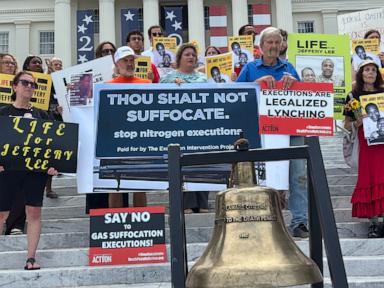
Faced with chemical scarcity and the physical complications of intravenous delivery, certain jurisdictions, including Alabama, have developed a secondary operational track: nitrogen hypoxia. This shift is a structural response designed to bypass the vulnerabilities of the lethal injection framework entirely.
Nitrogen hypoxia operates on a different physiological mechanism. Instead of introducing toxic chemicals into the bloodstream to disrupt cellular and cardiac function, it replaces oxygen in the respiratory tract with an inert gas, causing rapid asphyxiation. From an operational standpoint, this method eliminates the need for venous access, thereby removing the primary point of physical failure. It also bypasses the pharmaceutical supply chain, as industrial-grade nitrogen gas is widely available and not subject to the same corporate export bans as controlled substances.
However, substituting one protocol for another does not eliminate systemic risk; it shifts it to a new set of variables. The operational challenges of gas delivery systems include ensuring a hermetic seal on the delivery mask to prevent oxygen leakage, managing the risks to execution chamber staff from gas dissipation, and addressing novel legal challenges regarding the human experience of nitrogen inhalation. The legal framework surrounding nitrogen hypoxia is less mature than that of lethal injection, meaning that while physical execution risks decrease, near-term judicial delays typically increase as courts establish new precedents.
The Structural Logic of Judicial Delays
Judicial interventions in the hours leading up to an execution are often perceived as arbitrary, but they follow a strict legal logic determined by the hierarchy of state and federal courts. The litigation timeline converges on the expiration hour of the death warrant.
State Supreme Court (Issues Warrant)
       │
       ▼
Federal District Court (Assesses Protocol Constitutionality)
       │
       ▼
Circuit Court of Appeals (Reviews District Ruling / Grants or Lifts Stays)
       │
       ▼
United States Supreme Court (Final Arbiter on Constitutional Injunctions)
       ▲
       └─ [Execution Window Expiration Boundary]
The defense strategy relies on seeking a stay of execution based on new evidence, changes in the inmate's mental competency, or specific challenges to the state's execution cocktail. The state's counter-strategy focuses on sovereign finality, arguing that the inmate has exhausted all standard appeals and that delays cause irreparable harm to the administration of justice.
The systemic bottleneck occurs because federal courts must evaluate these highly technical, medical, and constitutional claims under extreme time constraints. If a lower federal court grants a stay to review a specific claim, the state must appeal to the Circuit Court or the United States Supreme Court to vacate the stay before the death warrant expires, usually at midnight. If the legal machinery does not resolve the dispute before the clock runs out, the execution is canceled by default, forcing the state to petition for a new execution date, restarts the entire administrative and legal cycle.
Strategic Realignment of State Execution Protocols
To stabilize the capital punishment framework and minimize administrative failures, state correctional authorities must move away from ad-hoc chemical sourcing and reactive litigation strategies. The operational model requires structural stabilization.
States must establish absolute clarity regarding their primary and secondary execution methods. Rather than defending a vulnerable lethal injection protocol subject to pharmaceutical boycotts and venous access failures, the logistical apparatus should shift toward standardized, non-clinical methods such as nitrogen hypoxia, provided the delivery systems can be proven mechanically reliable and legally defensible. This pivot neutralizes the pharmaceutical supply chain bottleneck and removes the requirement for specialized clinical labor inside the execution chamber.
Furthermore, state legislatures must reform the warrant issuance process to decouple execution dates from arbitrary 24-hour windows. Expanding the execution window to a multi-day period would prevent late-stage legal maneuvers from running out the clock based purely on temporal expiration. This change would shift the leverage back to institutional administrators, ensuring that executions are executed based on operational readiness and protocol compliance rather than midnight deadlines. Only by removing clinical dependencies and updating archaic statutory timelines can the state execute its legal mandates with predictable, repeatable efficiency.