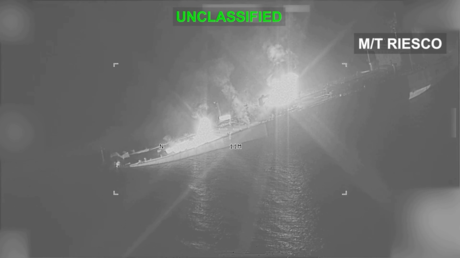
The escalation of naval hostilities in the Persian Gulf, characterized by the systematic targeting of Iranian petroleum carriers by United States forces, exposes the fragile mechanics of global energy logistics. When state actors transition from economic sanctions enforcement to kinetic interdiction—destroying commercial shipping assets in the Gulf of Oman and near Kharg Island—the primary variable shifts from diplomatic signaling to physical asset deprivation. Understanding this dynamic requires examining the structural relationship between maritime throughput, asymmetric retaliation loops, and the elasticity of global crude benchmarks.
The Tripartite Cost Function of Maritime Interdiction
Operating a naval blockade coupled with active kinetic strikes against commercial shipping introduces three distinct economic burdens: asset replacement friction, insurance risk premiums, and retaliatory escalation costs.
Kinetic Strike -> Hull Destruction -> Insurance Spike -> Spot Crude Inflation
When crude carriers are designated as legitimate targets following provocations against coalition warships, the immediate financial calculation alters.
- Asset Deprivation: Commercial oil tankers are capital-intensive, highly specialized vessels. Sinking or disabling hulls removes vital transport capacity from state-backed export networks, forcing sanctioned entities to rely on opaque shadow fleets.
- Insurance Revaluation: Underwriters instantly reprice regional transit risk. Every reported strike in the Strait of Hormuz or the Gulf of Oman feeds directly into hull and machinery war-risk rates, driving operational costs upward for any vessel daring to navigate regional waters.
- Retaliatory Asymmetry: Kinetic interdiction invites counter-surface action, ranging from ballistic missile volleys targeting regional military installations to proxy disruptions of adjacent infrastructure.
The strategic objective of targeting commercial oil transit is not merely the destruction of cargo, but the systematic raising of transaction costs until export volume drops to zero.
The Mechanics of Energy Price Transmission
Crude oil pricing relies heavily on marginal barrel availability and perceived supply continuity through critical chokepoints like the Strait of Hormuz. When kinetic operations remove multiple tankers from circulation in a single operational window, physical supply chains experience an immediate bottleneck.
Financial markets price in this friction instantly, pushing Brent crude past key psychological thresholds. The transmission mechanism operates through three distinct phases:
- Physical Disruption: The removal of carrier capacity halts the physical transfer of barrels from primary loading terminals such as Kharg Island to international buyers.
- Behavioral Withholding: Independent operators and regional crews abandon vessels or refuse port calls out of fear of collateral damage, compounding the structural shortage.
- Futures Speculation: Traders factor in the probability of a protracted campaign, extending risk curves deep into future delivery months and keeping retail energy prices elevated despite assertions of imminent military victory.
Attempting to lower domestic fuel costs while simultaneously pursuing a campaign that restricts regional supply creates an inherent macroeconomic contradiction. Energy pricing is global and integrated; removing supply from one sector of the network reverberates across all refined product markets.
Strategic Constraints and Operational Horizons
A prolonged naval interdiction strategy operates under strict diminishing returns. While tactical strikes degrade the operational capacity of adversary export networks, they also strain regional air-defense inventories, missile interceptor stockpiles, and allied tolerance for sustained economic volatility.
The operational reality of maintaining a multi-month blockade involves heavy logistical overhead. Naval assets must continuously patrol contested zones, defend against low-cost asymmetric threats like anti-ship ballistic missiles and drones, and absorb the financial shock of elevated global commodity prices. As deployment timelines stretch across fiscal quarters, the risk profile shifts from a short-term coercive shock to a structural drag on industrial economies.
The definitive strategic play requires balancing the kinetic suppression of adversarial revenue streams against the systemic risk of prolonged energy market instability. If the campaign fails to force a rapid capitulation, the enduring friction of higher baseline energy costs risks neutralizing the intended political gains.
Donald Trump expects 'lot more' Iranian tankers 'knocked out' provides context on the recent statements regarding the systematic targeting of petroleum carriers in the Gulf.