The ink was barely dry on the new maps when the pens were snatched away.
In a quiet neighborhood in Baton Rouge, a woman named Dorothy—let’s call her that, though she represents thousands like her—sat at her kitchen table with a local newspaper. For the first time in years, the lines on the map made sense to her. They didn't snake around her porch to include a neighbor three miles away while excluding her own backyard. For a brief window of time, the state of Louisiana had two Black-majority districts. It felt like a seat had finally been pulled out at a very crowded table.
Then came the gavel.
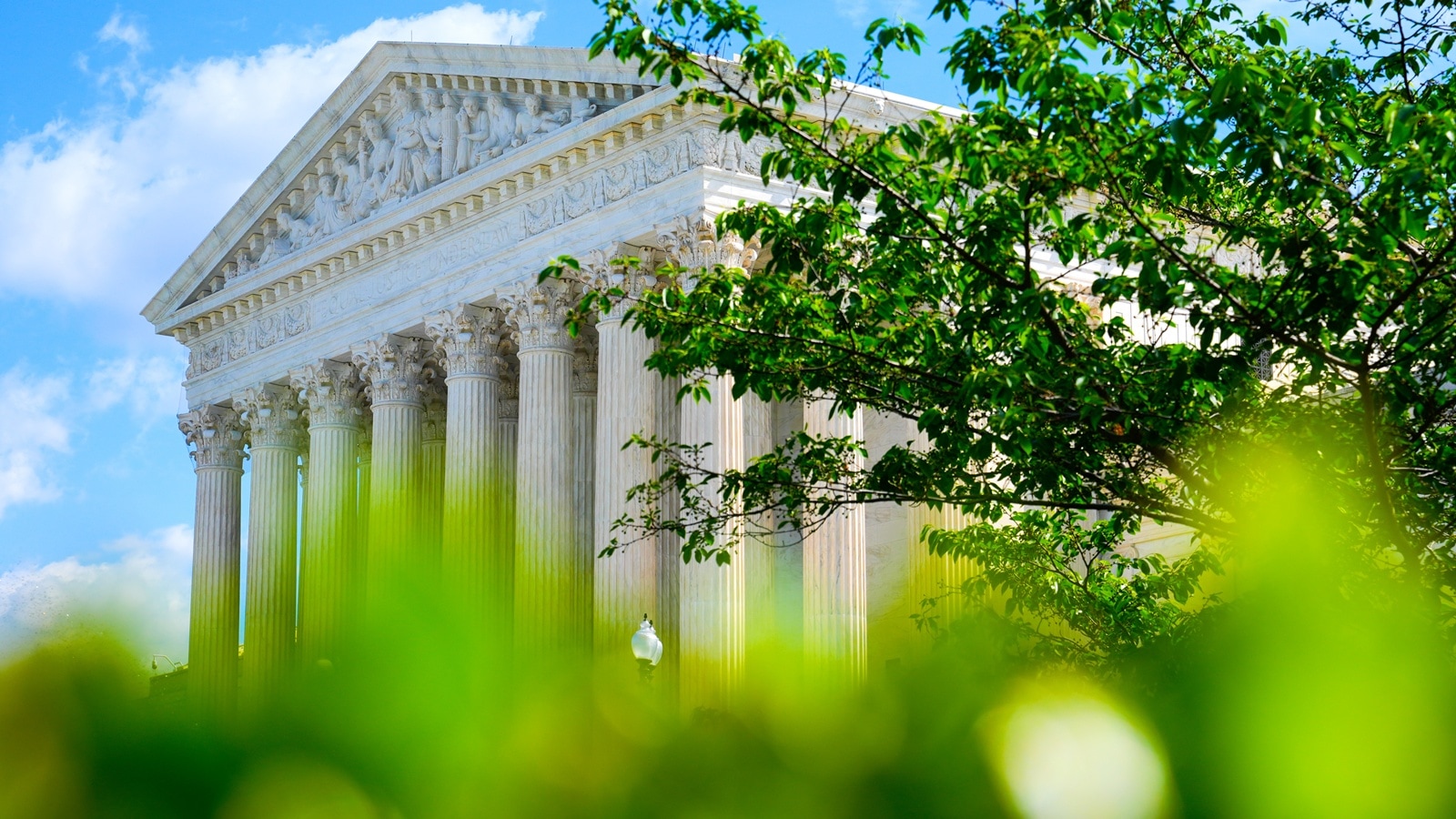
The U.S. Supreme Court recently issued an order that effectively wiped that second district off the board for the upcoming election cycle. It wasn't a long, poetic treatise on the nature of fairness. It was a brief, clinical intervention that paused a lower court’s order to use the new map. In an instant, the political weight of hundreds of thousands of people was shifted, recalibrated, and, in many eyes, diluted.
The Geometry of Power
Voter representation isn't about dots on a map. It is about the specific gravity of a community’s needs. When you group people together who share a history, an economy, and a set of struggles, their collective voice gains a resonance that cannot be ignored. When you split them up—a process often called "cracking"—you turn a shout into a series of disconnected whispers.
Louisiana’s population is roughly one-third Black. Simple math suggests that in a state with six congressional districts, two should reflect that reality. For decades, however, the state operated with only one. The second district was squeezed into a narrow, winding shape that stretched from New Orleans to Baton Rouge, packing as many Black voters as possible into a single "sacrificial" zone so they couldn't influence outcomes elsewhere.
Earlier this year, it seemed the tide had turned. Under intense legal pressure and a previous Supreme Court signal, the Louisiana legislature actually drew a second Black-majority district. It was a rare moment of bipartisan, if reluctant, pragmatism. The map, dubbed "S.B. 8," created a path for a second representative who might actually look like and understand the specific hurdles of the Mississippi Delta’s Black communities.
But the law is rarely a straight line.
A group of "non-African American" voters challenged the map, claiming it was an unconstitutional racial gerrymander. They argued that by prioritizing race to create the district, the state had violated the Equal Protection Clause. A lower court agreed with them, throwing the state into a tailspin just months before an election.
The Invisible Stakes of Timing
There is a concept in election law known as the Purcell principle. It is the idea that courts shouldn't change the rules of an election too close to the date because it creates "voter confusion." It sounds like a sensible, bureaucratic safety net.
In practice, it often acts as a guillotine for progress.
By freezing the status quo, the Supreme Court ensured that the 2024 elections would likely proceed under a map that the state’s own civil rights advocates call a relic of disenfranchisement. For Dorothy at her kitchen table, this isn't a debate about legal principles or "strict scrutiny." It is the lived experience of being told that her vote is a variable that can be solved for later.
"Later" is a dangerous word in the South.
Consider the ripple effect of a single congressional seat. It isn't just about a vote on the floor of the House in D.C. It is about who answers the phone when a local clinic loses its federal funding. It is about whose face is on the flyer for a town hall about rising flood insurance rates. It is about the psychological contract between a citizen and their government. When the map is drawn to ensure your candidate can never win, that contract feels like a scam.
A Tug of War with No Center
The legal battle over Louisiana is part of a much larger, more exhausting tug-of-war. On one side is the Voting Rights Act of 1965, a piece of legislation written in the blood of activists who marched across bridges and faced down fire hoses. Its goal was simple: to ensure that minority groups have an equal opportunity to elect candidates of their choice.
On the other side is a growing judicial philosophy that believes the best way to end racial discrimination is to stop talking about race altogether. This "colorblind" approach sounds noble in a vacuum, but it ignores the heavy, lingering scent of history. You cannot fix a house with a tilted foundation by pretending the ground is level.
The challengers of the two-district map argue that the state went too far, that the new district was "predominantly" motivated by race. They point to the jagged edges of the district lines as evidence of a "segregated" political system.
But the defenders of the map ask a stinging question: If race was used to exclude these voters for a century, why is it only a problem when race is used to include them?
The Human Cost of the Pause Button
While the lawyers trade barbs about "standard of review" and "reapportionment," the reality on the ground is one of profound exhaustion. Organizing a community to vote takes months of grueling, unglamorous work. It involves door-knocking, explaining complex ballot measures, and convincing people that their participation actually matters.
When the maps change every six months, that work becomes impossible.
Imagine trying to run a race where the finish line moves every time you get within a mile of it. Eventually, you stop running. You sit down on the curb. You decide the race is rigged. This is the true "voter confusion" that the courts claim to fear, yet their own vacillation is the primary cause of it.
The Supreme Court’s decision to block the new map isn't a final ruling on the merits of the case. It is a "stay." It is a pause. But in the world of politics, a pause is often as good as a defeat. By the time the legal dust settles, the election will be over. The representatives will be sworn in. The policies that affect Dorothy’s healthcare, her grandson’s school, and the air quality in her neighborhood will be set in stone by people she didn't have a fair chance to choose.
The Weight of the Gavel
We often talk about the Supreme Court as a distant, ethereal body—nine people in robes debating the ghosts of the Founding Fathers. But their hands are on the levers of the most intimate parts of American life. They are the cartographers of our destiny.
In Louisiana, the map currently looks like a jagged puzzle with a piece missing.
The struggle isn't merely over a seat in Congress. It is a struggle over the definition of a "majority." If a group of people makes up a third of the state but is prevented from exerting a third of the influence, what does the word "democracy" actually mean?
The silence coming from the highest court in the land is loud. It speaks of a preference for the "order" of the past over the "chaos" of a more representative future. It suggests that the convenience of an election calendar outweighs the fundamental right of a citizen to be seen.
As the sun sets over the humid stretches of the 6th District, the maps remain contested, the lines remains blurred, and the voices remain waiting. The tragedy isn't that the law is complex. The tragedy is that for some, the law is a wall that keeps getting taller every time they try to climb it.
The ink is dry now, but the map is a ghost.