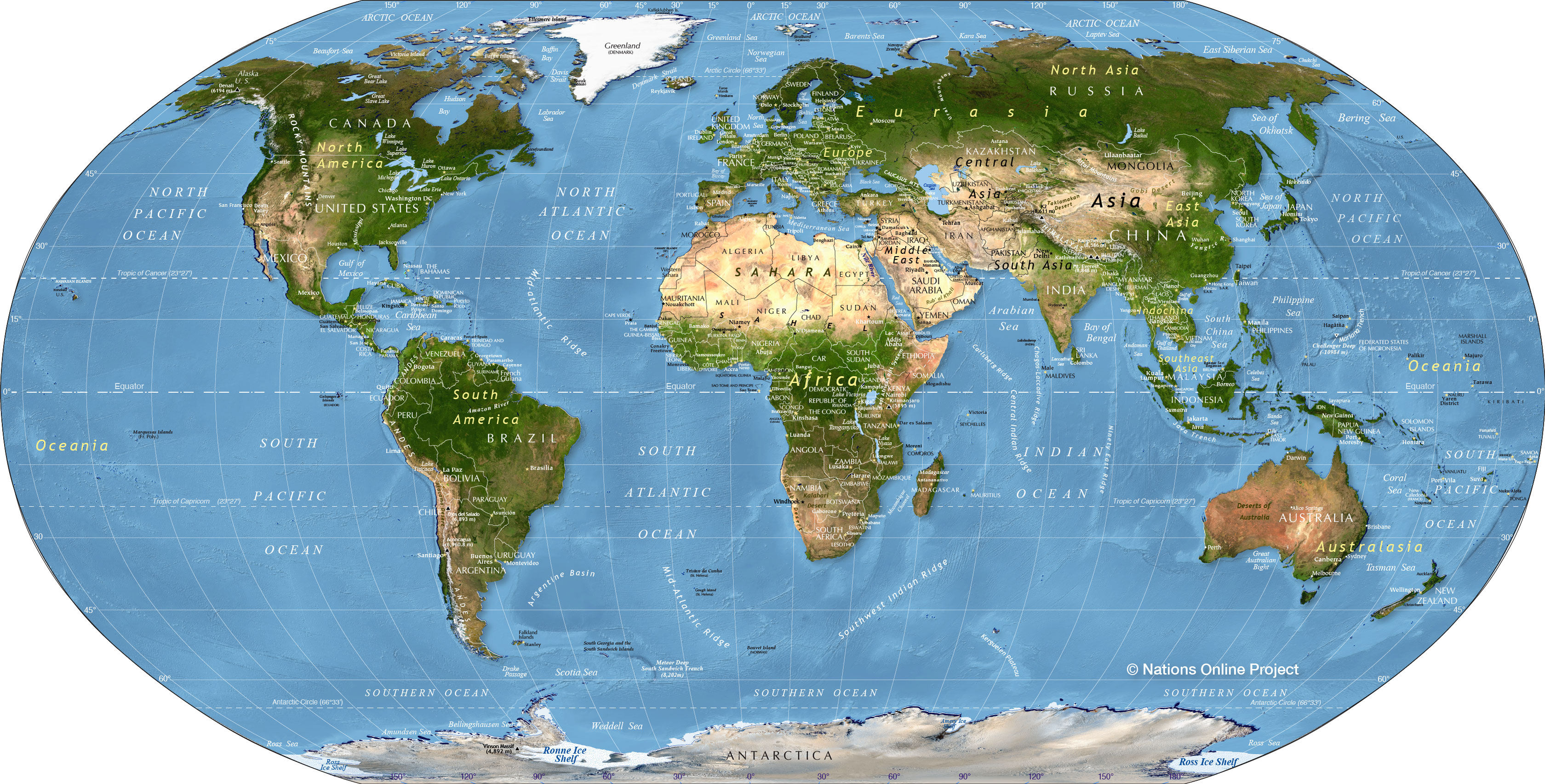
A light drizzle usually blurs the Tokyo skyline by late evening, softening the harsh neon of Roppongi into bleeding smears of red and blue. From a high-floor briefing room in the Ministry of Foreign Affairs, the view looks less like a postcard and more like a high-stakes chessboard. Maps lie flat on heavy oak tables. They are not the colorful, political maps found in school geography textbooks. These charts track deep-water shipping lanes, underwater fiber-optic cables, and the shifting density of maritime patrols.
When Japanese Foreign Press Secretary Kitamura Toshihiro stands before a microphone, his phrasing carries the practiced, deliberate weight of a career diplomat. He speaks of frameworks. He uses words like indispensable.
To the casual observer scrolling through a news feed, the official statements read like a standard bureaucratic exercise in regional cooperation. The headlines state a dry fact: Japan views India as an irreplaceable pillar of the Quadrilateral Security Dialogue, or the Quad.
But diplomats rarely speak just to state the obvious. Every carefully chosen syllable is a response to an invisible, simmering tension that stretches across thousands of miles of open ocean. To understand why a diplomat in Tokyo spends his evening emphasizing a bond with New Delhi, you have to look past the press releases. You have to look at the water.
The Weight of the Sea
Consider a container ship captain navigating the Malacca Strait.
He is tired. The air inside the bridge smells of stale coffee and the faint, metallic tang of radar equipment. Underneath his boots, two hundred thousand tons of steel thrum with the vibration of a massive diesel engine. His cargo holds carry microprocessors from Taiwan, heavy machinery from Nagoya, and raw minerals bound for European factories.
If that narrow strip of water closes, or if a hostile power decides to restrict who passes through it, the captain does not just take a detour. A detour means burning millions of gallons of fuel. It means store shelves emptying in London, factory lines freezing in Stuttgart, and energy prices spiking overnight in Mumbai.
This is the true heartbeat of the Indo-Pacific. It is not an abstract geopolitical concept. It is the fragile, physical conveyor belt of human survival.
For decades, the nations surrounding these waters operated on a simple assumption: the oceans would remain open, neutral, and predictable. That assumption is gone. In its place is a growing anxiety. One large nation in the region has spent the last decade building artificial islands, turning coral reefs into concrete runways, and asserting ownership over waters that international law declares free to all.
When Japan looks out across the western Pacific, it sees its supply lines vulnerable to a single, decisive squeeze. Tokyo remembers history. A island nation without natural resources depends entirely on the freedom of the waves. If the sea lanes choke, the country starves.
The Delhi Connection
Now, shift the perspective five thousand kilometers to the west.
New Delhi in the peak of summer is a furnace. Dust hangs thick over the government buildings of Raisina Hill, where analysts stare at different maps of the exact same ocean. For a long time, India’s strategic focus was firmly rooted in the dirt. It watched its northern mountainous borders with a mixture of vigilance and historical grievance.
The sea was a secondary thought.
That changed when Chinese submarines began docking in Sri Lankan ports and commercial maritime hubs sprang up along the rim of the Indian Ocean—a pattern security analysts call the string of pearls. Suddenly, India realized it could be outflanked not just on land, but from the water.
This shared vulnerability is what transformed the Quad from a tentative discussion group into a permanent reality.
When Kitamura Toshihiro calls India an indispensable partner, he is acknowledging a geographic reality. Japan holds the northern flank of this vast maritime theater. India commands the center and the south. Without India, the Quad is a table missing two of its legs. It becomes a Western-centric alliance trying to project power into an Asian ocean. With India, it becomes an indigenous, inescapable network of democratic heavyweights.
Beyond the Gray Hulls
It is easy to misinterpret this relationship as a war pact. The mind jumps naturally to images of destroyers sailing in formation, radar screens tracking incoming threats, and joint military exercises in the Bay of Bengal.
Military deterrence is part of the equation, certainly. But focusing exclusively on warships misses the entire point of modern statecraft.
The real struggle is happening in quiet, unglamorous sectors. It is happening in the undersea cable networks that carry ninety-nine percent of global internet traffic. If an adversary controls the companies that lay these cables, they control the flow of human knowledge and digital wealth.
It is happening in the development of critical technologies. Think about semiconductors. The microscopic silicon wafers that power everything from your smartphone to the braking system of your car are vulnerable to the same supply chain shocks as maritime trade.
The partnership between Tokyo and New Delhi is designed to build an alternative infrastructure. It is an agreement to ensure that when a developing nation in Southeast Asia or East Africa needs a new deep-water port, a 5G data network, or a fleet of clean-energy public buses, they do not have to sign away their sovereignty to get them.
The Friction of Reality
Let us be completely honest, because diplomacy often hides friction behind a veneer of total agreement.
This partnership is not seamless. It is not an effortless alignment of identical minds.
Japan is a treaty ally of the United States, deeply integrated into the Western security architecture since the end of the Second World War. India is fiercely independent. It prides itself on strategic autonomy, a legacy of the Non-Aligned Movement that refuses to bind the country to any single foreign superpower. India still buys military hardware from Russia. It still maintains its own distinct diplomatic relationships that occasionally cause raised eyebrows in Washington or Tokyo.
There are moments when the partners frustrate each other.
During meetings in quiet conference rooms, American negotiators might push for sharper, more confrontational language regarding territorial disputes. The Indian representatives often counter with a more deliberate, cautious approach, preferring to protect their long land border from sudden escalations.
But these differences do not break the bond. They strengthen it.
The very fact that India is not a formal treaty ally gives the Quad its unique legitimacy. It proves that this cooperative effort is not about American hegemony or Western encirclement. It is about a collective, regional consensus that no single nation should dominate the global commons.
The Quiet Architecture of Peace
As the briefing in Tokyo concludes, the journalists pack away their audio recorders. The press secretary steps down from the podium, his public duty finished for the night. The official statements will be archived, summarized in policy briefs, and largely forgotten by the public by tomorrow morning.
But the work continues.
Somewhere in the Pacific, a Japanese maritime surveillance aircraft dips its wing, scanning the gray water below for unregistered vessels. In New Delhi, a tech policy analyst drafts a proposal for a joint satellite tracking system to monitor illegal fishing fleets in the Indian Ocean.
These actions do not make the evening news. They lack the drama of a geopolitical crisis or the theatrical flair of a summit handshake. Yet, they are the bricks and mortar of a quiet architecture designed to keep the world stable.
The stakes are nothing less than the preservation of an international order that allows a merchant ship to sail from one side of the planet to the other without asking permission from a regional bully. It is the quiet, daily defense of a system that treats the oceans not as the property of the strongest navy, but as a shared highway for all humanity.
The mapmakers will keep drawing their lines, tracking the ships, and measuring the depths. They know that peace is never a natural state of affairs. It is something that must be built, defended, and articulated, one careful, indispensable partnership at a time.