History rarely announces itself with a trumpet blast. More often, it arrives in the quiet scrape of a chair on a tiled floor, the heavy silence of a security detail standing shoulder-to-shoulder in a hallway, and the surreal convergence of enemies who have spent lifetimes trying to erase one another.
We forget what proximity costs.
For months, the map of Gaza has been drawn in ash. Every satellite image shows a jagged scar where neighborhoods once stood, where children chased soccer balls through dusty alleys, where grandmothers brewed bitter coffee on battered tin stoves. The numbers roll across our screens with numbing regularity. Dead. Displaced. Destroyed. We read them over morning toast, feeling a brief, sickening lurch in our stomachs before scrolling down to sports scores or celebrity gossip. We have developed an armor of fatigue.
Consider what happens next: Behind closed doors, away from the screech of incoming rockets and the theatrical posturing of cable news pundits, the machinery of diplomacy grinds forward. Not through grand treaties signed on immaculate lawns, but through strange, improbable handshakes.
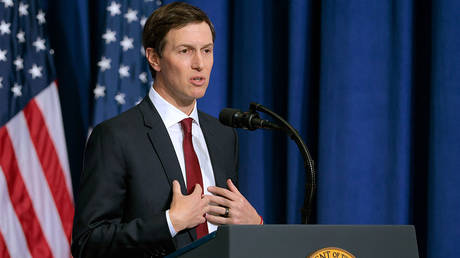
Jared Kushner sat across from a Hamas chief.
Read that sentence again. Let the spatial absurdity of it settle into your bones. This is not a buddy comedy. This is a collision of two utterly incompatible realities. On one side sits a representative of an American administration whose policies reshaped the diplomatic architecture of the Middle East through the Abraham Accords—a framework that deliberately bypassed the Palestinian issue to forge direct ties between Israel and the Arab Gulf states. On the other side sits a leader of an Islamist militant organization designated as a terrorist group by much of the world, governing a strip of land currently bleeding into the Mediterranean.
Why now? Why this room?
The answer lies in the terrifying exhaustion of the status quo. War has a way of burning away ideological pretenses until only raw survival remains. When the dust settles over rubble, the math of human misery becomes too heavy even for ideologues to carry.
To understand the weight of this meeting, you have to look past the tailored suits and the grim expressions. You have to imagine a mother in Khan Younis listening to the distant, rhythmic thud of artillery, wondering if tonight will be the night her ceiling caves in. Her world is not a geopolitical chess board. Her world is the next ten minutes. Her world is finding clean water for a coughing child.
When power brokers meet in secret to discuss a Gaza road map, they are trading in abstractions—demilitarization, governance, reconstruction funds, security guarantees. But every single bullet point on their dense legalistic agendas translates directly to flesh and bone. A misplaced comma in a peace proposal means a funeral in three weeks. A missed diplomatic window means another generation learns to hate the sound of sirens before they learn the alphabet.
Diplomacy is inherently tragic because it requires shaking hands with the architect of your neighbor's grief.
We live in an era that demands moral purity from a distance. We want our heroes pristine and our villains cartoonish. Real life refuses to cooperate. The men who design road maps out of hell are rarely angels. They are pragmatists cornered by catastrophe. They are calculating the exact price of a temporary truce against the cost of an endless war that consumes everyone within reach.
After stepping out of that clandestine meeting room, the itinerary shifts. The next stop is Jerusalem. Benjamin Netanyahu waits.
The geography of this trip is a physical manifestation of a tightrope walk. To move from a secret dialogue involving Hamas representatives straight to the office of Israel's prime minister is to inhabit the impossible middle of a zero-sum conflict. Every word must be weighed. Every concession offered in one room will be cross-examined, dissected, and weaponized in the next.
Trust is a luxury reserved for times of peace. Right now, there is only leverage.
Think of a structural engineer examining a skyscraper hit by an earthquake. They do not ask whether the concrete was poured ethically. They do not moralize about the architectural flaws of the past thirty years. They tap the remaining pillars with a small hammer, listening for the hollow echo of impending collapse. They want to know what can still hold weight.
That is what these backchannel conversations are. They are a desperate tapping on fractured pillars.
We often talk about peace as if it were a light switch—off for decades, then suddenly clicked on, bathing the room in warmth. It is nothing of the sort. Peace, when it happens at all, is a slow, agonizing accumulation of compromises that satisfy no one completely and infuriate extremists on all sides. It is built by people who despise each other sitting in rooms with stale air, arguing over border lines drawn on outdated maps while the people they claim to represent bleed outside.
The road map on the table is not a salvation. It is a leash on chaos.
And yet, in the grim calculus of modern conflict, a leash is sometimes the only thing standing between humanity and the abyss. When enemies start talking—even in secret, even with cold calculation behind their eyes—the guns occasionally lower by a fraction of an inch.
In that fraction lies the entire future.
The security guards outside the conference room shift their weight. Their radios crackle with static. Somewhere in the dark, a child falls asleep to the sound of the sea, completely unaware that a group of men just argued over whether she will grow up behind a checkpoint or beneath an open sky. The meeting ends. The doors open. The participants walk out into the harsh light, stepping back into a world that remains broken, waiting to see if anything has actually changed.