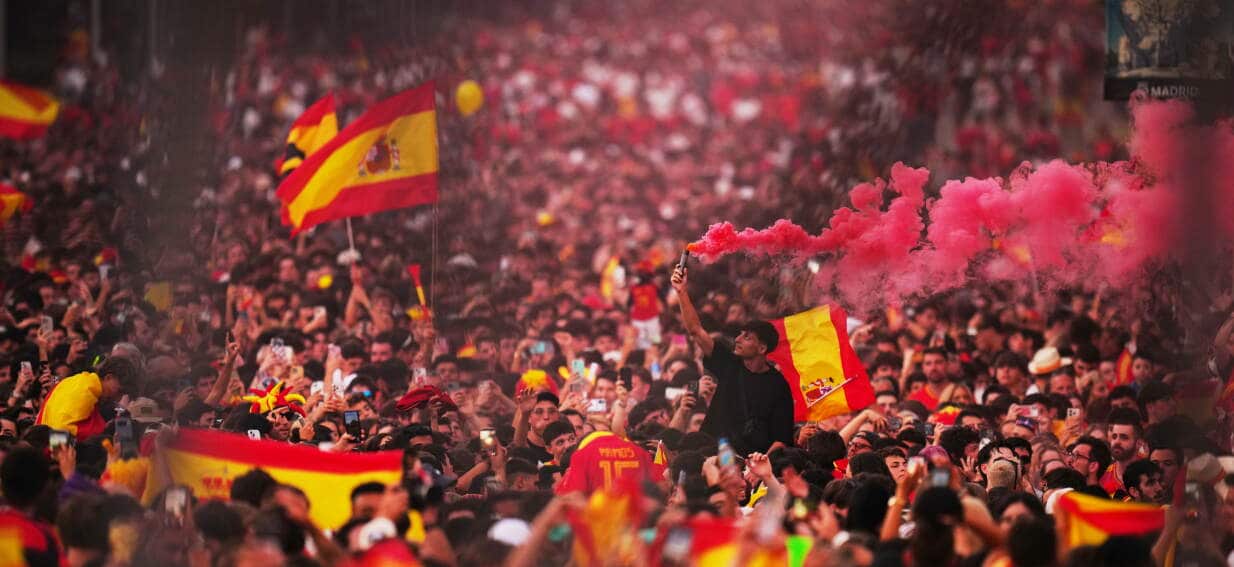
The air smelled of spilled cerveza, scorched flare-powder, and summer sweat.
In the heart of Puerta del Sol, tens of thousands of voices rattled the old stone facades. Horns blared from scooters trapped in a sea of red and yellow jerseys. Strangers hugged with the fierce, desperate intensity usually reserved for reunions after long wars.
Spain had won.
Yet among the roar, a single sentence kept bouncing off the walls of the crowded neighborhood tapas bars: The ones who played football were the ones who won.
That phrase was not a simple stat line. It was an identity statement. It was a vindication of a philosophy that had been ridiculed for decades.
The Weight of the Beautiful Curse
For generations, Spanish football lived under a shadow.
The national team carried a title that felt more like an insult: the great pretenders. They possessed individual talent in abundance, yet every major tournament ended the same way—in tears, bitter controversies, or sudden-death penalties that left an entire country staring at blank television screens.
They were told they lacked bite. Critics argued that passing the ball with grace was pointless if you could not bully your opponent in the mud. The dominant orthodoxy insisted that raw physicality, ruthless counterattacks, and relentless pragmatism were the only true paths to glory.
To sit in a Madrid café during those long years was to listen to an endless wake. Old men would gesture with espresso cups, arguing that Spain was condemned to craft art while others collected trophies.
Then everything shifted.
A collective decision took root in the Spanish consciousness: if they were going to win, they would do it without sacrificing their soul. They would pass. They would move. They would treat the ball not as a projectile to be smashed forward, but as an extension of their own willpower.
Midnight in the Plaza
Consider an old man named Mateo.
He sits on the edge of a marble fountain in Plaza de Cibelis, his hands trembling slightly as he clutches a faded scarf from 1982. He has watched decades of heartbreak. He remembers the missed chances, the bloody noses, the agonizing exits in quarterfinals that felt like pre-ordained tragedies.
Around him, twenty-somethings are climbing lampposts and chanting until their voices crack. They have known only dominance, but Mateo remembers the drought.
"You do not understand," he says, leaning toward a young woman painted in red stripes who is dancing beside him. "It is not just that we lifted the cup. It is how."
He is right.
In the final minutes of the match, as the clock ticked down and the opposition tried to turn the pitch into a grinding war of attrition, Spain did not panic. They did not resort to desperate long balls or cynical fouls. They stuck to the rhythm. Short passes. Triangles. Patience.
They wore down the clock by keeping the ball away from their rivals, turning possession into a fortress. When the final whistle blew, it was not merely a victory of goals; it was a victory of style over brute force.
The Triumph of the Idealists
To understand why this night felt like an exorcism, look closely at how the match unfolded.
The opposition brought steel, tactically disrupting the play and breaking up the tempo with aggressive tackles. It was a classic trap—one that had broken Spanish teams for fifty years. In the past, Spain would lose their temper, lose their structure, and ultimately lose the game.
Not this time.
Every time a midfielder took a hit, they got back up and demanded the ball again. They accepted the bruising because they trusted the geometry of their game. They believed that moving the ball quickly enough would eventually open a hairline fracture in the opponent's defense.
And it did.
One sudden turn in space. One sharp, incisive pass through three defenders. One clean finish into the side netting.
The stadium thousands of miles away erupted, but the sound was amplified a million times over in every plaza from Bilbao to Seville. The victory belonged to the players on the grass, but the belief belonged to the millions who had spent their lives waiting for validation.
The Sound That Echoes Still
As the night stretches toward dawn, the street sweepers in Madrid begin their impossible task, nudging empty cans and confetti through the crowded alleys. Nobody wants to go home.
The celebration is not about dominance over an enemy. It is about the triumph of a belief system.
In a world that so often rewards shortcuts, cynicism, and raw force, a group of athletes showed up on the highest stage and proved that patience, skill, and collective harmony could overcome anything thrown in their path.
The songs in Puerta del Sol will eventually fade. The flags will be folded and stored in closets until the next tournament.
But as the first light of morning hits the rooftops of Spain, the truth remains etched into the asphalt: they did not just win the World Cup. They played football, and the world had to watch.