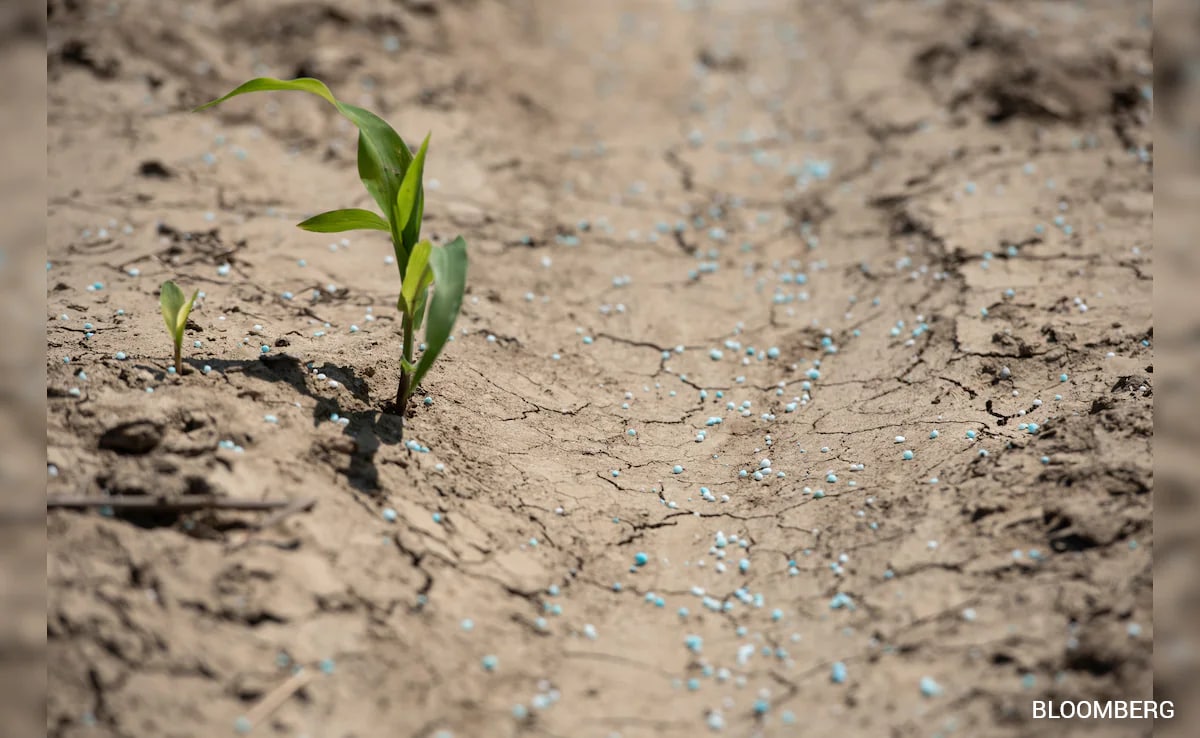
The physical closure of the Strait of Hormuz due to geopolitical conflict has exposed the structural fragility of global agricultural supply chains. Because approximately one-third of globally traded urea—the primary synthetic vector for nitrogen delivery—originates in the Persian Gulf region, the sudden cessation of maritime transit through this bottleneck has driven global fertilizer prices to multi-year highs. New Orleans urea futures reached $710 per ton, while Egyptian spot prices surged more than 90% to $940 per ton. This sudden supply contraction forces an immediate recalculation of farm-level operational expenditures. It also highlights a critical structural vulnerability: modern agrarian food security is directly tethered to volatile fossil fuel supply chains.
To mitigate catastrophic yield declines ahead of the upcoming planting cycles, the agricultural sector is evaluating alternative nutrient vectors. These alternatives span a continuum from traditional organic manure to centralized biostimulants, and increasingly, processed anthropogenic waste streams—specifically human urine. While mainstream accounts treat the deployment of human urine as a novel, localized improvisation, a rigorous economic assessment reveals that nutrient recovery from human waste represents a predictable response to a supply shock. It operates within a clear, quantifiable framework governed by chemistry, logistics, and processing costs.
The Chemical and Stoichiometric Equivalence Framework
The viability of any alternative fertilizer depends on its ability to satisfy the stoichiometric demands of commercial crops. High-yield modern cultivars require precise inputs of the macronutrient triad: nitrogen (N), phosphorus (P), and potassium (K). Synthetic fertilizers isolate these elements into highly concentrated, predictable, and rapidly bioavailable compounds, such as anhydrous ammonia, urea, and diammonium phosphate.
Anthropogenic waste streams contain these exact same elemental building blocks. Human urine accounts for less than 1% of total domestic wastewater volume but carries roughly 80% of the nitrogen and 50% of the phosphorus excreted by the human population. The underlying chemical profile makes it a viable substitute for synthetic inputs:
- Nitrogen (N): In raw urine, nitrogen is primarily held within urea ($CO(NH_2)_2$). Through a natural enzymatic process catalyzed by environmental urease, this urea hydrolyzes into ammonium ($NH_4^+$) and carbonate ($CO_3^{2-}$). This matches the identical chemical path that synthetic urea takes when applied to damp soil.
- Phosphorus (P): Present as dissolved phosphate ($PO_4^{3-}$), which plants can immediately absorb.
- Potassium (K): Excreted as highly soluble ions ($K^+$), identical to the potassium derived from mined potash ($KCl$).
Agronomic trials confirm this chemical equivalence. Field evaluations conducted by the Swedish University of Agricultural Sciences (SLU) and international research cohorts indicate that sanitized, stabilized human urine can deliver crop yield increases equivalent to conventional synthetic inputs when normalized for nitrogen load. For example, long-term trials on cereal crops like pearl millet demonstrate a baseline yield expansion of up to 30% relative to unfertilized control plots. This confirms that the operational challenge is not a matter of biological efficacy, but of industrial scaling and extraction logistics.
The Logistical Cost Function of Nutrient Recovery
The fundamental barrier preventing human urine from immediately replacing synthetic urea is its low volumetric density. Synthetic urea boasts a nitrogen concentration of approximately 46% by weight. In contrast, raw human urine is 95% water, with a native nitrogen concentration hovering between 0.6% and 1.0%.
This massive disparity introduces a severe logistical penalty. To deliver an equivalent mass of active nitrogen ($N$), an operator must transport, store, and apply roughly 50 to 70 times the physical volume of liquid compared to granular synthetic inputs. The economic viability of urine-derived fertilizer is governed by a strict cost function:
$$C_{delivered} = C_{collection} + C_{processing} + C_{transportation} (d) + C_{application}$$
Where $d$ represents the distance from the point of collection to the agricultural application site. Because liquid transportation costs scale linearly with volume and distance, raw urine distribution is economically unviable outside a narrow, hyper-local radius.
To bypass this geographic constraint, specialized startups and research institutions are deploying distinct technological models designed to strip out the water weight and concentrate the active nutrients.
The Biological Stabilization Model
Companies like the French startup Toopi Organics focus on preserving the liquid state while optimizing its biological utility. Instead of stripping out the water, they use raw urine as a sterile, nutrient-rich culture medium to cultivate specific plant-growth-promoting rhizobacteria (PGPR). This approach shifts the value proposition: the final product is not merely a replacement for bulk nitrogen, but a concentrated biostimulant that improves a plant's natural nutrient uptake efficiency. This model minimizes processing costs but retains a higher liquid volume, meaning it requires local collection infrastructure—such as partnerships with schools, large-scale public festivals, and eco-districts—situated close to agricultural markets.
The Thermal and Electrochemical Distillation Model
To achieve a dry, easily transportable product comparable to synthetic fertilizer, engineering firms rely on phased extraction systems. A prominent example is the system deployed by Nutrient Recovery Systems in commercial installations like the PAE Living Building in Oregon. This process relies on a multi-stage concentration loop:
- Source Separation: Specialized source-separating toilets and waterless urinals isolate the "yellow water" stream at the point of origin, preventing dilution from graywater or blackwater flush systems.
- Alkaline Stabilization: The raw urine is treated with calcium hydroxide ($Ca(OH)_2$) to elevate the pH above 10. This high alkalinity deactivates the urease enzyme, preventing the volatile loss of nitrogen as ammonia gas ($NH_3$).
- Thermal Evaporation & Distillation: Energy-intensive thermal systems evaporate the water. Newer configurations, such as prototypes engineered at Stanford University, attach copper plates directly to the back of photovoltaic solar panels. This design uses solar waste heat to drive down the operational cost of distillation, improving system efficiency by up to 20%.
- Precipitation of Struvite: Phosphorus is recovered by introducing magnesium salts, which forces the crystallization of struvite ($MgNH_4PO_4 \cdot 6H_2O$). The result is a dry, slow-release solid fertilizer rich in both nitrogen and phosphorus.
Systemic Constraints and Market Structural Bottlenecks
Despite surging demand driven by the current price shock, alternative nutrient markets cannot immediately scale to plug the supply deficit left by the Strait of Hormuz shutdown. Synthetic nitrogen production relies on the Haber-Bosch process, an ultra-centralized chemical synthesis method that uses natural gas ($CH_4$) to fix atmospheric nitrogen ($N_2$) into ammonia ($NH_3$). This infrastructure has been optimized globally for over a century. Anthropogenic recovery systems face three distinct structural bottlenecks that limit immediate market penetration.
Infrastructure Stranding
Modern municipal wastewater networks are designed around mixed collection. Millions of tons of potential agricultural nutrients are intentionally diluted with trillions of gallons of water, routed to centralized treatment plants, and energy-intensively destroyed via nitrification-denitrification cycles. Retrofitting existing urban environments with source-separating plumbing requires massive capital expenditures. Consequently, localized collection efforts—like the Rich Earth Institute's community pilot in Vermont—remain constrained to volumes of roughly 10,000 gallons annually per hub. This is a drop in the ocean compared to industrial agricultural demands.
Production Lead Times and Supply Inelasticity
Alternative inputs face hard physical ceilings on production capacity. Biotech and circular economy firms cannot quickly scale production to meet a sudden market shock. For example, regional innovators like Nitricity (which manufactures nitrogen inputs from non-synthetic alternative processes) are already fully booked through 2028. Because alternative production facilities are capital-intensive and require precise regulatory approvals, supply remains highly inelastic in the short to medium term.
The Consistency Dilemma
Microbial alternatives and raw organic inputs exhibit variable performance based on environmental conditions. Unlike synthetic urea, which reliably dissolves and releases nitrogen regardless of soil ecology, biostimulants and raw organic residues depend on soil temperature, moisture levels, and existing microbial populations to unlock their nutrient payload. If heavy rain events occur shortly after application, un-stabilized microbial elements risk washing away from the root zone entirely, exposing the grower to unpredictable yield volatility.
Strategic Playbook for Commercial Producers
As the ongoing conflict continues to restrict Gulf-derived synthetic urea, commercial agricultural enterprises cannot afford a passive approach to nutrient procurement. To protect crop yields into the next planting cycles, operators must transition from a reactive purchasing model to an integrated, asset-diversified nutrient strategy.
Step 1: Execute a Granular Soil and Yield Correlation Audit
Before purchasing high-priced alternative inputs, operators must eliminate systemic over-application. Historical data from the Union of Concerned Scientists shows that commercial farms routinely apply 30% to 50% more synthetic nitrogen than crops can physically absorb. Producers should deploy precision sap-testing and variable-rate application technology to map exact field-level deficits, reducing total volume requirements before looking for substitutes.
Step 2: Establish Direct Local Biproduct Supply Contracts
To offset synthetic nitrogen deficits, logistics managers must secure regional organic waste streams before competitors price them out. This involves mapping and locking down multi-year supply agreements with local poultry operations for high-nitrogen chicken manure, or partnering with regional food-processing hubs utilizing waste inputs like ground almond shells.
Step 3: Integrate Stabilized Biostimulants to Compress Synthetic Dependence
Producers should allocate 15% to 25% of their total nutrient budget to advanced biostimulants and stabilized nitrogen fixers, such as those produced by Pivot Bio or Holganix. By combining these biological products with a reduced base of synthetic urea, farms can maintain high yields while lowering their overall cost per acre. The biological inputs fix atmospheric nitrogen directly at the root zone, creating a buffer against volatile spot market prices for synthetic chemicals.
Step 4: Invest in On-Farm Storage and Decouple from Just-In-Time Delivery
The primary systemic error of the current crisis was relying on just-in-time delivery of imported synthetic fertilizer. Commercial operations must invest in on-farm liquid storage tanks and dry storage sheds. This allows procurement teams to buy alternative inputs during off-peak periods, maximizing margin protection against the structural shifts reshaping global agricultural supply chains.