Clocks are merciful things. They tick in measured increments. Sixty seconds to a minute, sixty minutes to an hour, twenty-four hours to a complete rotation of the earth. We rely on this geometry to survive grief. We tell ourselves that morning will come, that the sun will reset the board, that night has a defined boundary.
Except when it does not.
Ask anyone who has ever stood on the precipice of an unanswered phone call, staring at a screen that refuses to light up, and they will tell you that time is elastic. It stretches. It folds back on itself. It becomes a singular, unbroken expanse where the hours lose their names. It is essentially one long day.
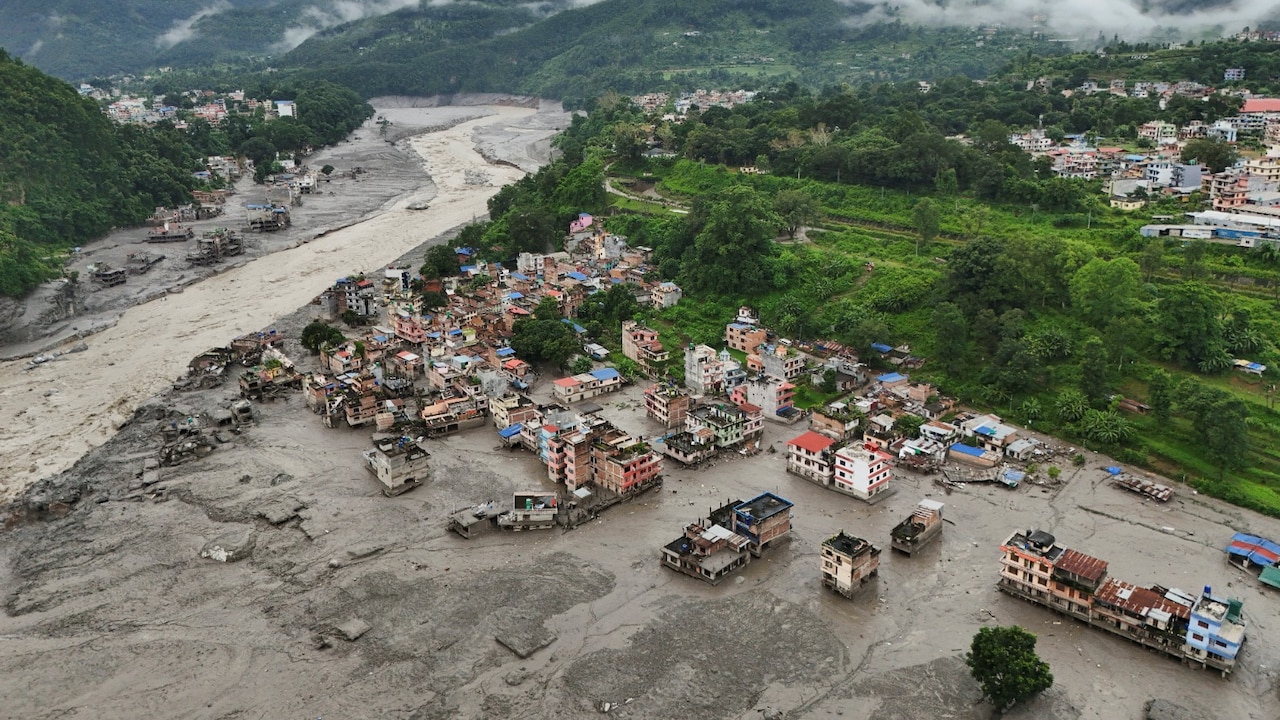
That phrase belongs to a daughter searching for her parents in Nepal. It is a deceptively quiet sentence holding an ocean of exhaustion. Behind those ten words lies the jagged edge of distance, the friction of international bureaucracy, and the helpless fury of being trapped thousands of miles away while the people who gave you life vanish into a landscape that refuses to speak.
Distance is a modern cruelty. We carry the illusion of intimacy in our pockets. With a swipe of a thumb, we can see a face across the globe in crisp high definition, hear a laugh, check if they landed safely. We have fooled ourselves into believing the world has shrunk. But when disaster strikes, when structural failures, political upheaval, or sudden environmental crises sever the fragile threads of communication, the old geography returns with a vengeance.
The earth is terrifyingly vast once again.
Consider the mechanics of waiting. It is not a passive state. It is an active, burning labor that consumes every ounce of caloric and emotional energy. When a loved one goes missing in a foreign terrain, the mind goes to work like a frantic architect, building and dismantling scenarios. They are delayed. Their battery died. They found shelter in a remote village without a signal. They are walking down a mountain path right now, out of reach, annoyed by our worry.
Then the alternative architecture moves in. The shadows. The what-ifs.
To understand what it means to search from afar, you have to look at the anatomy of distance. It is measured in time zones that refuse to align. It is measured in the hollow ring of a helpline that plays cheerful hold music while your pulse drums against your ribs. It is the bureaucratic maze of embassies, local police reports, translation apps that stutter over regional dialects, and foreign ministries that operate at a glacial pace while your personal universe is burning to the ground.
We talk about global connectivity as if it were a universal shield. It is not. It is a thin veneer. Beneath it lies the same ancient wilderness, the same human vulnerability that our ancestors faced when someone walked out into the storm and did not return before dark.
The daughter in Nepal is not an isolated statistic. She is a mirror. She represents the terrifying vulnerability of the modern traveler and the families left behind to watch the news ticker crawl across the bottom of the television screen. We send our parents, our children, our partners out into the world with a lighthearted wave and a promise to text when they land. We treat global travel like a bus ride. We forget that the edges of the map are still sharp.
When the lines go dead, the modern myth of control shatters.
There is a specific kind of madness that sets in when you are trying to direct a rescue mission from a kitchen table six thousand miles away. You become a detective of fragments. A grainy photo on social media. A sketchy weather report from a valley you cannot pronounce. A stranger's tweet claiming to have seen tourists boarding a bus. You parse every syllable of every official statement, searching for hidden codes of doom or rays of improbable hope.
Every minute feels like an hour. Every hour feels like a lifetime.
It is a long day.
We build our lives around the assumption of safety. We insure our trips, we download offline maps, we register with embassies, we buy the best gear. We domesticate the planet in our minds. But mountains do not care about itineraries. Rivers do not consult flight schedules. The world remains wild, indifferent, and magnificently vast.
When the search narrows, when the first faint glimmers of news finally cut through the static—whether that news brings rescue or the heavy, crushing weight of closure—the long day does not instantly end. Time stutters back into motion, but the gears are stripped. You are left standing in the wreckage of your own routine, holding a phone that finally rang, forever changed by the hours spent in the gray space between knowing and not knowing.
The sun will set eventually. It always does. But the light looks different when you have spent an eternity waiting for it to pierce the dark.