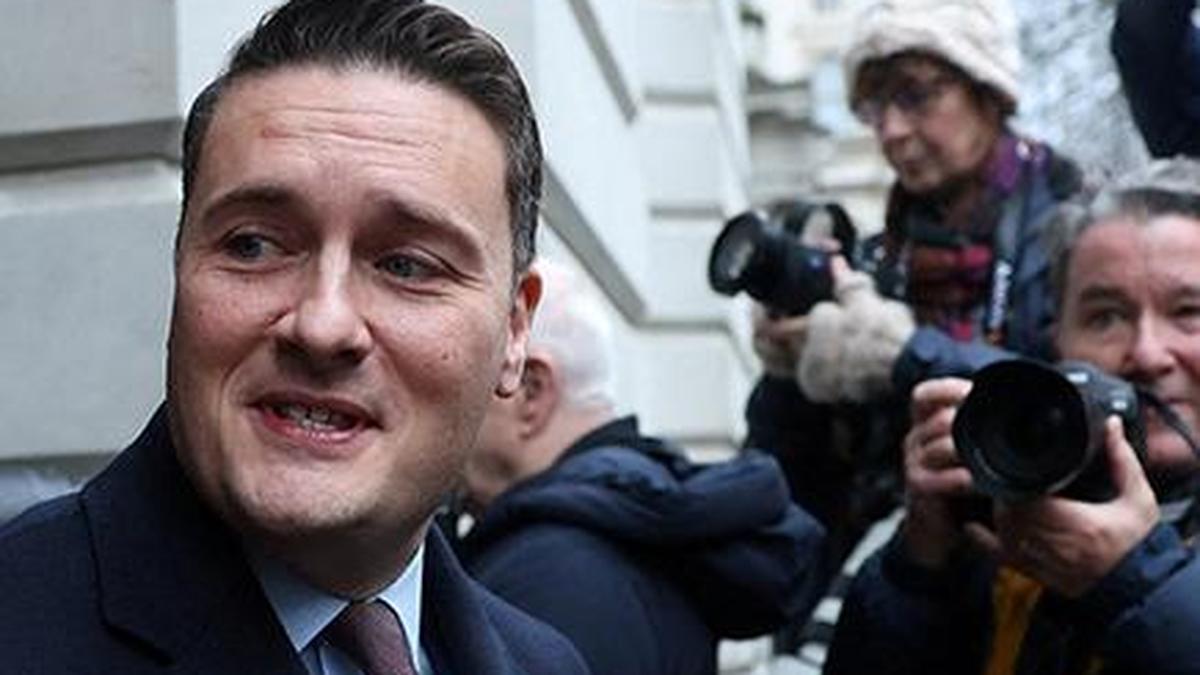
The heavy oak doors of the Department of Health and Social Care don't slam. They click. It is a polite, expensive sound that signals the end of a career and the beginning of a crisis.
When the Health Secretary handed over that crisp sheet of stationery this morning, the ink still wet with the resignation of a high-office holder, the vibration didn’t just stay within the wood-paneled walls of Westminster. It traveled. It moved through the sterile corridors of overstretched NHS wards in Leeds, hit the morning strategy meetings in 10 Downing Street, and eventually settled in the quiet, restless corners of the Labour Party backbenches.
Politics is often described as a game of chess, but that is too clean an analogy. It is more like an architectural collapse. One structural beam gives way, and suddenly, you are looking at the sky through the roof of what you thought was a secure house.
The Weight of the Red Box
To understand why a cabinet resignation matters, you have to look past the dry headlines. You have to look at the man holding the leather red box. For months, the Health Secretary has been the human shield for Keir Starmer’s government. Every missed waiting list target, every junior doctor picket line, and every headline about crumbling hospital concrete was a stone placed in that red box.
Eventually, the weight becomes physical.
The resignation wasn't just about a policy disagreement or a desire to "spend more time with family"—that ancient euphemism for political exhaustion. It was a tactical retreat. By stepping down, the Secretary has transformed from a loyal soldier into a looming shadow. In the brutal geometry of British politics, a former minister is often more dangerous than a current one. They possess the one thing a sitting minister lacks: the freedom to speak.
Imagine a surgeon halfway through a complex operation. The lights flicker. The head nurse walks out. The surgeon—in this case, Prime Minister Keir Starmer—is left holding the scalpel, wondering if the person who just left is going to start telling the people in the waiting room that the hospital is out of supplies.
The Quiet Ambition of the Backbenches
The British public tends to view leadership challenges as explosive events, full of shouting and dramatic votes. The reality is far more subtle. It starts with tea.
In the tea rooms of the House of Commons, the air is thick with the smell of toasted teacakes and damp wool. This is where the real work happens. When a high-profile figure like the Health Secretary resigns, the gravity in the room shifts. Members of Parliament who were previously nodding along with the front bench start to tilt their heads toward the new vacancy.
The resignation sets up a "potential Labour leadership challenge," but that phrase is a clinical way of describing a very human phenomenon: the scent of blood.
Keir Starmer has spent years cultivating an image of "changed Labour"—disciplined, professional, and perhaps a little grey. He has steered the ship with a firm, if cautious, hand. But caution can be mistaken for stagnation. For those in the party who feel the pace of change is too slow, or that the government’s grip on the NHS is slipping, the departing Health Secretary represents an alternative.
He is no longer the man who has to defend the wait times. He is the man who can now ask why they are so long.
A Ghost in the Machinery
Consider a hypothetical voter named Sarah. Sarah lives in a town where the local GP surgery has a three-week wait for a non-urgent appointment. She doesn't follow the intricacies of cabinet reshuffles. She doesn't know the name of the Under-Secretary of State for Care.
But she feels the friction.
When the person at the top of the health pyramid quits, Sarah feels a spike of anxiety. If the person in charge of fixing the system thinks it’s time to leave, what does that say about the system?
This is the invisible stake of the resignation. It isn't just a blow to Starmer’s internal party discipline; it is a breach of the unspoken contract with the electorate. The government promised stability. A resignation is the definition of instability. It suggests that behind the closed doors of Whitehall, the arguments have become louder than the solutions.
The departing secretary knows this. Every word of his resignation letter was a calculated strike. By highlighting "fundamental differences in the direction of healthcare funding," he didn't just quit; he planted a flag. He signaled to the unions, the left wing of the party, and the frustrated public that he is the keeper of a different vision.
The Calculus of Power
Power is a liquid. It doesn't disappear; it just flows elsewhere.
Starmer now faces the most dangerous period of his premiership. He must fill the vacancy with someone loyal enough to follow the script but talented enough to stop the bleeding. If he chooses a sycophant, the department will drift. If he chooses a rival, he brings a different kind of fire into his own house.
While the Prime Minister weighs his options, the former Health Secretary is already moving. He is appearing on Sunday morning political shows. He is writing op-eds that "reflect on his time in office" while subtly dismantling the current strategy. He is making himself available for "informal chats" with disgruntled MPs.
The leadership challenge doesn't happen when the vote is called. It happens in the weeks before, in the silence between sentences, and in the growing sense that the current leader is defending the past while the challenger is claiming the future.
The NHS is the secular religion of the United Kingdom. To be the person who "saved" it is the ultimate political prize. To be the person who presided over its decline is a political death sentence. By resigning now, the former secretary is trying to ensure he is remembered as the man who tried to save it before he was silenced by the bureaucracy of Number 10.
The Echo in the Hallway
The corridors of power are long, and they echo.
As the sun sets over the Thames, the lights remain on in the Prime Minister's office. Starmer is likely looking at a list of names, calculating the cost of each one. He knows that across the city, in a private residence or a quiet wine bar, his former colleague is doing the same thing.
The "Health Secretary resigns" headline is a snapshot of a moment. The narrative, however, is a slow-motion film of a shifting tide. The stakes aren't just about who sits in which office. They are about the soul of a party that finally won power, only to realize that holding it is infinitely harder than seizing it.
The story isn't over. It has simply changed narrators.
In the coming weeks, every stutter from the Prime Minister and every "spontaneous" speech from the backbenches will be analyzed for signs of the coming storm. The ghost of the Health Department is now haunting the halls of Parliament, and ghosts are notoriously difficult to whip into line.
The click of that oak door wasn't an end. It was an opening.
A man walks away from a building, his shadow stretching long across the pavement of Whitehall, pointing directly toward the door of the man who thought he was finally safe. Drawing a breath of cold London air, he realizes that for the first time in years, he doesn't have to check with the Prime Minister before he speaks.
And that is the most dangerous thing a politician can be: heard.