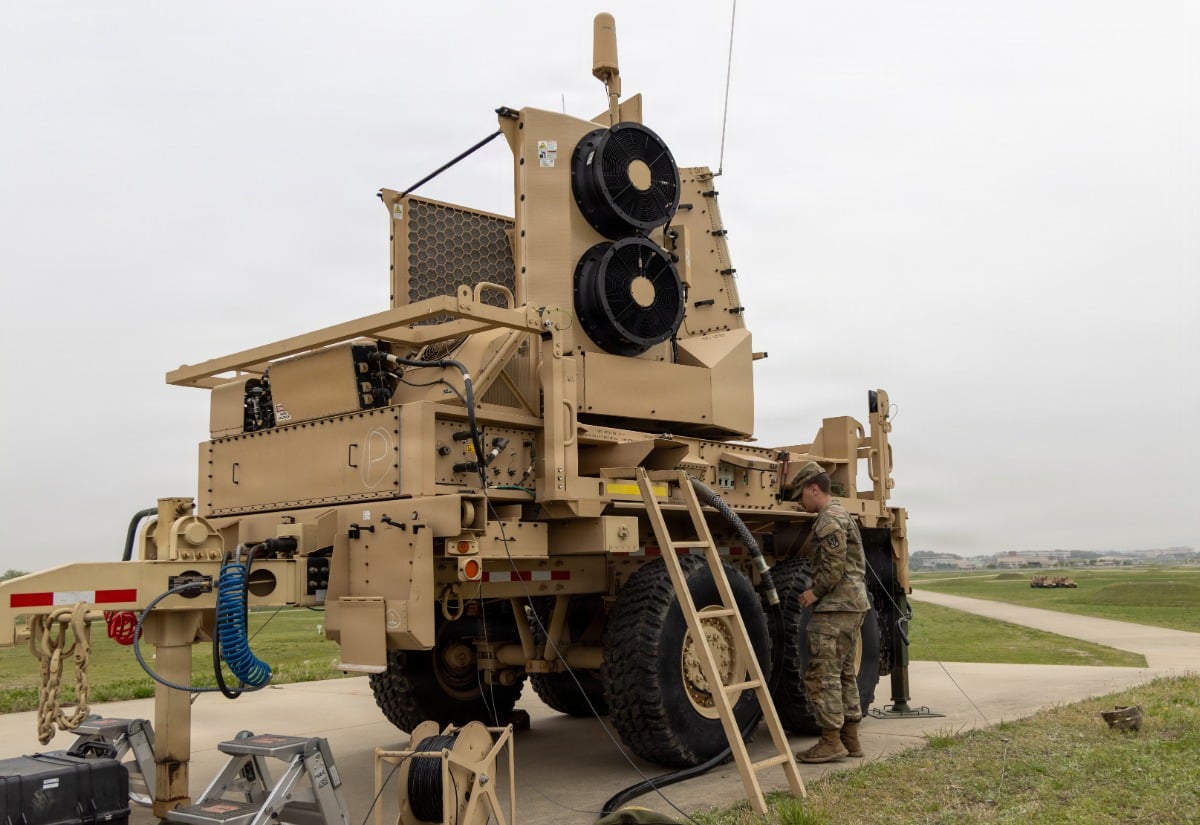
Lockheed Martin secured a three billion dollar U.S. Army contract to manufacture and engineer the Sentinel A4 radar system, locking down a foundational piece of the Pentagon's air defense strategy until 2031. Beneath the massive price tag lies a stark reality of modern defense procurement. The Department of Defense received exactly one bid for the project.
This single-source outcome reflects a deeper consolidation within the industrial base, where complex radar manufacturing has narrowed to a handful of corporate giants capable of absorbing massive financial and technical demands.
The Single Bid Reality
When the Army Contracting Command at Redstone Arsenal solicited proposals over the internet for the next generation of forward-area air defense sensing, only Lockheed Martin answered the call. The lack of competing offers highlights the steep barriers to entry for advanced military electronics. Developing active electronically scanned array systems requires specialized infrastructure, a highly cleared workforce, and billions in prior research that mid-tier firms cannot sustain.
The contract relies on a hybrid financial structure, combining fixed-price-incentive, cost-plus-fixed-fee, and cost-no-fee arrangements. This design spreads the immense financial risks inherent in scaling up hardware production. Fixed-price incentives penalize the contractor for cost overruns while offering profit premiums for efficient delivery, whereas cost-plus components protect the firm from unpredictable engineering bottlenecks during integration.
Digital Array Transmitters and Gallium Nitride
The technical core of the Sentinel A4 represents a complete departure from the legacy traveling wave tube technology found in the aging Sentinel A3. By shifting to an X-band digital Active Electronically Scanned Array, the hardware achieves a substantial leap in detection capability.
Internal design documents show a 175 percent increase in detection range and a 225 percent improvement in radar sensitivity. This means the system can spot threats much earlier, giving command networks more time to respond.
+-------------------------------------------------------------------+
|                  Sentinel A3 vs Sentinel A4                       |
+--------------------------+----------------------------------------+
| Feature                  | Sentinel A4 Upgrade                    |
+--------------------------+----------------------------------------+
| Core Sensor Technology   | X-Band Digital AESA                    |
| Power Amplifiers         | Gallium Nitride (GaN) Solid-State      |
| Detection Range          | 175% Increase over legacy              |
| Radar Sensitivity        | 225% Improvement over legacy           |
| Deployment Footprint     | Single truck and trailer platform      |
| Network Integration      | Native IBCS and FAAD C2 compatibility   |
+--------------------------+----------------------------------------+
The underlying power behind these metrics comes from gallium nitride high-power amplifiers. Gallium nitride handles significantly higher voltages and temperatures than traditional silicon or gallium arsenide components. This thermal efficiency allows the radar to pump more energy into the sky without overheating, producing pencil-sharp 3D beams that track hundreds of targets simultaneously.
The system uses sub-array digital beamforming to look everywhere at once while rotating at 30 revolutions per minute. It tracks high-altitude fixed-wing aircraft alongside low-altitude, slow-moving commercial drones that hide in ground clutter or urban interference.
Testing Hurdles and Scaled Down Ambitions
Despite the massive financial commitment, the path to full production has faced significant friction. The Pentagon’s Director of Operational Test and Evaluation revealed that production delays and system immaturity have disrupted the radar’s evaluation timeline. Delays in delivering the User Operational Evaluation System test articles forced a messy overlap between delta-developmental testing and Initial Operational Test and Evaluation.
Budget shortfalls compounded these delays. The program office found itself unable to fund the complete testing regimen originally mandated in its formal evaluation plan. Consequently, the Army Test and Evaluation Command had to implement a scaled-down testing plan to fit within strict time and budgetary boundaries.
This modified approach does not assess every intended capability in a fully realistic combat environment. Shifting to a restricted test protocol introduces a layer of risk, as hidden software glitches or hardware vulnerabilities under electronic warfare conditions might only emerge once units are deployed to active fields.
Network Integration and the Regional Shield
The U.S. Army is not buying the Sentinel A4 to operate in isolation. The radar acts as the primary sensory eyes for the Integrated Air and Missile Defense Battle Command System, a network designed to link any sensor to any shooter.
Data collected by the radar streams instantly into a common command network. This allows Forward Area Air Defense units to cue short-range weapons, indirect fire protection capabilities, and even international systems like the National Advanced Surface-to-Air Missile System.
Mobility remains a critical operational metric. A two-soldier crew can unpack the trailer-mounted radar from a standard tactical vehicle and have it fully operational in less than 30 minutes.
Pack-up time takes under ten minutes, allowing the crew to move quickly before opposing forces can locate the radar's electromagnetic signature. This balance of high mobility, extended range, and rapid digital processing forms the baseline of the Pentagon's front-line surveillance strategy for the coming decades.