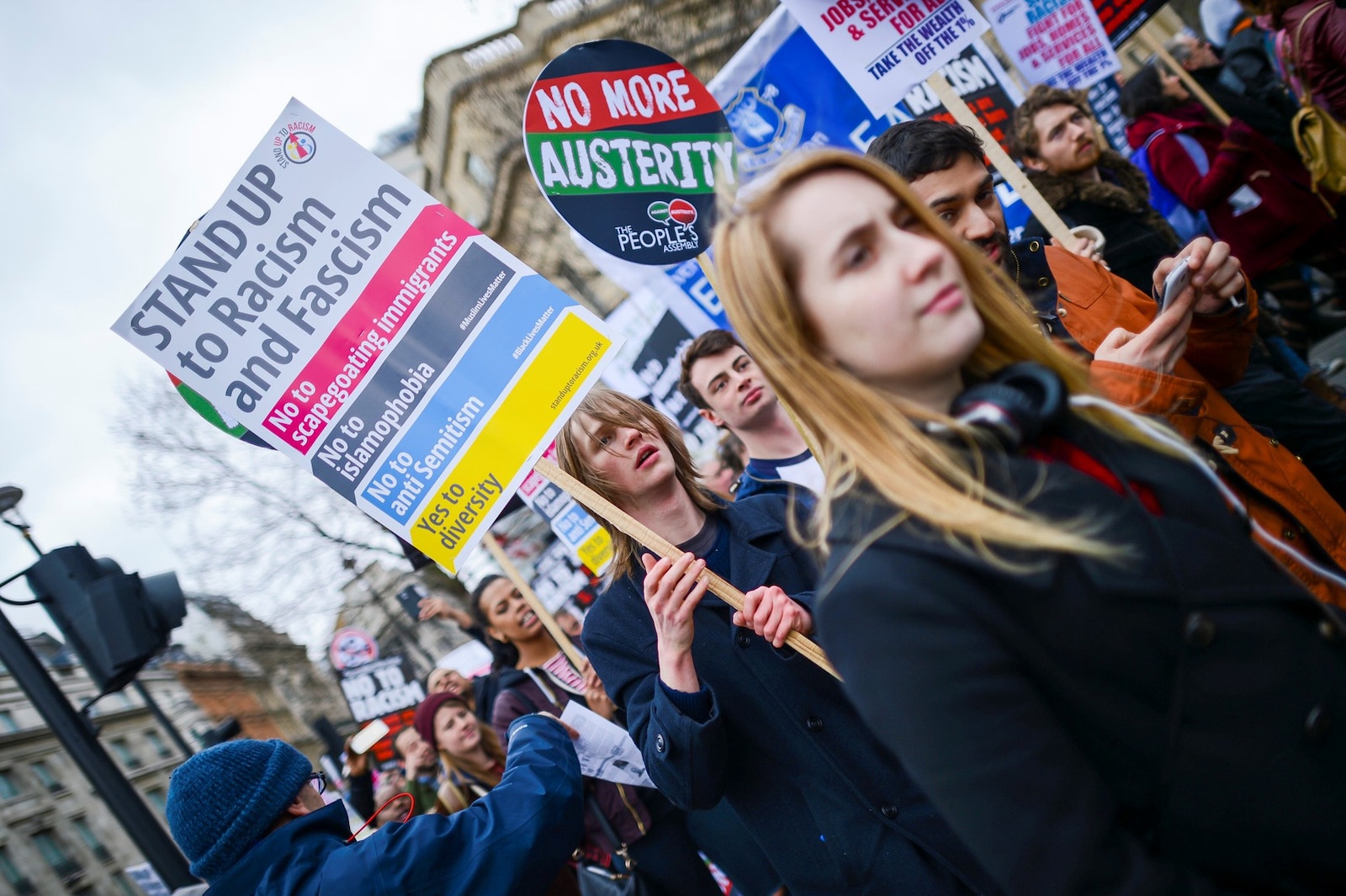
Thousands of people just took over the streets of London. It wasn't a casual Saturday stroll. They came to send a loud, clear message to the far right that their brand of division isn't welcome in the UK. If you’ve been watching the news lately, you might think the country is teetering on the edge of some massive cultural collapse. The media loves a fire. They love the footage of small, angry groups shouting about borders and "taking back" something they never really lost. but what happened in central London this weekend tells a much bigger story about where the British public actually stands.
This wasn't just a "protest." It was a massive, multi-generational wall of resistance. From Piccadilly down to Whitehall, the sheer scale of the crowd made the previous far-right gatherings look tiny by comparison. We’re talking about a sea of banners, chants that echoed off the historic stone buildings, and a vibe that was more about community than it was about hate. It’s easy to feel pessimistic when you see extremist rhetoric trending on social media, but when you see forty thousand people standing shoulder to shoulder, that pessimism starts to look a bit silly.
The numbers don't lie about British values
The organizers, primarily Stand Up To Racism, managed to pull together a coalition that represents what Britain actually looks like in 2026. You had trade unions, faith groups, students, and grandparents all walking together. It’s a direct response to the surge in anti-immigrant sentiment that we've seen bubbling up in smaller pockets across the country. The far right thrives on the idea that they are a "silent majority." They aren't. They’re just loud. This march proved they’re a very small, very loud minority that shrinks the moment the rest of us show up.
Police presence was heavy, obviously. After the riots and disturbances we saw in various towns last year, the Met wasn't taking any chances. But the atmosphere remained overwhelmingly peaceful. That’s the thing about these counter-protests. They don't need to break windows to make a point. They just need to exist. When you have tens of thousands of people peacefully occupying the heart of the capital, the narrative of a "divided nation" starts to fall apart. It looks more like a nation that knows exactly who it is and is tired of being told otherwise.
Why this specific moment felt different
The timing of this march matters. We’ve seen a shift in how political rhetoric is being handled at the highest levels. For a while, it felt like mainstream politicians were flirting with far-right talking points to win votes. They thought they could control the fire. They couldn't. Now, the public is pushing back. People are realizing that if you don't stand up to the small stuff, the big stuff gets scary very quickly.
The role of social media in distorting reality
It’s easy to get sucked into an algorithm that says everyone hates everyone else. You see a ten-second clip of a scuffle or a hateful speech and you think the world is ending. The London march is the reality check we all needed. It’s the physical manifestation of the data we often ignore. Most people in the UK support a multicultural society. Most people want their neighbors to feel safe. The internet is a funhouse mirror; the streets of London are the real thing.
Organizing on a massive scale
You don't get this many people out on the street by accident. It takes months of legwork. Local groups from Scotland, Wales, and the North of England chartered buses to get here. This wasn't just a London event. It was a national statement coordinated by people who understand that local activism is the only way to beat organized hate. They didn't just post a hashtag. They showed up. That’s the difference between performative activism and actually holding the line.
What the far right gets wrong about London
London has always been a target for far-right groups because it represents everything they fear. It’s diverse, it’s global, and frankly, it’s thriving because of those things. When extremist groups try to march here, they usually end up surrounded by police for their own protection because the locals have zero patience for them. This latest march wasn't just about opposing a specific policy. It was about defending the very idea of the city itself.
The counter-protesters didn't just stay in their lane. They took the space. They occupied the symbolic center of British power—Whitehall—and made it clear that the government's mandate includes protecting all citizens, regardless of where they were born. It’s a reminder that "Britishness" isn't a static, white-picket-fence fantasy from the 1950s. It’s a living, breathing, evolving identity that gets stronger the more inclusive it becomes.
Dealing with the fallout of extremist rhetoric
We can't ignore why people are angry in the first place. Economic anxiety is real. People feel like they’re being left behind by a system that favors the ultra-rich. The far right is very good at taking that legitimate anger and pointing it at the wrong people. They tell you your life is hard because of the person who moved in next door, rather than the person who’s been cutting your public services for a decade.
The marchers in London addressed this too. Many of the banners highlighted the need for better housing, better healthcare, and higher wages for everyone. They’re refusing to let the far right hijack economic frustration. You can be angry about the state of the country without blaming someone who’s just trying to survive, same as you.
Moving beyond the march
So, what happens now? A march is great for morale, but it’s not a policy change. The energy from the streets has to move into local councils and community centers. If you were one of the thousands who walked, the work doesn't stop because you finished the route.
The next step is supporting the organizations that do this work every single day. Look at what’s happening in your own borough. There are refugee support groups and community integration projects that need the same energy you brought to Whitehall. Don't let this be a one-day event. Use that momentum to challenge the "silent majority" myth whenever it pops up in your own social circles or online feeds. The far right wins when we stay quiet because we’re tired. Stay loud.