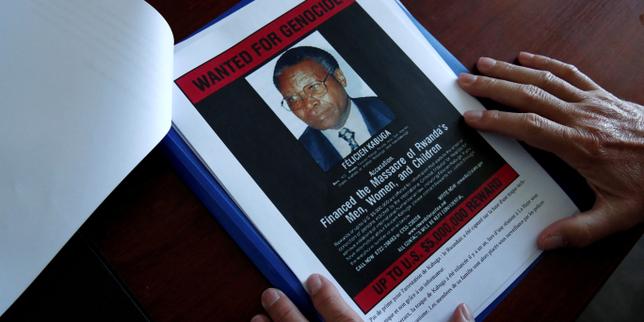
The death of Félicien Kabuga in a United Nations detention facility in The Hague terminates the final major international legal proceeding linked to the 1994 Rwandan genocide. Kabuga, who died at age 93 after a protracted battle with vascular dementia and Alzheimer’s disease, eluded global law enforcement for 26 years before his 2020 arrest in France. His eventual escape from a criminal conviction—secured not by legal acquittal but by biological decline—exposes a systemic structural vulnerability in international humanitarian law: the inability of transnational courts to deliver timely verdicts when processing aged defendants who leverage complex funding networks to exploit jurisdictional friction.
To evaluate Kabuga’s legacy through a strictly sentimental lens misses the operational reality of how the massacres were executed. Mass violence requires more than ideological hatred; it demands industrial coordination, supply chain management, and scalable communication networks. Kabuga did not wield a weapon. Instead, he operated as the foundational nodes in the structural design of the genocide, serving as its primary financier, logistician, and media architect.
The Institutional Architecture of Hate
The mechanics of the 1994 genocide relied on a highly coordinated triangle of state power, private capital, and decentralized militia groups. Kabuga sat at the absolute center of this structural triad, converting financial liquid capital into an operational apparatus for mass murder.
The Media Vector: RTLM as an Operational Command System
The conventional narrative treats the Radio Télévision Libre des Mille Collines (RTLM) as a mere propaganda vehicle. A rigorous structural analysis reveals it functioned as an essential decentralized command-and-control network. Kabuga was the primary corporate founder and majority shareholder of RTLM.
[Capital Mobilization] ---> [RTLM Broadcast Infrastructure] ---> [Real-Time Target Allocation] ---> [Interahamwe Militia Deployment]
The media infrastructure operated via three distinct mechanisms:
- Target Optimization: Broadcasters did not just broadcast general hate speech; they read out specific license plate numbers, home addresses, and flight paths of targeted individuals, acting as a real-time tracking network.
- Coordination Efficiencies: In an environment with fragmented telecommunications, shortwave radio served as a zero-cost, one-to-many broadcast channel that synchronized the movements of the Interahamwe militia across rural and urban sectors.
- Ideological Normalization: By blending popular Congolese music with political rhetoric, the station reduced the psychological barrier to violence, framing participation in mass killing as civic labor.
The Procurement Pipeline: The Economics of Low-Tech Armament
Industrialized slaughter does not require advanced weaponry if the target population is unarmed and geographically contained. Kabuga systematized the importation of agricultural tools modified for military application.
Statistical records from the period indicate that between January 1993 and March 1994, Rwanda imported hundreds of thousands of machetes, a massive inflation of historical agricultural demand. Kabuga’s import-export enterprises provided the letters of credit, foreign currency reserves, and logistics pipelines necessary to procure these tools from manufacturers in East Asia and distribute them directly to Interahamwe storage depots. By treating military logistics as a standard supply-chain problem, Kabuga lowered the marginal cost of murder to pennies per target.
The Intersecting Oligarchy: The Akazu Network
Capital requires political protection to operate at scale. Kabuga secured this by embedding himself into the Akazu ("the little house"), the informal core of Hutu Power extremists surrounding President Juvénal Habyarimana. The alliance was reinforced by strategic marital ties; two of Kabuga’s daughters married into the President’s immediate family. This integration neutralized state regulatory interference, allowing Kabuga to misappropriate state-linked agricultural tea profits into private procurement pipelines designed for paramilitary mobilization.
The Geometry of Evasion: 26 Years of Jurisdictional Friction
Kabuga’s ability to remain a fugitive from 1994 to 2020 provides a case study in how transnational financial networks can systematically defeat state-level intelligence operations. His survival strategy depended on three distinct layers of defense.
1. Sovereign Protection and Bribery Liquidity
Immediately following the collapse of the genocidal regime in July 1994, Kabuga leveraged his remaining liquid assets to buy safe passage through successive jurisdictions. When Switzerland expelled him, he transitioned to Kinshasa, and subsequently settled in Nairobi, Kenya. In Nairobi, Kabuga operated transparently for years, registering businesses such as the Nshikabem Agency under his own name. His protection was bought through local political patronage networks, demonstrating that deep financial liquidity can successfully purchase immunity within weak state structures.
2. Identity Fragmentation and Asymmetric Information
To counter the International Criminal Tribunal for Rwanda (ICTR) and a $5 million bounty placed on him by the United States government, Kabuga shifted from institutional bribery to operational obscurity. He adopted multiple aliases, utilized forged passports, and completely avoided electronic communications. The information asymmetry favored the fugitive: while international investigators relied on rigid state-to-state bureaucratic requests, Kabuga operated within informal, trust-based networks of the Rwandan diaspora who viewed his survival as a point of political resistance.
3. The European Urban Shield
The final phase of Kabuga’s evasion took place not in an ungoverned safe haven, but in the suburbs of Paris. His arrest in Asnières-sur-Seine in May 2020 revealed that his family had engineered a sophisticated care and security apparatus within Europe itself. By blending into a dense immigrant community and relying entirely on a fiercely loyal, closed familial network for logistical needs, Kabuga exposed a critical blind spot in Western counter-terrorism tracking: the assumption that high-value fugitives always stay in hiding within failed states.
The Structural Breakdown of Transnational Justice
The ultimate termination of the trial without a verdict represents an institutional failure for the International Residual Mechanism for Criminal Tribunals (IRMCT). The judicial timeline highlights an unavoidable friction between human biology and formal legal procedures.
| Milestone | Date | Legal/Medical Status | Operational Consequence |
|---|---|---|---|
| Arrest | May 16, 2020 | Extradited to The Hague | Trial preparation commences after a 26-year delay. |
| Trial Commencement | September 29, 2022 | Defendant pleads not guilty | Presentation of prosecution evidence begins. |
| Fitness Ruling | June 7, 2023 | Declared mentally unfit due to severe dementia | Formal trial indefinitely stayed; conviction ruled out. |
| Decease | May 16, 2026 | Death in custody | Proceedings terminated; no legal verdict recorded. |
The decision by the UN judges in 2023 to halt the trial because Kabuga was "no longer capable of meaningful participation" reflects the strict adherence to due process embedded in international human rights charters. However, it also highlights an operational vulnerability. By delaying a trial until a defendant reaches advanced old age, defense teams can utilize cognitive decline as a definitive barrier to legal accountability. The court’s attempt to establish an alternative "evidence-hearing procedure" without the possibility of conviction satisfied neither the legal requirements of a trial nor the survivors' demand for an enforceable verdict.
Strategic Imperatives for Contemporary International Tribunals
The legacy of the Kabuga case demands a fundamental restructuring of how transnational justice systems handle high-value financiers of mass violence. Moving forward, the international community must pivot away from a reactive, arrest-first methodology toward a proactive asset-and-infrastructure model.
Prioritize Financial Interdiction Over Physical Apprehension
Fugitives of Kabuga's scale cannot operate without access to global banking networks, shell companies, and real estate proxies. International judicial bodies must collaborate directly with financial intelligence units (such as FATF) to freeze the assets of indicted individuals long before physical arrest occurs. Neutralizing financial liquidity collapses the fugitive's protection network, accelerating their capture.
Establish Accelerated Trial Frameworks for Aging Defendants
When dealing with crimes against humanity committed decades prior, courts must implement specialized fast-track mechanisms. This does not mean compromising due process, but rather eliminating bureaucratic bottlenecks between investigation, extradition, and trial commencement. If an indicted individual is over a specific age threshold upon apprehension, the court must prioritize the preservation of judicial testimony and expedite the evidentiary phase to outpace biological decline.
The closure of the Kabuga file without a formal judicial determination means that history is left with an incomplete ledger. While the physical infrastructure he built was dismantled in 1994, the legal precedent set by his long evasion and death in custody serves as a warning: when international justice moves slower than the natural lifespan of its targets, accountability is denied by default. Future tribunals must match the agility of transnational capital if they hope to prevent biology from consistently defeating the law.