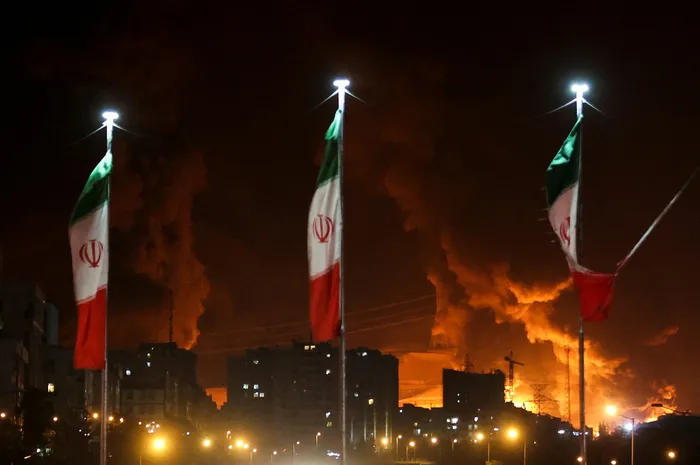
In a small, dimly lit tea house tucked into a side street of Tehran’s Grand Bazaar, the steam from a glass of chai carries the weight of forty years. An old man sits there, his thumb tracing the rim of the glass. He doesn't look at the television mounted in the corner, where a news anchor is reading a cold, scripted statement from the Iranian Foreign Ministry. The words are sharp, definitive, and stripped of all warmth: there are no plans for negotiations with the United States.
To a diplomat in Washington, this is a data point. To a market analyst, it is a signal to hedge on oil futures. But to the man with the tea, it is the sound of a heavy iron bolt sliding home once again.
The Language of the Silence
Diplomacy is often mistaken for a series of meetings. In reality, it is a psychological state. When Iran’s leadership announces there will be no talks, they aren’t just refusing a meeting; they are maintaining a wall that has become a load-bearing structure for the entire nation's identity.
The current stalemate isn't a glitch in the system. It is the system.
Consider a hypothetical negotiator—let's call him Hamid—working within the labyrinthine halls of the Iranian administrative complex. Hamid has spent his life studying the West. He understands the cadence of American politics, the way a change in the White House can flip a table overnight. He remembers 2018. For Hamid and those like him, the withdrawal from the Joint Comprehensive Plan of Action (JCPOA) wasn't just a policy shift. It was a betrayal of the very concept of a handshake.
When you burn a bridge while someone is standing in the middle of it, you don't just lose the path. You lose the desire to build the next one.
The "no plans" stance is a shield. It protects the Iranian leadership from the perceived humiliation of being the first to blink. In the high-stakes theater of Middle Eastern geopolitics, appearing eager is equated with being weak. The silence coming out of Tehran is a calculated roar. It says that the status quo, however painful, is preferable to a seat at a table where the rules might change before the main course is served.
The Ghost at the Table
Every time a spokesperson stands behind a mahogany podium to dismiss the idea of a summit, a ghost sits in the front row. It is the ghost of the "Maximum Pressure" campaign.
Statistically, the Iranian economy has been strangled. Inflation has clawed its way into the pockets of the middle class, turning once-simple grocery trips into exercises in desperation. Yet, the logic of the state remains unmoved by the logic of the ledger. There is a deep, historical conviction in Tehran that the United States does not want a deal—it wants a transformation.
This suspicion isn't just rhetoric. It’s a foundational belief rooted in the 1953 coup and the 1979 revolution. To the Iranian leadership, the American offer of "negotiation" looks less like an olive branch and more like a Trojan horse. They see a trap designed to peel away layers of national sovereignty until there is nothing left but a shell.
This is why the facts—the uranium enrichment levels, the drone exports, the regional proxies—often feel secondary to the vibe of the conflict. You cannot fix a broken marriage with better accounting if one partner believes the other is only staying to plan the divorce.
The Cost of a Closed Door
While the elites play a game of geopolitical chess, the board itself is made of human lives.
Imagine a young woman in Isfahan. She is a brilliant coder, capable of competing on a global stage. But because of the "no plans" reality, her world is a series of digital and physical barriers. She cannot access global banking. She cannot easily travel. Her talent is bottled up, fermenting into a quiet, simmering resentment.
The refusal to talk is often framed as an act of resistance against imperialism. But for the coder, or the father trying to find imported medicine for a sick child, it feels like being a passenger on a ship where the captain has decided to stop looking at the map out of spite for the person who drew it.
The stakes are invisible until they aren't. They are invisible in the way a currency loses its value overnight, or the way a family decides to leave their ancestral home because they can no longer see a future that isn't defined by sanctions.
The Illusion of Choice
There is a common misconception that Iran’s refusal to negotiate is a sign of a monolith. It isn't. Inside the halls of power, there are hawks who view any contact with the "Great Satan" as a spiritual failure. There are pragmatists who look at the numbers and realize that the current path is unsustainable.
But the Supreme Leader’s word is the final gravity that pulls all these wandering planets into orbit.
When the word is "no," the pragmatists go silent. They hide their plans for rapprochement in desk drawers, waiting for a season that never seems to come. This creates a feedback loop. The U.S. sees the refusal as a sign of hostility and tightens the screws. Iran sees the tightening as a sign of bad faith and reinforces the door.
We are watching a masterclass in the sunk cost fallacy. Both sides have invested so much in their mutual enmity that the cost of peace starts to look more expensive than the cost of a cold war.
The Weight of the Past
To understand why a simple "yes" is so difficult, one must understand the Iranian concept of ghayrat—a mix of honor, zeal, and protection. For the revolutionary guard and the hardliners, the refusal to negotiate is an act of ghayrat. It is the refusal to be bullied.
Metaphorically, it is like a man standing in a burning house, refusing to take a fire extinguisher from the neighbor who he believes set the fire in the first place. He would rather burn with his dignity than survive through the charity of his enemy.
This isn't logical. It is emotional. And you cannot solve an emotional crisis with a white paper or a list of "People Also Ask" bullet points.
The current administration in Tehran is betting that the world is changing. They look at the rise of the BRICS nations, the growing influence of China, and the shifting alliances in the East. They believe that if they can just hold out a little longer, the U.S. will become irrelevant to their survival. They are looking for an exit that doesn't involve walking through a door marked "Washington."
The Unspoken Reality
The truth is that "no plans for negotiations" is a temporary statement that feels eternal. Every conflict in human history has ended with a conversation, a surrender, or a graveyard. Since neither side is ready for a full-scale war, and neither is ready to surrender, the conversation is inevitable.
But the timing is everything.
Right now, the air is too thick with history. The scars of previous broken promises are too fresh. In Tehran, the decision-makers are looking at the American election cycle with a mixture of dread and indifference. Why build a house on sand? If they negotiate with one president, will the next one simply kick the walls down?
This uncertainty is the greatest enemy of the diplomat. It turns every potential breakthrough into a political liability.
Back in the tea house, the old man finally looks up at the screen. The news has moved on to a story about a new dam or a local festival. He sips his tea, which has grown cold. He knows that as long as the doors stay locked, his grandchildren will keep looking for the exit.
The tragedy of the "no plans" policy isn't that it avoids a bad deal. It’s that it avoids the possibility of any deal at all, leaving a nation of eighty million people suspended in a permanent waiting room, listening to the ticking of a clock that no one knows how to wind.
The door remains shut, not because the key is lost, but because both sides are afraid of who might be standing on the other side when it opens.