We hear about it all the time. A billionaire drops $100 million on a Harvard or a Yale. The university puts their name on a shiny new building, the donor gets a massive tax write-off, and the mega-endowment grows just a little bit fatter.
But frankly, those massive gifts rarely change the immediate daily reality of healthcare in the communities that need it most.
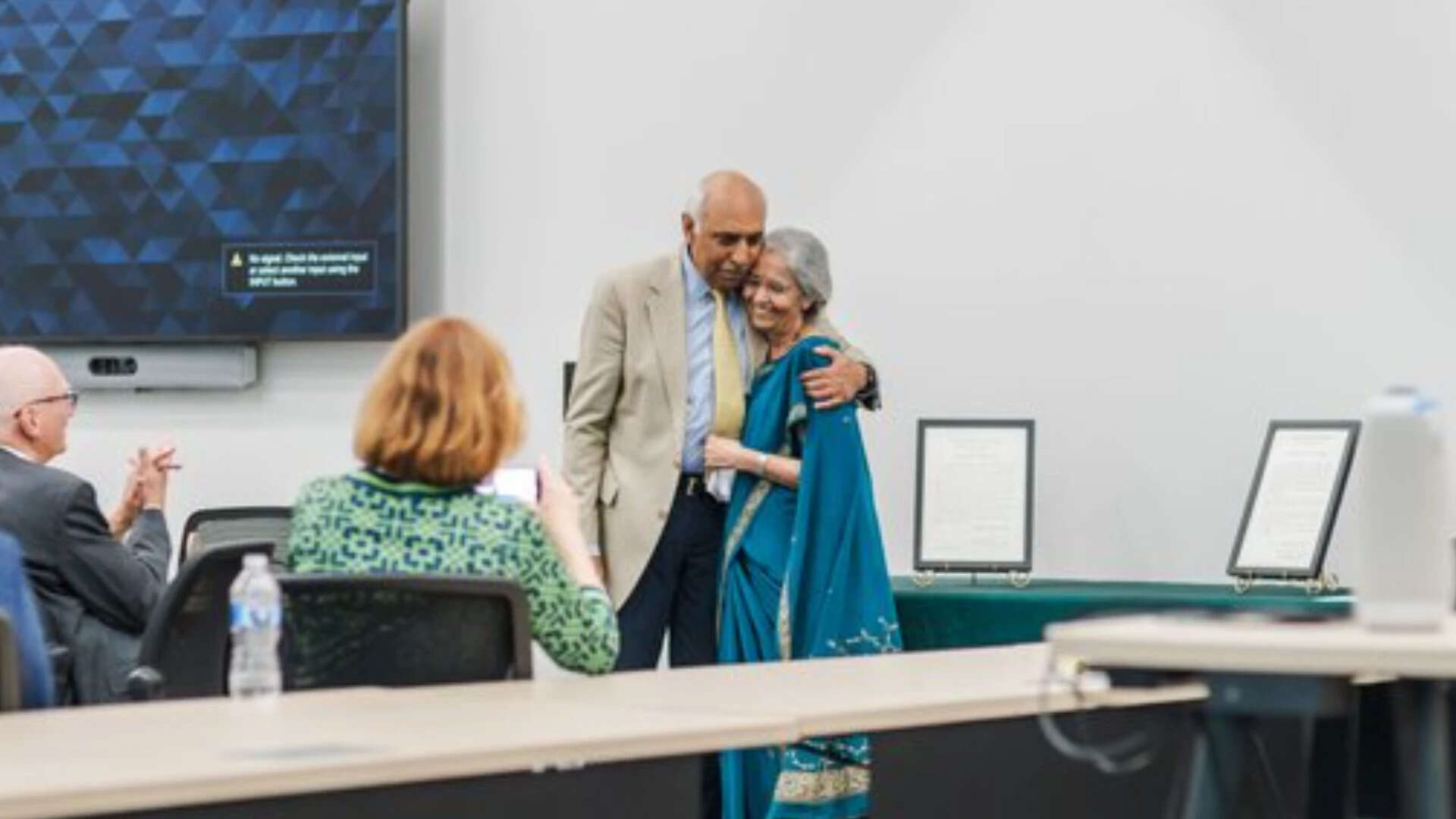
If you want to see philanthropy that actually moves the needle for everyday people, you have to look away from the Ivy League. Look instead at regional institutions like Methodist University in Fayetteville, North Carolina. That is where retired doctors Rakesh Gupta and Vinita Gupta recently put up $500,000 of their own money to fund scholarships at the university's Cape Fear Valley Health School of Medicine.
It is a chunk of change that would get lost in the couch cushions of an elite New England school. In Fayetteville, it is a massive deal.
The reality is that local medical funding keeps communities alive. It is not about vanity or chasing headlines. It is about fixing a broken regional pipeline.
Shifting From Global Ambition to Local Survival
The Guptas spent decades embedded in Fayetteville. Dr. Vinita Gupta served as an Army veteran and pediatrician at Womack Army Medical Center for 25 years. Dr. Rakesh Gupta built a career as a gastroenterologist, helping launch the local Cape Fear Center for Digestive Diseases. They even helped start the local Hindu Bhavan Temple.
When you spend that much time on the ground, you see the cracks in the system.
Regional medical centers across the US face massive pressure. Doctors are burning out, rural clinics are closing, and smaller towns can't attract young talent. Medical students graduate with hundreds of thousands of dollars in debt, forcing them into high-paying urban specialties rather than primary care in underserved communities.
That is why the structure of this $500,000 gift is so deliberate. It doesn't fund a fancy glass atrium.
- $100,000 goes out immediately as merit scholarships for students entering in 2026 and 2027.
- $400,000 is locked away as an endowed fund for Enrichment Scholarships, handed out to students who hit specific milestones at the end of their first year.
This keeps students enrolled and relieves the crushing financial pressure right when the workload peaks.
The Hidden Mechanics of Medical Endowments
Most people don't understand how university endowments work. They think a half-million-dollar gift means the school just cuts checks until the bank account hits zero. That is a quick way to run out of momentum.
Endowments are built for the long haul. The principal amount—the $400,000 in this case—is invested. The medical school only spends the interest generated by those investments. If the fund earns a steady return, that money creates a permanent stream of scholarship cash that outlives the donors.
It means a kid from North Carolina can go to medical school ten or twenty years from now because of a decision made today.
Dr. Rakesh Gupta didn't just write a check; he actually helped conceptualize the School of Medicine at Methodist University. He knew from the blueprint stage that the biggest hurdle for a regional school isn't building classrooms. It is getting qualified students through the door without bankrupting them.
The Immigrant Legacy in American Healthcare
This isn't an isolated incident. The broader trend of Indian-origin physicians driving American medical philanthropy is impossible to ignore.
Look at the trajectory. The Guptas met while studying at a medical school in Belgaum, India. They immigrated, worked through grueling residencies at Lincoln Medical Center in New York City, and eventually found their way to North Carolina in 1990. Their story tracks with thousands of international medical graduates who became the backbone of regional healthcare systems in the United States.
When these professionals retire, they don't always take their money back to the big cities. They reinvest it right where they practiced.
Methodist University president Stanley T. Wearden noted that the university honored the couple with the Algernon Sydney Sullivan and Mary Mildred Sullivan awards. These honors aren't given for the size of your wallet. They have been handed out since 1925 to recognize community members who put service ahead of self-interest.
How Local Gifts Outperform Mega Donations
When a billionaire gives $100 million to an institution that already has a $50 billion endowment, the marginal impact is remarkably low. The money gets swallowed by administrative costs, elite research labs, and prestige projects that don't translate to patient care for decades.
Smaller, targeted donations to regional medical schools do three things better:
- Higher Retention Rates: Students who train at regional schools like the Cape Fear Valley Health School of Medicine are far more likely to stay and practice in that exact region. You solve the doctor shortage locally.
- Immediate Debt Relief: A $10,000 or $20,000 scholarship at a state or regional private school goes much further toward wiping out tuition than it does at an ultra-expensive private tier-one university.
- Targeted Community Programs: Local money allows schools to adapt their training to regional health crises, whether that is rural diabetes management, specialized pediatric care, or local veteran health needs.
The Guptas called their contribution a way to give back in a small way. But honestly, there is nothing small about securing the healthcare pipeline for an entire county.
If you want to make a tangible difference in the future of medicine, look at the regional universities in your own backyard. Stop waiting for the mega-billionaires to fix things from the top down. Find the local medical schools, nursing programs, or community clinics that are keeping your town afloat, and back them. They are the ones doing the heavy lifting.


