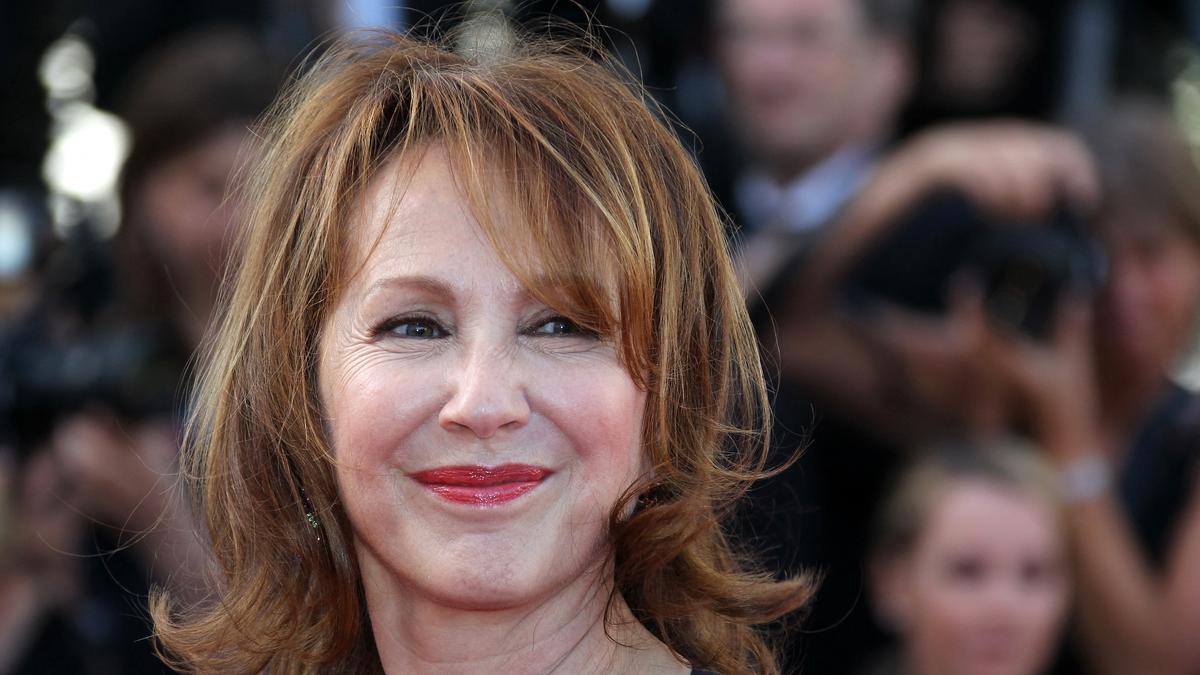
The screen goes dark, but the afterimage remains. For six decades, to watch French cinema was to witness a specific kind of alchemy. It was the way a single look could bridge the gap between a bourgeois living room and the raw, bleeding heart of the human condition. Nathalie Baye didn’t just act; she exhaled life into the frames of the world's most demanding directors.
Now, the silence is different.
The announcement came from her family on a Tuesday that felt too heavy for the changing season. At 77, the woman who served as the muse for Godard, Truffaut, and Spielberg has stepped out of the light. She died in Paris, the city that acted as the permanent backdrop to her elegance, leaving behind a void that no amount of digital remastering can ever truly fill.
The Girl Who Danced Through the Frame
Long before she was a four-time César Award winner, Nathalie was a girl with a pair of ballet shoes and a restless spirit. Born in Mainneville, she moved to New York at seventeen to study dance. It’s a detail people often overlook, yet it explains everything about her screen presence. There was a kinetic intelligence to her movements. Even when she was sitting perfectly still in a smoky cafe in a Truffaut film, her body seemed to be humming at a different frequency.
Consider the discipline required to transition from the rigid world of classical dance to the chaotic, improvisational energy of the French New Wave. She didn't just pivot; she transformed.
When she returned to France, the conservatory called. Then, the legends started knocking. It wasn't just her beauty, which was formidable but never flashy. It was her reliability. In an industry built on egos and volatility, Baye was the anchor. She was the "girl next door" if that girl happened to possess the soul of a philosopher and the timing of a master watchmaker.
A Career Defined by the Gaze
To understand the magnitude of this loss, you have to look at the 1970s. This was an era when cinema was trying to find its footing after the explosion of the 1960s. Directors were looking for authenticity. They found it in Baye’s eyes.
In Day for Night (1973), Truffaut cast her as a script girl. It was a meta-commentary on the industry itself. She wasn't playing a star; she was playing the person who makes the stars possible. She was the glue. That role set the tone for a career that refused to be pigeonholed. She could play the grieving widow, the hardened detective, or the mother of a con artist with equal conviction.
Think about the stakes of a performance like the one she gave in Every Man for Himself. Working with Jean-Luc Godard is notoriously like navigating a minefield while reciting poetry. He demanded a raw, unvarnished presence. Baye gave him more than that. She gave him a pulse. She won her first César for that role, a moment that signaled the arrival of a titan.
But she wasn't content with being a local treasure.
Crossing the Atlantic and Breaking the Mold
Most European actors find themselves swallowed by the Hollywood machine, relegated to playing the "mysterious foreigner" with a thick accent and a smoking habit. Baye was different. When Steven Spielberg cast her as Paula Abagnale in Catch Me If You Can, she didn't just play Leonardo DiCaprio’s mother. She provided the emotional gravity that prevented the film from floating away into mere caper territory.
In those scenes, you can see the weariness of a woman who has lived multiple lives. She brought the weight of French history and the sophistication of the European arthouse to a blockbuster stage. It was a masterclass in subtlety.
She never had to shout to be heard.
This is the invisible thread that runs through her filmography. Whether she was working with Xavier Dolan in her later years or commanding the screen in Le Petit Lieutenant, her authority came from a place of deep, quiet observation. She was a listener. In a world that prizes the loud and the fast, she was the deliberate pause.
The Private Heart of a Public Icon
Behind the accolades—the Césars, the Legion of Honour, the standing ovations at Cannes—lay a life lived with a fierce commitment to privacy. Her relationship with Johnny Hallyday, the "Elvis of France," was the stuff of tabloid dreams, yet she managed to navigate that whirlwind with a dignity that bordered on the miraculous.
Together, they had a daughter, Laura Smet.
Imagine the pressure of being caught between the two most famous surnames in France. Baye protected that flame. She wasn't interested in the celebrity circus. She was interested in the work. She was interested in the truth.
When news of her passing broke, the tributes didn't just come from film critics or industry peers. they came from the people who grew up watching her evolve. To the French public, she was a constant. Governments rose and fell, the world digitized, and the very nature of fame changed, but Nathalie Baye remained a symbol of a certain kind of French excellence: sophisticated, slightly melancholic, and utterly human.
The Persistence of Memory
There is a specific kind of grief that comes with the passing of a cinematic icon. It’s the realization that the gallery of our collective memory has lost one of its most vibrant colors.
We live in an age of disposable content. We consume images and discard them within seconds. Baye’s work demands the opposite. It demands that you sit. It demands that you feel the silence between the lines of dialogue.
Her death marks the end of a specific lineage of acting. She was one of the last great bridges to the golden age of the New Wave, a performer who understood that a movie isn't just a sequence of shots, but a conversation between the actor and the audience's soul.
She leaves behind a filmography that functions as a map of the human heart. If you want to know what it felt like to be alive, confused, and hopeful in the late 20th century, you only need to watch her walk across a room.
The lights have dimmed in the theaters along the Boulevard du Montparnasse tonight. The projectors are still, and the seats are empty. But somewhere, on a silver screen in the mind's eye, she is still moving. She is still looking back at us, her expression a mix of secrets and starlight, reminding us that while the actor may depart, the performance is eternal.
The curtain falls. The credits roll.
The city waits for a morning without her, but the shadows she cast were so long, so elegant, that they will likely never disappear.