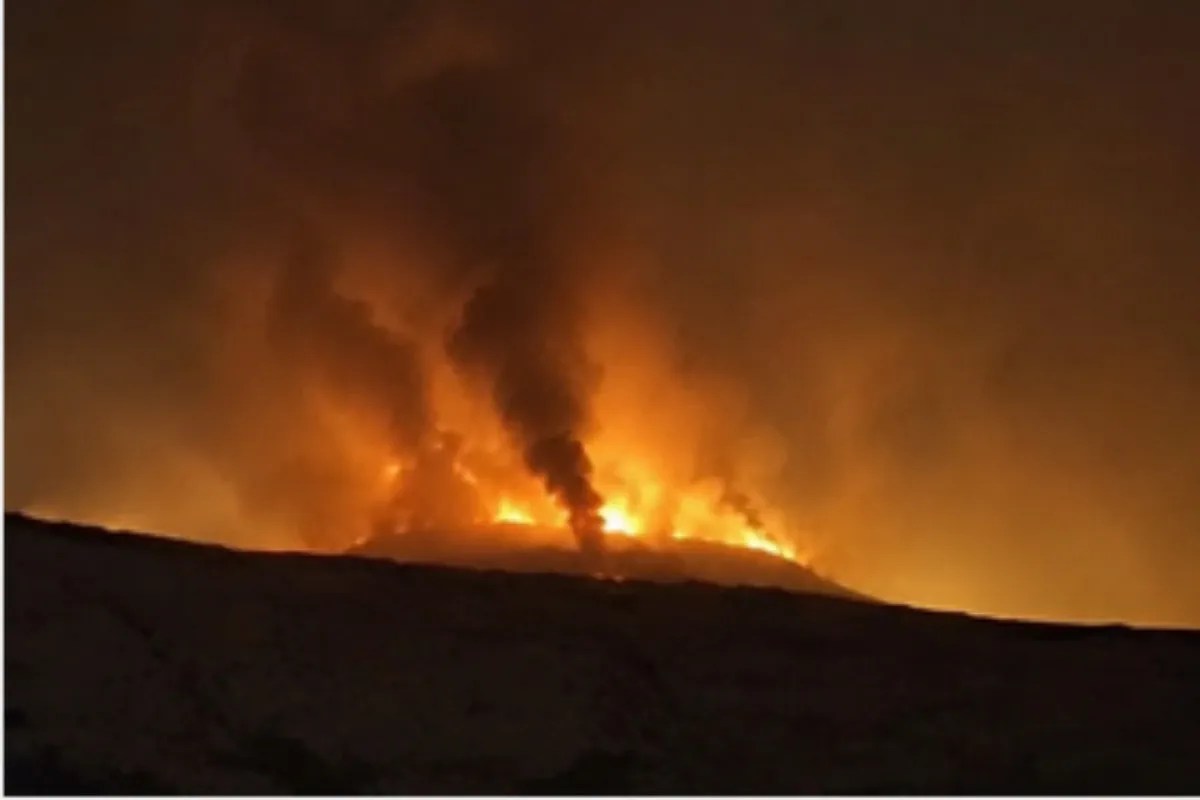
Headline writers love night twelve. It sounds relentless. It sounds decisive. It projects an image of an unstoppable superpower grinding an adversary into submission through relentless operational tempo.
It is a complete misunderstanding of modern conflict.
When military command runs a strike campaign for twelve straight nights without altering the strategic calculus on the ground, it does not demonstrate dominance. It demonstrates an operational dead end.
The Airpower Illusion
Sensational media reports frame continuous bombardment as a display of infinite capacity. Having spent years analyzing force projection and defensive posture across Western Asia, I can tell you that long bombardment cycles usually signal strategic hesitation, not strength.
Air strikes are surgical instruments designed to achieve specific short-term conditions: degrading air defenses, severing command-and-control nodes, or blunting immediate offensive maneuvers. They are meant to create window opportunities for diplomatic leverage or ground maneuver.
When an air campaign stretches past a week without a follow-on strategy, the adversary adapts. Hardened targets are evacuated. Mobile assets disperse into civilian infrastructure. Command nodes shift to redundant, low-tech communication channels.
By night twelve, the high-value target list is exhausted. What remains is a costly exercise in bombarding empty bunkers and secondary munitions dumps to maintain the appearance of pressure.
The Asymmetric Math Heavy Hitters Ignore
Every precision-guided munition dropped carries a massive fiscal and logistical weight. A single joint direct attack munition or cruise missile costs tens of thousands to millions of dollars. The adversary counters with low-cost dispersal, passive defense, and cheap air defense saturation tactics.
Imagine a scenario where an offensive power spends $150 million over two weeks targeting assets that cost the defender $10 million to replace. That is not deterrence. That is economic attrition turned on its head.
Defense analysts like Kenneth Waltz long argued that true deterrence rests on the target believing that the attacker can and will alter the strategic reality permanently. Repeated, bounded airstrikes send the exact opposite signal:
- Bounded Intent: They show the attacking power is unwilling or unable to commit ground forces or enforce an actual blockade.
- Predictable Escalation: They allow the defensive nation to calibrate its response threshold, absorbing the shock while building long-term political resilience internally.
- Depletion of Strategic Stocks: Munition stockpiles are finite. Expending top-tier precision weapons on low-yield targets in a secondary theater leaves the attacking nation exposed in primary global operational zones.
Misreading the Political Effect Inside the Target Nation
The standard media narrative assumes that continuous bombing breaks a nation's internal resolve. Historical precedent—from the Blitz to Vietnam to modern regional clashes—shows precisely the opposite.
Foreign bombardment acts as an institutional sealant. It neutralizes internal political dissent, unites competing domestic factions under a national security umbrella, and validates the regime's core narrative that external containment is existential.
The media focuses on smoke plumes over urban centers. They miss the real action: the rapid consolidation of political authority behind closed doors.
What Real Escalation Control Looks Like
If the goal of kinetic action is to force a concessions framework, twelve nights of kinetic operations represent a failure of coercive diplomacy. Coercive diplomacy requires an off-ramp paired with credible, irreversible threats—not a predictable nightly bombardment schedule.
True strategic leverage requires three things airpower alone cannot deliver:
- Financial Interdiction: Cutting off real-time capital flows and dark-market energy exports at the source, rather than bombing regional proxies.
- Structural Isolation: Forcing third-party trade partners to choose between access to global financial clearinghouses or secondary trade routes.
- Irreversible Positional Change: Altering maritime control points or territorial geometry in a way that cannot be undone when the aircraft return to base.
Without these components, night twelve becomes night thirty, the news cycle moves on, the strike ordinance runs low, and the strategic baseline remains entirely unchanged.