The knuckles turn raw first. By the fourth hour of walking up the concrete stairwells of Queens, the skin over the bone splits slightly in the November wind. You learn to knock with your left hand because your right hand is holding the clipboard, the heavy stack of flyers, and the pen that keeps freezing in the chill.
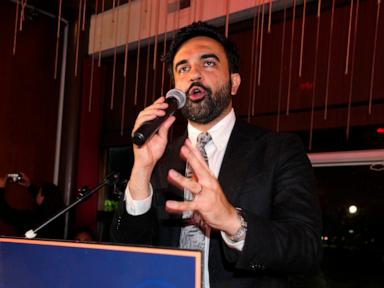
Zohran Mamdani knew this cold. Long before he sat in the polished legislative chambers of Albany, he was a foreclosure prevention counselor. He spent his days sitting at kitchen tables, looking at notices printed in stark, terrifying bold font. He watched people stare at the walls of apartments they had lived in for forty years, realizing the ceiling over their heads was no longer a certainty.
When he ran for the New York State Assembly in 2020 as a democratic socialist, the political establishment treated his campaign like a fluke. A statistical anomaly born of low-turnout pandemic voting. But then he won. Then, years later, he decided to challenge the very center of gravity in New York politics by eyeing the city’s highest office.
This is not a story about one man’s ambition. It is a window into a quiet, tectonic fracture inside the Democratic Party, a entity currently frozen in a state of existential panic. The party is trapped between two opposing forces: an aging donor class that demands moderation, and a desperate, younger electorate that cannot pay its rent.
The Calculus of the Kitchen Table
Step inside a typical two-bedroom apartment in Astoria. Let us call the woman living there Maria. She is fifty-two. She works in a medical billing office in midtown. Every month, her paycheck arrives, and every month, a larger percentage of it vanishes into the bank account of a corporate landlord based in Delaware.
For decades, the standard Democratic response to Maria was a symphony of empathy. Politicians would stand at podiums, look deeply into the cameras, and declare that housing is a human right. They would pass incremental tax incentives for developers, hoping a few crumbs of affordable housing would trickle down to the working class.
Mamdani’s approach rejects the incentive structure entirely. He does not ask developers to be kinder; he asks the state to wield its power. He championed the Good Cause Eviction law, a piece of legislation designed to prevent landlords from hiking rents predatory amounts without justification. To the real estate lobby, this was an attack on the free market. To Maria, it was the difference between staying in her neighborhood or packing her life into cardboard boxes.
The institutional leadership of the Democratic Party views this brand of politics with deep discomfort. They worry about the flight of capital. They worry about wealthy donors closing their checkbooks. They argue that to win national elections, the party must project an image of fiscal responsibility and stability.
But stability is a luxury of the stable.
Look at the numbers. Across American cities, the cost of living has outpaced wage growth by staggering margins. The traditional working class, the historical bedrock of the Democratic coalition, is experiencing an economic tightening that feels less like a recession and more like a slow eviction from society. When a political party offers incrementalism to a person facing an emergency, that person stops voting. Or worse, they look for answers in radical right-wing populism.
The Illusion of the Big Tent
Political strategists love the metaphor of the big tent. It is a comfortable image. It suggests room for everyone, from Wall Street executives who favor socially progressive policies to union laborers fighting for a living wage.
The tent is tearing.
The primary friction is no longer just about ideology; it is about lived urgency. When Mamdani and his allies in the Democratic Socialists of America (DSA) secure victories in New York, it sends a tremor through the national party architecture. It proves that a campaign can survive, and even thrive, without corporate political action committees. It relies instead on an army of volunteers willing to ruin their knuckles on doors.
This success challenges the fundamental business model of modern politics. For a generation, political consulting has been a high-stakes industry driven by multimillion-dollar television ad buys and data-driven targeting. Left-wing insurgencies bypass this apparatus. They trade expensive consultants for thousands of individual conversations on doorsteps.
Consider the psychological shift required of a party leadership accustomed to total control. For decades, the path to power within the Democratic hierarchy required paying dues, waiting in line, and securing the blessing of county leaders. The new wave of organizers does not ask for permission. They view the party structure not as a home, but as a vehicle—one that is currently idling in neutral while the world burns.
The Geography of Discontent
New York City is often treated as an exceptional place, a dense, vertical anomaly disconnected from the rest of the country. This is a mistake. The forces playing out in the neighborhoods of Queens and Brooklyn are the exact same forces reshaping Phoenix, Atlanta, and Detroit.
Gentrification is not just a change in the types of coffee shops available on a block. It is a form of displacement that rewrites the social contract. When a neighborhood changes rapidly, the long-term residents feel a sense of profound alienation. They see new buildings rising around them, gleaming towers of glass and steel, and they know instinctively that those buildings are not meant for them.
Mamdani’s political identity is rooted in this specific geography of discontent. He represents a district where over a hundred languages are spoken, where street vendors clash with city agencies, and where delivery workers ride electric bikes through blizzards to bring warm meals to people who never see their faces.
The traditional party apparatus often treats these communities as a monolith, a reliable block of minority voters who will show up every November out of fear of the alternative. But allegiance is fading. Younger Black, Latino, and Asian voters are showing a distinct unwillingness to settle for symbolic representation. They want material results. They want healthcare that does not require a deductible that ruins them. They want public transit that works.
When the establishment dismisses these demands as unrealistic or pie-in-the-sky, they misread the room entirely. These are not academic debates for the people living them. They are matters of survival.
The Question of Governance
It is easy to be an insurgent. It is hard to govern. This is the critique most frequently leveled against the socialist left by moderate Democrats. They argue that while fiery speeches and protest marches are effective at capturing attention, they do not get bills passed in a messy, compromised legislative body.
There is a kernel of truth here that the left must confront. To pass a budget, to keep the lights on, to manage a massive bureaucracy like New York City, requires negotiation. It requires sitting in rooms with people whose worldviews you find abhorrent.
Mamdani’s tenure in the Assembly has been a test case for this exact dilemma. He has had to navigate the reality of a legislative body where power is concentrated in the hands of a few leaders. He has had to learn when to stand outside the gates with a megaphone and when to sit at the negotiating table with a pen.
The tension is visible every time a vote is called. Do you vote against a state budget because it contains concessions to the wealthy, or do you vote for it because it includes crucial funding for public universities that your constituents desperately need? There is no clean answer. The purity of activism always collides with the friction of governance.
But the establishment’s critique often masks a deeper fear. The fear is not that the left will fail to govern, but that they might succeed. If a socialist administration can successfully fund public housing, expand green infrastructure, and tax high earners without causing an economic collapse, the entire ideological justification for the moderate, neoliberal consensus evaporates.
The Echo in the Halls of Power
Walk through the corridors of the State Capitol in Albany. The walls are lined with oil portraits of governors from the nineteenth century. Stern, bearded men who oversaw the construction of the canals and railroads. The architecture itself is designed to make the individual feel small, to remind you that the state is ancient and permanent, and you are merely a temporary occupant.
In these halls, the presence of someone like Mamdani is a constant, irritating reminder that the old rules are fraying. The political machine that once dominated New York—a machine built on patronage, backroom deals, and corporate deference—is losing its grip.
The response from the party center has been a mix of co-optation and resistance. In some instances, leadership has adopted the rhetoric of the left, talking openly about environmental justice and economic inequality. In other instances, they have poured millions of dollars into primary challenges designed to crush the insurgent wing before it can expand.
This internal civil war is exhausting. It drains resources that could be used to fight the conservative movement nationally. Yet, it is an unavoidable conflict. You cannot reconcile two fundamentally different visions of what a political party should be. One vision sees the party as a manager of the existing system, tweaking the dials to make the capitalism a little more humane. The other vision sees the party as an instrument for structural transformation.
The Doorbell is the Horizon
The sun sets early in Queens during the winter. By five o'clock, the shadows of the elevated subway tracks stretch long and blue across the asphalt. The trains roar overhead, a deafening, metallic shriek that drowns out conversation every four minutes.
Beneath the tracks, the canvassers keep moving.
They are out there right now. They are climbing up to the third floors of brownstones. They are ringing bells that don't work, waiting in the dim light of vestibules that smell of cooking spices and damp coats.
The Democratic Party’s willingness to change will not be decided by a committee report or a high-level summit in Washington. It will be decided by whether the party can offer something meaningful to the person who opens that door.
If the party continues to offer half-measures, if it remains terrified of its own shadow and its own donors, the door will simply close. Not with a bang, but with a quiet, definitive click. And the people outside will be left standing on the stoop, holding their clipboards in the dark, wondering how a movement with so much promise forgot how to speak to the hunger of the street.