Everyone loves a peace summit.
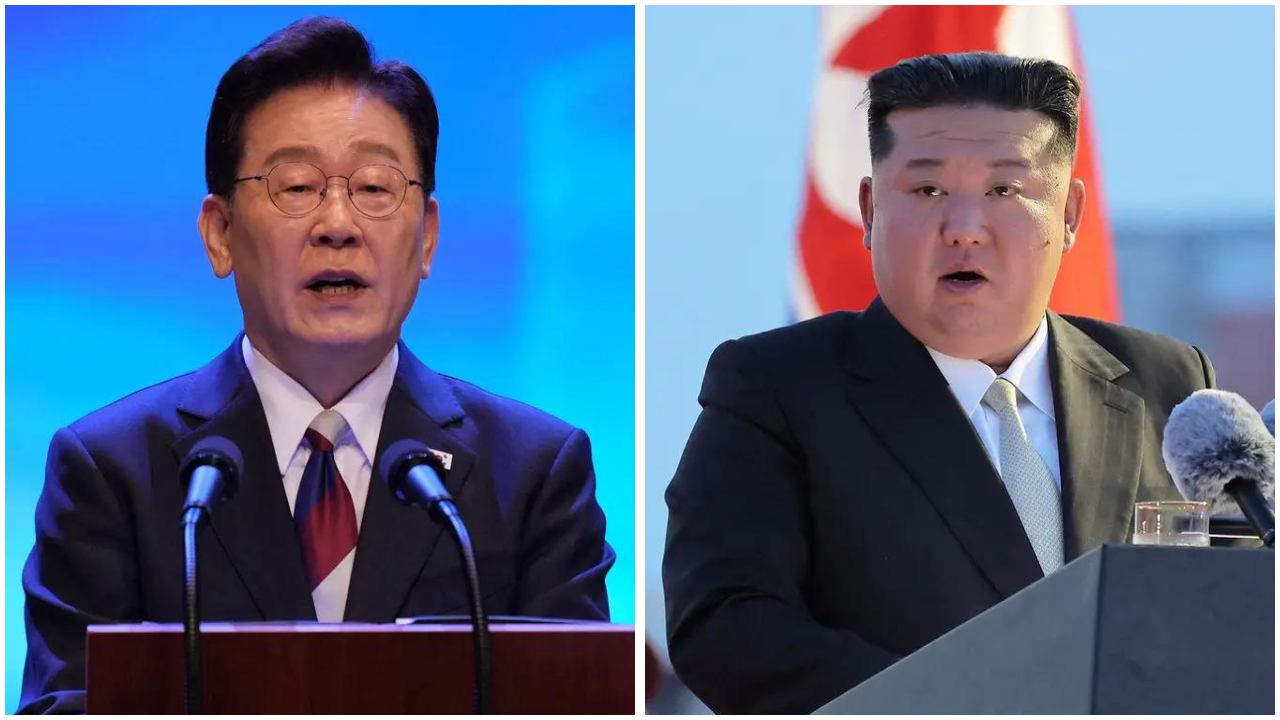
The media eats it up. The diplomatic corps dusts off their finest suits. Observers salivate over historical handshakes, smiling flags, and vague communiques promising a brighter tomorrow. South Korea’s Lee Jae Myung steps up to the microphone, calls for immediate discussions with Pyongyang, and the predictable chorus of breathless optimism fills the air. It sounds sophisticated. It sounds civilized.
It is also completely, catastrophically wrong.
The lazy consensus in international relations holds that dialogue is an unalloyed good. If two parties are not talking, the standard narrative goes, they are drifting toward war; if they are talking, they are walking toward peace. This is a comforting fairy tale for comfortable people who have never spent an hour analyzing the inner workings of the regime in Pyongyang.
I have spent decades watching Seoul politicians fall into the exact same trap. They mistake the process of negotiation for the product of peace. They look at a regime driven by institutionalized paranoia, nuclear extortion, and domestic survival, and they project onto it the rational incentives of a Western liberal democracy.
Stop trying to fix inter-Korean relations through more roundtable chats. Start recognizing that unconditional dialogue without prior structural disarmament is nothing more than a subsidized lifeline for a failing dictatorship.
The Misdiagnosis at the Heart of Seoul Politics
To understand why Lee's call for renewed talks misses the mark, we first need to define the fundamental error plaguing modern Korean diplomacy: the conflation of capability with intent.
Mainstream analysts argue that North Korea's aggressive postures, ballistic missile tests, and saber-rattling are simply reactions to joint military drills or perceived slights from the conservative camp in Seoul. They claim that if South Korea just shows enough flexibility, offers enough economic concessions, and opens enough diplomatic channels, Pyongyang will reciprocate.
This is historical illiteracy.
Look at the record. Over the past three decades, Seoul has tried every flavor of engagement imaginable. The Sunshine Policy poured billions of dollars northward with zero political strings attached. Summits were held. Industrial parks were built. Joint tourism ventures were funded. And what was the return on investment? A fully weaponized nuclear arsenal, intercontinental ballistic missiles capable of hitting the American mainland, and a formal constitutional declaration by Pyongyang defining the South not as a brotherly nation to be unified with, but as its primary enemy and invariable principal foe.
When a regime tells you who they are through actions and official statutes, believing that a new round of coffee-and-croissants diplomacy will change their core calculus is not statesmanship. It is malpractice.
"Dialogue with a nuclear extortionist is not diplomacy. It is financing your own eventual coercion."
👉 See also: When the Asphalt Turns to Ocean
The Economics of Appeasement
Let us look at the mechanics of what happens when Seoul rushes to the negotiating table without leverage.
Imagine a scenario where the South Korean government unconditionally opens high-level talks, lifts unilateral sanctions restrictions, and resumes major economic projects to show good faith. Within weeks, the hard currency flows in. The regime in Pyongyang uses those hard currency injections to plug the structural leaks in its military-industrial complex, fund cyber-warfare operations, and accelerate fissile material production. Meanwhile, the South Korean public relaxes its guard, defense budgets face political pressure, and the alliance with Washington experiences friction over differing diplomatic tempos.
You have not reduced tension. You have subsidized the threat.
The Kim regime does not survive by integrating into the global economy. It survives by maintaining total internal control through external enemies. A peaceful, stable, open dialogue threatens the very ideological architecture of the North Korean state. If the populace in the North realizes that their southern neighbors are not imperialist monsters starving in the dirt, but a thriving technological powerhouse, the regime collapses from within.
Therefore, any meaningful engagement from Pyongyang's perspective must be transactional, temporary, and entirely focused on extracting concessions without yielding an inch of strategic capability.
Dismantling the People Also Ask Fallacy
Every time tensions flare on the peninsula, search engines and opinion columns are flooded with the same tired questions. Let us dismantle them right now with brutal clarity.
Can dialogue reduce the risk of accidental military conflict?
No. In fact, it often increases risk by creating a false sense of security. Historical crises on the peninsula—such as the shelling of Yeonpyeong Island or the sinking of the Cheonan—did not happen because there was a lack of hotlines. They happened because North Korea calculated that the political cost of aggression was lower than the utility of provocation. Clear communication channels are useless if the adversary interprets your willingness to talk as a sign of weakness and hesitation to retaliate.Is economic aid an effective tool to modify North Korean behavior?
Only if it is backed by absolute, unyielding punitive enforcement. When aid is given as a bribe to keep the peace—often called appeasement with better PR—it functions as rent paid to a landlord who is actively burning down the apartment building. True leverage requires the credible threat of total economic isolation, not the dangling carrot of perpetual assistance.Does a hardline stance preclude eventual reunification?
It is the exact opposite. A soft, capitulatory stance normalizes the division by institutionalizing the existence of two hostile nuclear states on the same peninsula, with one holding the other hostage. Real momentum toward a stable, unified future can only begin when the illegitimate leverage of the North's nuclear arsenal is neutralized through unyielding pressure and structural containment.
The Cost of False Hope
I have seen corporations and political entities blow millions of dollars, countless hours of diplomatic capital, and irreplaceable strategic advantage on the altar of feel-good diplomacy. They prioritize the optics of progress over the reality of security.
When you tell the public that peace is just one more summit away, you disarm their vigilance. You make it politically toxic to maintain the necessary, unpleasant, expensive defenses that keep the peace in the first place. Peace on the Korean peninsula has not held for over seventy years because of nice conversations. It has held because of a massive, unyielding deterrent posture and the undeniable reality that any northern aggression would mean total annihilation.
Lee Jae Myung’s impulse to talk sounds compassionate. But compassion without strategic realism is just recklessness.
Stop confusing motion with progress. Stop pretending that talking to an arsonist about the architecture of their matches will stop the fire.
The next time a politician calls for unconditional talks with Pyongyang, do not look for the handshake. Look for what they are willing to give away to get it.
That price is always too high.