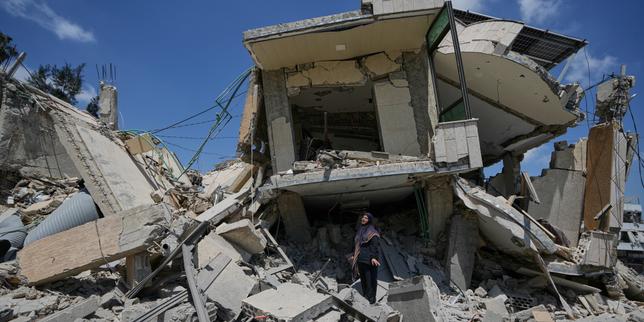
Paper agreements don't stop bullets. A fragile ceasefire brokered under heavy international pressure was supposed to bring quiet to southern Lebanon. Instead, it brought immediate blame, fresh airstrikes, and a rapid descent back into chaos.
Within less than forty-eight hours of the truce taking effect, Hezbollah publicly accused Israel of repeatedly violating the terms. The group pointed to aggressive low-altitude drone flights and direct artillery targeting as proof that the Israeli military had no intention of slowing down. But look at the bigger picture and you see a classic, tragic pattern. Israel countered immediately, claiming Hezbollah fired dozens of projectiles at its forces, forcing a defensive response.
This isn't just a breakdown in communication. It is a fundamental disagreement on what a ceasefire actually means when hostile armies occupy the same dirt.
The Anatomy of an Instant Violation
We've seen this script play out in the Middle East dozens of times. A diplomatic breakthrough is announced, families celebrate in the streets of Beirut, and then the artillery starts up again. Hezbollah claims Israeli tanks pushed into territory they shouldn't have touched immediately after the ink dried on the deal.
The Lebanese group insists it remained committed to the framework but wouldn't tolerate what it called flagrant territorial overreach. On the other side, Israel claims its airstrikes against rocket storage sites and command outposts were a direct answer to real-time threats.
The core issue stems from the wording of these diplomatic deals. The transition phase allows Israeli forces to maintain a physical presence in certain southern pockets while the Lebanese army supposedly prepares to deploy. This creates a friction cooker. When you have armed fighters and occupying troops within eyesight of each other, someone is going to pull a trigger.
What the Diplomats Missed
Diplomats sitting in western capitals love clear timelines. They write down sixty-day withdrawal periods and expect militias and state armies to move like pieces on a chessboard. Real life is messier.
- Vague Rules of Engagement: The agreement leaves a massive gray area regarding what constitutes an "imminent threat."
- The Drone Dilemma: Israeli surveillance flights never truly stopped, which Lebanese officials view as a constant breach of sovereignty.
- Command Control Fault Lines: Local field commanders often act on survival instincts rather than waiting for orders from high command.
Who Actually Controls the Ground
If you listen to the Lebanese government, the solution is simple. The state military needs to be the sole authority in the south. Kamal Shehadi, the Lebanese Minister for the Displaced, has repeatedly argued that international players focus too much on balancing Hezbollah and Israel while ignoring the central government in Beirut. He's right, but the Lebanese army simply lacks the muscle to push Hezbollah out or stop Israeli incursions on its own.
United Nations peacekeepers (UNIFIL) have been stationed in the region for decades. Their presence hasn't stopped a single major escalation. They track the violations, write reports, and watch the rockets fly overhead.
The structural flaw here is that both sides believe they have a right to "active defense." If Israel spots what it thinks is a Hezbollah fighter moving toward a storage facility, it strikes. If Hezbollah sees an Israeli drone hovering over a village, it fires. Every single action is framed as a reaction.
The Regional Stakes
This fight isn't happening in a vacuum. The broader regional alliance network ensures that a spark in southern Lebanon catches fire elsewhere. Iran handles the logistics and political backing for Hezbollah, meaning any collapse of a local truce instantly hardens diplomatic positions in Tehran and Tel Aviv. We saw this clearly when maritime threats flared up in the Persian Gulf in tandem with the renewed strikes in Nabatiyeh.
Moving Past the Finger-Pointing
If this truce is going to survive the week, the international monitoring committee needs to stop acting like spectators. Watching both sides trade blame on social media and news broadcasts achieves nothing.
Immediate, direct communication channels between the Lebanese army, international monitors, and the combatants must be used to clarify troop positions hourly. Localized border lines need explicit demarcation to prevent accidental encounters. Without these ground-level fixes, expect the sirens to keep sounding in northern Israel and the smoke to keep rising over southern Lebanon.