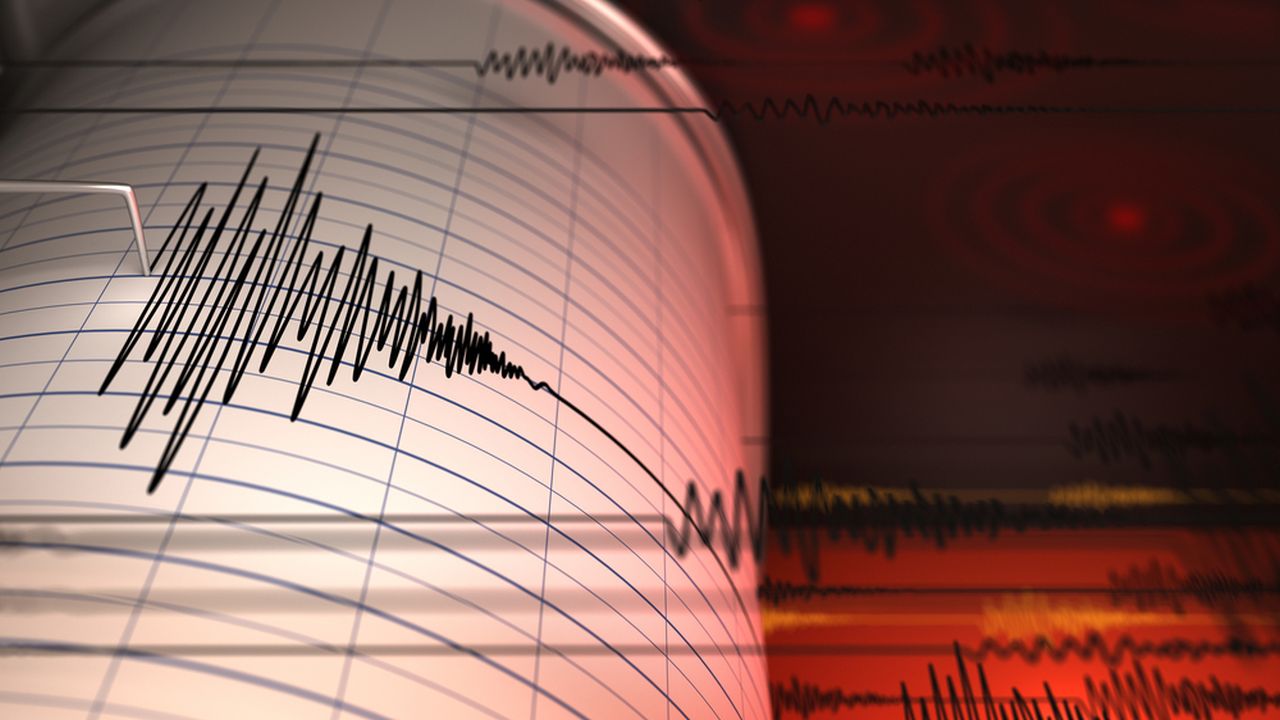
When the ground starts shaking on the Sanriku coast, you don't look for explanations. You move. That’s the reality for anyone living along Japan’s northeastern seaboard, and it was the reality for thousands today, April 20, 2026. A magnitude 7.7 earthquake struck off the coast of Iwate, sending a jolt through the region that reminded everyone why this part of the world is ground zero for seismic risk.
The Japan Meteorological Agency (JMA) acted fast, issuing tsunami warnings immediately. For those of us who track these events, it’s not just another headline. It’s a systemic test of a society that has spent decades building everything—from infrastructure to early warning protocols—around the inevitability of the next big one.
Making sense of the April 20 earthquake
This wasn't a minor tremor. A magnitude 7.7 event is powerful enough to cause significant structural damage and trigger dangerous waves. The epicenter, located about 100 kilometers off the coast of Iwate, was shallow. That matters. Shallow earthquakes, even if they aren't magnitude 9.0 monsters, pack a punch because their energy has less distance to travel before it hits the surface.
[Image of the Japan Trench subduction zone]
We saw the result today: tsunami warnings flashing on screens, public broadcaster NHK urging immediate evacuations, and a general disruption of daily life. The JMA and the Cabinet Office were quick to flag the heightened risk for the next week, reminding residents that a "mega-quake" (the dreaded Nankai Trough or a repeat of 2011-scale events) remains a statistical possibility, even if the odds are low. They aren't predicting the future, they’re managing it.
Why the Sanriku coast keeps shaking
If you're wondering why this specific region is so volatile, look at the geography. The Sanriku coast sits near the Japan Trench, where the Pacific Plate is ruthlessly grinding underneath the Okhotsk Plate. It’s a subduction zone. The plate moves at about 8 to 9 centimeters a year. That might sound like a slow crawl, but it’s enough to build up massive amounts of stress.
When that stress breaks, the energy releases as an earthquake. If the rupture happens at the seabed, it displaces the water column, and that's when you get a tsunami. This isn't a new phenomenon. It's the same mechanic that triggered the 1896 Meiji-Sanriku disaster, the 1933 Showa-Sanriku earthquake, and of course, the 2011 Tohoku disaster. The geological reality of the Sanriku coast hasn't changed. It is simply one of the most seismically active places on the planet.
[Image of tsunami wave propagation]
How to read a tsunami warning properly
Most people panic when they hear "tsunami warning." That’s a mistake. You need to read the specific alert levels because they dictate your survival strategy.
- Tsunami Warning: This is the big one. Waves could exceed 1 meter and reach up to 3 meters or more. If you are in a warning area, don’t take photos. Don't go to the beach to "see" it. Get to high ground.
- Tsunami Advisory: Waves are expected to be around 1 meter. It sounds small, but a 1-meter wave moving at high speed can knock a person off their feet, swamp a harbor, and wreck small boats. It’s still dangerous.
- Tsunami Watch/Information: Stay alert. Information is evolving.
The biggest mistake people make is waiting for the authorities to tell them to move. If you feel a strong, long-duration tremor—or even a weak one that lasts for a long time—don’t wait for a siren. If you are near the coast, you should move to higher ground immediately. The time between the quake and the first wave can be minutes. You do not have time to check Twitter or wait for an official broadcast.
The truth about Japan's seismic risk
There is a strange, dangerous comfort in thinking, "Well, they just had a big quake, so the area is 'safe' for a while." This is absolutely false. In fact, seismic clusters are a thing. The 2011 event proved that a smaller quake can be a foreshock to something much, much larger.
The Japanese government’s issuance of a special advisory about the potential for future powerful quakes isn't fear-mongering. It’s a standard operating procedure for risk management. They are telling the public to remain vigilant because the crustal stress in that region hasn't just magically disappeared. It’s been redistributed.
Practical steps you need to take right now
If you are currently in or traveling to a high-risk region like the Tohoku coast, you need to stop guessing and start preparing.
- Map your exit: Don’t just look at a map. Walk your route from your home or office to the nearest designated high-ground evacuation site. Do it during the day, then do it at night. The terrain looks completely different in the dark.
- Pack a grab bag: This is non-negotiable. Keep a durable backpack with water, a high-calorie energy bar, a flashlight, a whistle (to signal for help if trapped), and a portable battery bank. Keep it near your front door.
- Understand the "10-minute rule": If you feel an earthquake that makes it hard to stand, assume a tsunami is coming. You have roughly 10 minutes to reach safe elevation. If the sirens don't go off, you have made the right choice by moving anyway.
- Download the apps: Use apps like "Yurekuru Call" or the JMA's own alerts. They provide faster, more localized data than generic news apps.
This April 20 event is a reminder that we don't live in a static world. The Earth is moving, shifting, and breaking beneath us. Respect the power of the sea and the ground. Don't wait for a warning to start planning your safety. If you wait until the ground starts shaking to think about where to run, you’ve already waited too long.


