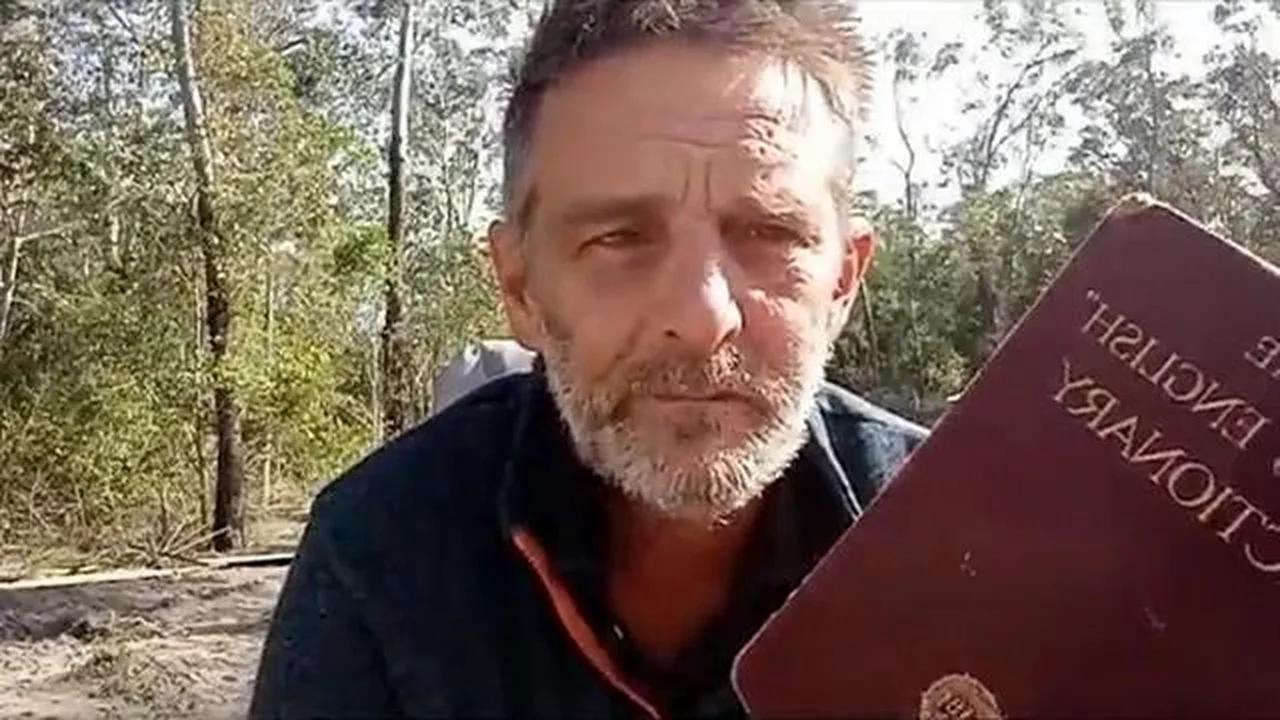
The international press is currently obsessed with a fairy tale. They are painting the detention of former Taipei Mayor Ko Wen-je as a "stress test" for Taiwan’s young democracy or a "pivotal moment" for its political stability. They are wrong. This isn't a constitutional crisis. It isn't a martyr’s journey. It is the inevitable biological rejection of a political organ that tried to survive without a skeleton.
Ko Wen-je didn't fall because of a grand conspiracy by the Democratic Progressive Party (DPP). He didn't fall because of a Kuomintang (KMT) resurgence. He fell because the "Third Way" in Taiwan was never a bridge; it was a vanity project built on sand. While pundits wring their hands over the optics of a former presidential candidate in handcuffs, they are missing the brutal reality: the Taiwan People's Party (TPP) was a venture capital firm that forgot to check its own balance sheet.
The Myth of the Technocratic Savior
The "lazy consensus" suggests that Ko Wen-je offered a refreshing, data-driven alternative to the "Blue-Green" ideological divide. This is a fundamental misunderstanding of how power functions. Ko didn't offer data; he offered a brand of aesthetic competence. He spoke in medical metaphors and used "SOP" (Standard Operating Procedure) as a mantra to distract from a lack of coherent foreign policy.
In reality, his administration in Taipei was a revolving door of talent. Genuine technocrats—the kind who actually understand urban planning and macroeconomics—frequently exited his inner circle, citing a leadership style that prioritized the "Ko P" persona over actual policy implementation. When you strip away the YouTube clips and the blunt-talk "honesty," what remained was a hollow core.
The Core Pacific City (Jinghua Mall) scandal isn't an anomaly. It is the logical conclusion of a political movement that claimed to be "above" the system while simultaneously trying to extract maximum utility from it. When you claim to be the only honest man in the room, you better make sure your floor-area ratio (FAR) calculations are beyond reproach. Increasing a project's FAR from 560% to 840% isn't an "administrative oversight." It is a massive transfer of public value to private hands.
The Mathematics of a One-Man Brand
Let’s talk about the TPP’s survival, or lack thereof. Political parties usually fall into two categories: ideological vessels or patronage networks. The TPP tried to be a "middle path," which in the context of Taiwan’s existential struggle with China, is a mathematical impossibility.
In a winner-take-all electoral system, a third party must either possess a distinct, unshakeable ideology (like the Greens in Europe) or a hyper-local base of support. Ko had neither. He had a cult of personality.
I have seen movements like this before. They mirror the "disruptor" startups of the mid-2010s that burned through cash, ignored governance, and assumed their charismatic founder was enough to ignore the laws of gravity. Once the founder is incapacitated—legally or politically—the "synergy" evaporates. The TPP isn't a party; it’s a fan club with a legislative caucus. Without Ko at the podium, the TPP's eight seats in the Legislative Yuan are essentially orphaned assets looking for a buyer.
The Fallacy of the Political Martyr
The TPP’s current strategy is to cry "political persecution." They want you to believe that President Lai Ching-te is weaponizing the judiciary to eliminate a rival. This narrative is a gift to the TPP’s base, but it falls apart under the slightest scrutiny.
If the DPP wanted to destroy Ko, they would have done it before the January election when he was a genuine threat to their plurality. Instead, the investigation followed the evidence. The "persecution" narrative ignores the fact that the Taipei District Court originally released him, only for an appeals court to point out the glaring inconsistencies in his defense. This isn't a "hit job"; it’s the legal system moving with the grinding, unglamorous pace of a bureaucracy that finally found a paper trail.
People also ask: "Will this lead to a more polarized Taiwan?"
The question is flawed. Taiwan is already polarized, but that polarization is its greatest strength. It creates a system of checks where neither the pro-sovereignty nor the China-friendly camps can drift too far into extremism without being pulled back by the electorate. Ko Wen-je didn't "soften" this polarization; he exploited it for clicks. By removing the "Third Way" noise, the political discourse actually becomes clearer. It returns to the fundamental question: How does Taiwan survive in the shadow of the CCP?
The Business of Integrity
For the international investor or the regional observer, the Ko Wen-je saga shouldn't be seen as a sign of instability. It should be seen as a sign of institutional health.
In many neighboring jurisdictions, a figure with Ko’s profile would be untouchable. The fact that a former mayor of the capital and a recent presidential contender can be detained and investigated for white-collar crimes—without the streets descending into chaos—is a massive "buy" signal for Taiwan’s rule of law.
However, there is a downside to this contrarian view. The collapse of the TPP likely forces a return to a two-party duopoly. For those who believe that competition breeds better governance, this is a loss. But it’s a necessary loss. A "third party" that functions as a chaotic wildcard, shifting positions on the 1992 Consensus depending on which way the wind blows, doesn't provide stability. it provides volatility.
Stop Looking for a Middle Ground
The lesson here is brutal. In high-stakes geopolitics, there is no "middle ground" when the fundamental question is existence. Ko Wen-je’s attempt to play both sides—flirting with the KMT for a joint ticket while maintaining a "white" (neutral) identity—exposed the vacuum at the heart of his movement.
When you try to be everything to everyone, you end up being nothing to anyone. The TPP’s supporters, largely disillusioned youth, are now left with a choice: return to the traditional parties or retreat into apathy.
If you want to understand what this means for the future, stop watching the protests outside the detention center. Start watching the TPP’s legislative votes. They will likely lean toward the KMT to stay relevant, effectively ending the "Third Way" experiment and merging back into the "Blue" camp in all but name.
Ko Wen-je’s cell is small, but the space he occupied in the Taiwanese psyche was even smaller than we realized. The "Ko P" era was a fever dream of the 2010s that finally broke in 2024. The data is in. The SOP failed.
Forget the "political landscape." The map hasn't changed; we’ve just stopped pretending a mirage was a mountain. Use this moment to realize that in the business of nation-building, "disruption" without a foundation is just a fancy word for a crash.
The TPP is a dead man walking. The only question left is who gets to keep the furniture.