The current friction between the United States and Iran represents a fundamental divergence between rhetoric and structural military posture. While political signaling hints at a "wind-down" of conflict, the physical movement of assets—specifically the deployment of additional troops and the targeting of cultural or tourism-related infrastructure—suggests a transition from traditional warfare to a high-stakes containment model. This is not a retreat; it is a recalibration of how power is projected in a multipolar environment where cyber capabilities and proxy networks have replaced clear front lines.
The Mechanics of Credible Deterrence
Deterrence operates through a mathematical relationship between capability and the perceived will to use it. When the U.S. sends additional troops while simultaneously discussing a wind-down, it is attempting to manage the "Escalation Ladder." This conceptual framework, pioneered by Herman Kahn, suggests that to prevent a total war, one must be able to dominate every individual rung of conflict.
The deployment of 3,000 to 4,000 additional personnel to the region serves three distinct operational functions that contradict the "withdrawal" narrative:
- Force Protection and Logistics Reinforcement: Small, isolated garrisons are liabilities. Increasing troop density at key hubs (like those in Kuwait or Iraq) transforms these locations from targets into "hardened nodes" capable of absorbing or repelling asymmetrical strikes.
- Electronic Warfare and Signal Intelligence (SIGINT): Modern troop movements are rarely just about infantry. They include specialized units capable of disrupting drone telemetry and intercepting encrypted communications. This technical layer is the primary defense against the "gray zone" tactics preferred by the Islamic Revolutionary Guard Corps (IRGC).
- The Tripwire Effect: By increasing the physical presence of U.S. personnel, the U.S. raises the "cost of aggression" for Iran. Any strike that results in significant American casualties necessitates a proportional response that Iran’s domestic economy—already strained by sanctions—cannot sustain.
The Tourism Target Paradox
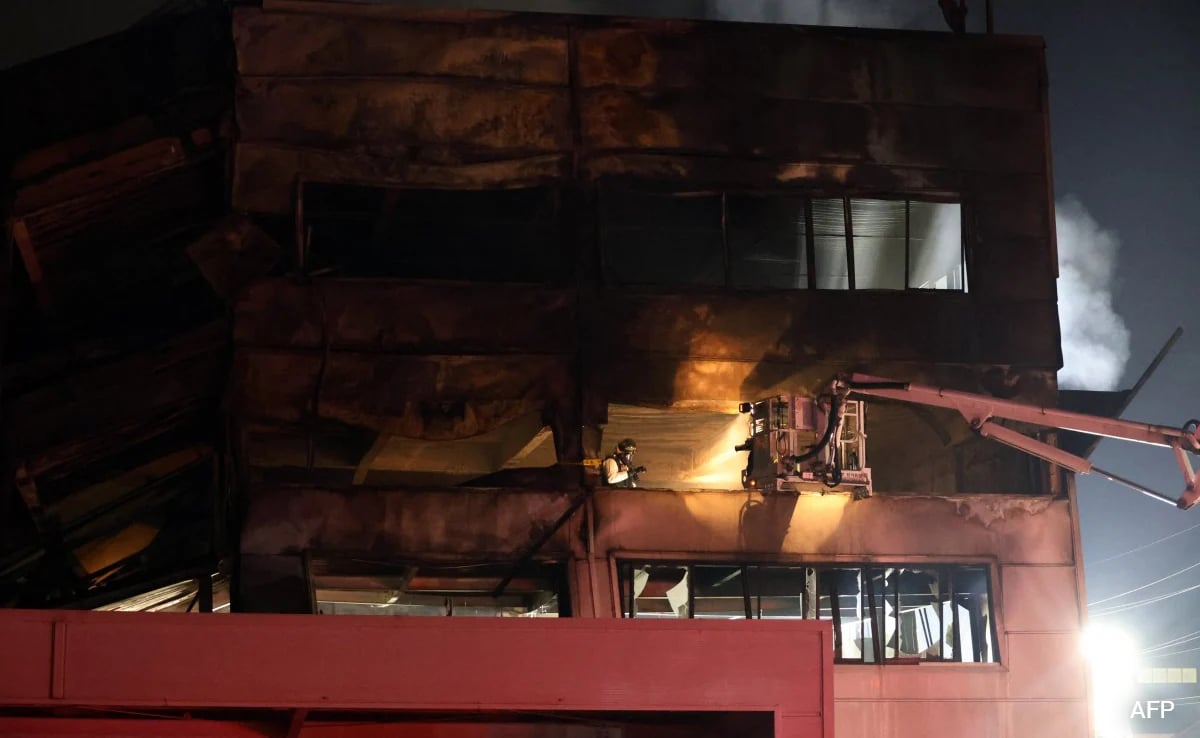
Iran’s threat to target U.S.-affiliated sites, potentially including cultural or tourism-heavy locations, marks a shift from military-on-military engagement to "Economic and Psychological Interdiction." To understand this, one must look at the Cost-Benefit Analysis of targeting different asset classes.
Military targets are hardened and carry high retaliatory risks. Tourism and cultural sites, conversely, are "soft targets" with massive symbolic value. By threatening these areas, Iran aims to trigger a "Risk Premium" on Western involvement in the region. This manifests as:
- Insurance Hikes: Global maritime and travel insurance rates spike when regional stability is questioned, creating a phantom tax on Western commerce.
- Capital Flight: Uncertainty discourages Foreign Direct Investment (FDI) in regional allies, effectively using psychological warfare to achieve economic decoupling.
- The PR Asymmetry: If the U.S. responds to threats against soft targets with hard military strikes, it risks losing the "moral high ground" in the international court of public opinion, a critical variable in maintaining European and Asian coalition support.
The Three Pillars of Iranian Proxy Warfare
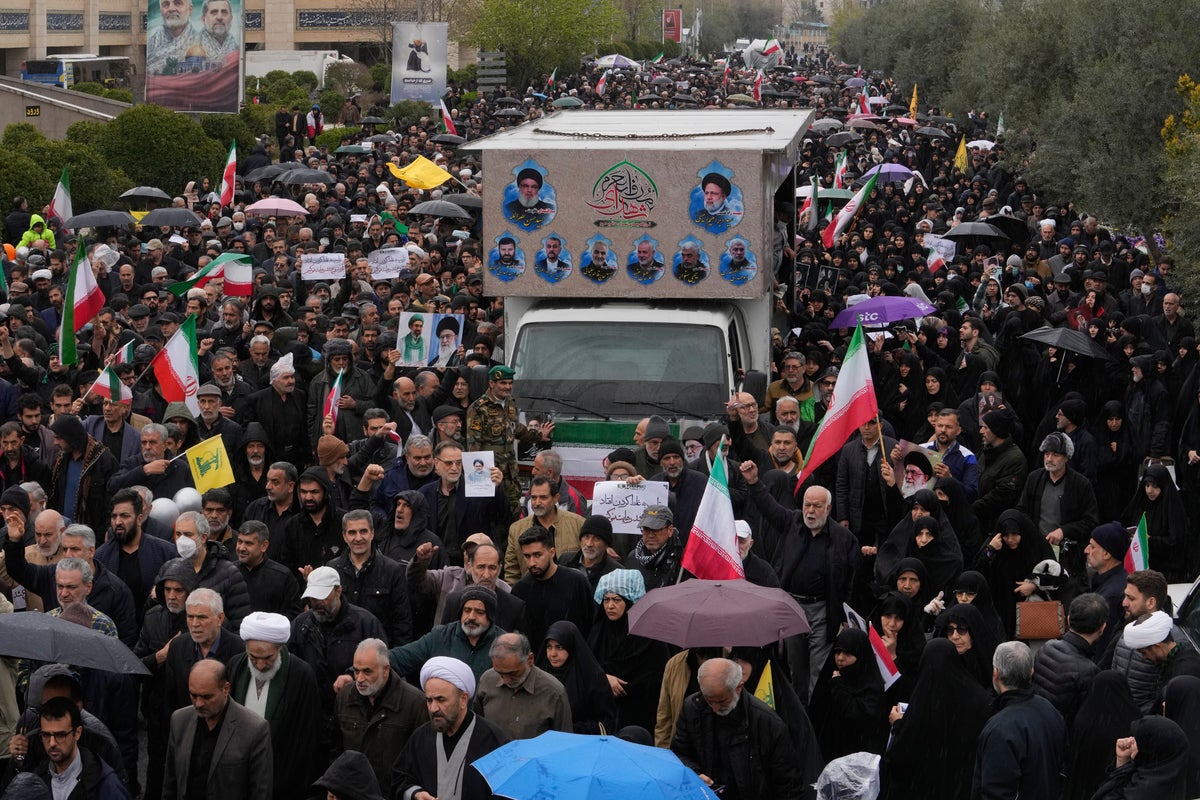
Iran does not fight as a Westphalian state. It operates through a decentralized network known as the "Axis of Resistance." This strategy is designed to achieve "Strategic Depth"—the ability to project power far beyond one's own borders without utilizing a traditional air force or navy.
- Pillar I: Plausible Deniability: By utilizing groups like Kata'ib Hezbollah or the Houthis, Iran can conduct kinetic operations while maintaining a diplomatic layer of separation. This complicates the U.S. "Rules of Engagement" (ROE), as retaliating against the sponsor (Iran) for the actions of the proxy (militias) is a legal and political minefield.
- Pillar II: Asymmetric Attrition: The cost of a single Iranian-manufactured Shahed drone is roughly $20,000. The cost of a single Patriot missile used to intercept it exceeds $3 million. This "Cost-Exchange Ratio" is unsustainable for the U.S. in a long-term conflict. Iran is not trying to win a battle; it is trying to bankrupt the U.S. military’s regional budget.
- Pillar III: Information Dominance: Every strike is recorded and distributed through social media to demoralize the opponent’s domestic population. In the U.S., public appetite for "forever wars" is at a historic low. Iran leverages this fatigue to force a political retreat where a military one is not happening.
Kinetic Realities vs. Rhetorical Signaling
The disconnect between "sending more troops" and "hinting at a wind-down" is a classic application of Game Theory, specifically the "Hawk-Dove Game."
The "Wind-down" rhetoric is the "Dove" signal, intended to provide an off-ramp for diplomacy and to soothe domestic voters. The "Troop Deployment" is the "Hawk" action, ensuring that if the off-ramp is ignored, the U.S. retains "Escalation Dominance."
However, this dual-track strategy contains a critical failure point: Miscalculation. When both sides are signaling peace while preparing for war, the "Buffer Zone" for error disappears. A stray drone or an unauthorized militia commander can trigger a kinetic chain reaction that neither Washington nor Tehran originally intended.
The Logistics of the Surge
The technical composition of the incoming U.S. forces reveals the true intent. High-ranking officials have noted the deployment of the 82nd Airborne Division’s Immediate Response Force (IRF). This is not an occupation force; it is a "Rapid Intervention" force.
Occupational forces bring heavy armor and civil affairs units. Intervention forces bring paratroopers, light infantry, and rapid-deployment logistics. The presence of the IRF suggests the U.S. is preparing for "Short-Duration High-Intensity" (SDHI) strikes rather than a sustained ground war. This distinction is vital for understanding the shift in U.S. foreign policy—moving away from nation-building and toward "Whack-a-Mole" counter-terrorism and state-actor containment.
Regional Alignments and the Energy Variable
The stability of the global energy market remains the silent arbiter of this conflict. The Strait of Hormuz handles approximately 21% of the world's petroleum liquids consumption. Any escalation that leads to a "Kinetic Closure" of the Strait would result in an immediate global recession.
Iran knows this is its "Nuclear Option" in the conventional sense. The U.S. troop surge includes naval assets specialized in mine-clearing and convoy protection. This is a direct counter-move to Iran’s "Guerilla Navy" tactics, which involve fast-attack boats and sea mines. The goal of the U.S. Navy here is to ensure "Freedom of Navigation" (FON), a core tenet of international law that justifies the presence of carrier strike groups in the Persian Gulf.
The Cyber-Kinetic Bridge
While physical troops move on the ground, the real escalation is occurring in the digital "Fifth Domain." Iran’s cyber capabilities have matured significantly, moving from simple Website Defacement to "Industrial Control Systems" (ICS) interference.
A "wind-down" in physical troop presence is often offset by an increase in "Cyber-Offensive" personnel. The U.S. Cyber Command (USCYBERCOM) likely operates in tandem with these troop movements to map Iranian infrastructure. This creates a "Dual-Threat Environment":
- Kinetic Threat: Missiles and troops.
- Digital Threat: Disruption of power grids, water treatment, and financial systems.
The targeting of "tourism sites" mentioned in political rhetoric may actually be a euphemism for the digital infrastructure that supports those sectors—reservations systems, banking backends, and telecommunications.
Strategic Decision Matrix
The U.S. is currently operating under a "Pivot to Asia" long-term strategy, which requires a reduction of footprints in the Middle East. However, the "Security Vacuum" created by a hasty withdrawal allows Iran to expand its "Land Bridge" from Tehran to the Mediterranean.
To resolve this, the U.S. must employ "Integrated Deterrence." This involves:
- Multilateral Sanctions: Moving beyond U.S.-only "Maximum Pressure" to a unified UN or EU-aligned framework.
- Regional Security Architecture: Strengthening the "Abraham Accords" framework to allow local allies (Israel, UAE, Saudi Arabia) to take the lead on regional security, with the U.S. providing the "Technical and Intelligence Backbone" rather than the "Front-line Infantry."
- Precision Attribution: Using advanced forensics to tie militia strikes directly to IRGC funding, stripping away Plausible Deniability and forcing Iran to own the consequences of its proxies' actions.
The current movement of troops is a "Stabilization Pulse"—a temporary increase in force to achieve a long-term reduction in risk. It is a tactical paradox: you must prepare for a larger war to ensure the current one actually winds down.
The move toward targeting cultural and tourism sites by Iran is a signal that they recognize the traditional military path is closed. They are searching for "Asymmetric Vulnerabilities" in the Western psyche. The U.S. response—sending more troops—is a firm rejection of that psychological gambit, signaling that the "Cost of Entry" for such an escalation remains prohibitively high.
The strategic play here is not to exit the Middle East, but to "Automate and Out-Tech" the presence there. Expect a future where physical troop numbers eventually drop, replaced by permanent "Over-the-Horizon" (OTH) strike capabilities and a sophisticated network of regional sensor arrays that make a physical U.S. presence redundant while maintaining the same lethal reach.