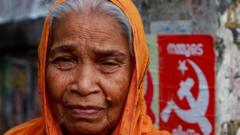
Walk into almost any village in Pathanamthitta or Alappuzha, and you will notice a eerie pattern. Massive, multi-story houses stand completely silent. The manicured lawns are empty, the gates are locked from the inside, and the only residents are a couple in their late seventies staring at a smartphone screen.
This is the reality of Kerala, India’s fastest-ageing state. While the rest of the country boasts about its young demographic dividend, Kerala is silently sliding into a massive demographic inversion. Decades of high literacy and a chronic lack of local white-collar opportunities have driven generations of young Keralites to the Middle East, Europe, and North America. They send back billions in remittances, but money cannot cook a meal, drive an octogenarian to a hospital, or provide conversation at 9:00 PM.
The traditional Indian joint family system is dead in these parts. Realizing that remittances cannot cure isolation, the state government just made a radical move. It launched India's first-ever dedicated Department for Senior Citizens along with a quasi-judicial Senior Citizens Commission. The goal is simple but incredibly heavy: ensure that no one in the state grows old and dies entirely alone.
The Silent Crisis Inside Massive Empty Houses
For decades, the standard narrative of success in Kerala followed a specific script. You get a degree, you catch a flight out of Cochin or Trivandrum, you send money home to build a large concrete house, and eventually, you return. Except, the return part rarely happens anymore. Children settle abroad permanently, leaving elderly parents to manage sprawling properties on their own.
Take the case of 70-year-old T.O. Dominic and his wife Martha from central Kerala. They have two sons. One is in the neighboring state of Karnataka; the other lives in the Middle East. They call every morning to talk about the weather and ask about prescriptions, but when a fuse blows or the plumbing breaks, the distance feels insurmountable. They are completely dependent on the goodwill of neighbors who are often ageing themselves.
This isn't an isolated case of bad parenting. It is a massive structural shift. Local social workers frequently find elderly residents who have been dead for days inside their homes, discovered only when the milkman notices uncollected bottles or smell alerts the neighborhood. The money is in the bank, but the hands to help are thousands of miles away.
Moving Beyond Institutional Care
The easy answer to an ageing population has always been building more old-age homes. Kerala is intentionally rejecting that path. Warehousing the elderly in institutions strips them of dignity and accelerates cognitive decline. Instead, the new department is modeling its interventions on Japan's community-integrated care systems.
The focus is on domiciliary care—bringing the support system directly to the person's current home so they can stay in a familiar environment. The strategy utilizes Kerala’s secret weapon: its deep-rooted network of local self-governments (panchayats) and Kudumbashree, a massive 4.5-million-strong women's neighborhood network.
Local volunteers are being trained in basic geriatric care to run mandatory weekly check-ins on every registered single or elderly couple in their wards. They do not just ask if they need medicine; they look for signs of cognitive drift, nutritional neglect, or physical hazards in the home.
The Overlooked Shift Toward Single Older Women
When you look at the raw data of ageing, you are actually looking at a gender issue. Demographers call this the "feminisation of ageing". Women in Kerala have a significantly higher life expectancy than men, frequently outliving their husbands by five to ten years.
This leaves a massive population of elderly widows living entirely alone. Unlike their male counterparts, many of these women never handled bank accounts, land deeds, or property taxes. When their spouses pass, they face a double wall of intense emotional isolation and complete financial illiteracy, making them prime targets for local scams or exploitation by distant relatives.
The newly formed Senior Citizens Commission is designed to act as a legal shield. It holds quasi-judicial powers to enforce the Maintenance and Welfare of Parents and Senior Citizens Act, a law that technically forces children to provide financial support but has historically been too slow and bureaucratic to protect vulnerable parents. The commission can step in directly, bypass lengthy court delays, and freeze local assets if children abandon their parents while enjoying their inheritance early.
Redesigning The Physical Landscape
A social safety net is useless if an elderly person cannot physically cross the street to access it. The state's plan includes a complete overhaul of public infrastructure to accommodate an older population.
This means rebuilding pedestrian walkways, introducing low-floor public transport buses that do not require giant steps to board, and mandating wheelchair access across all government offices. Hospitals are introducing priority geriatric wings to eliminate the grueling multi-hour wait times that cause many elderly individuals to skip routine medical appointments altogether.
There is also a push to build a statewide "skill bank". Retirement at 56 or 60 in the public sector leaves tens of thousands of healthy, highly educated teachers, engineers, and administrators with decades of life ahead of them and nothing to do. By indexing these individuals into local governance mentoring programs and community digital literacy campaigns, the state is trying to solve two problems at once: filling administrative gaps and giving retirees a profound sense of purpose.
Real Challenges The State Faces Right Now
Let's be clear: setting up a new government department is the easy part. Funding it long-term is a massive hurdle. Kerala's state treasury is notoriously strained, saddled with high public debt and a massive salary and pension burden. Relying heavily on remittances means the local tax base is surprisingly shallow for a state with such high human development indicators.
Moreover, community volunteerism has its limits. Burnout among local health workers and Kudumbashree volunteers is real. Expecting underpaid or voluntary neighborhood workers to handle complex, long-term geriatric care and severe dementia cases without major financial backing is unrealistic. The state will eventually have to transition from an informal network of well-meaning neighbors to a professionalized, state-funded workforce of certified geriatric caregivers.
If you are currently managing the care of an ageing relative from a distance, do not wait for policy rollouts to fix your family dynamics. Start by auditing their physical environment today. Install smart cameras with two-way audio in common areas, automate their monthly bill payments through local banking apps, and explicitly hire and pay a dedicated local coordinator or trusted neighbor rather than relying on casual promises of checking in. Loneliness kills just as effectively as physical disease; structural care requires structured planning, not just good intentions.