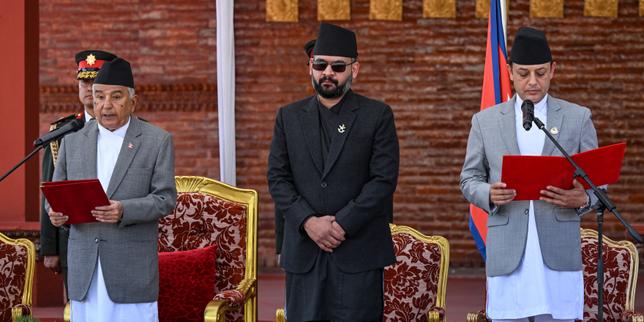
Balendra Shah never promised comfort. When the underground rapper turned structural engineer took over as mayor of Kathmandu in 2022, his platform was simple, raw, and relentlessly uncompromising. He swept into office on a wave of ferocious youth anger, promising to tear down illegal construction, break up decades of corrupt municipal cartels, and drag Nepal's ancient capital kicking and screaming into the twenty-first century.
Millions of young Nepalis viewed Balen not merely as a local politician, but as a cultural savior. They had watched generation after generation of traditional party hacks trade national wealth for personal sinecures while the youth fled the country for Gulf construction sites, Australian universities, and European kitchens. Balen was supposed to stop the bleeding. You might also find this similar coverage insightful: Why Foreign Policy Coverage is Completely Broken.
Four years later, the street-level reality is far more complicated. The honeymoon phase has crashed violently against the stubborn machinery of South Asian bureaucracy, structural poverty, and elite pushback. Kathmandu remains choked by dust, traffic, and political obstruction.
To understand what happened to the Kathmandu youth movement, you have to look beyond the viral TikTok clips and examine the grinding, unglamorous mechanics of urban governance. As reported in detailed coverage by Associated Press, the effects are widespread.
The Cost of Demolition Politics
Balen's early strategy relied heavily on shock and awe. Armed with bulldozers and a live-streamed indifference to political pressure, his administration tore down illegal commercial structures encroaching on public land. Street vendors lost their livelihoods overnight. Informal settlements faced sudden eviction notices without adequate relocation plans.
To his most ardent supporters, this was decisive leadership. Finally, an executive was ignoring the entrenched syndicates that had paralyzed the Kathmandu Metropolitan City office for decades.
To critics, and increasingly to the working-class youth who initially chanted his name, it looked like technocratic authoritarianism. Urban planning requires more than a sledgehammer. When you displace thousands of informal workers without building alternative economic infrastructure, you do not solve urban blight. You simply shift the misery to the outer ring roads.
The political fracture runs deep. Many of the young volunteers who spent their savings printing campaign flyers in 2022 now find themselves priced out of the very city they helped transform. The economic anxiety that drove them to the ballot box has not evaporated. It has mutated.
The Exodus Continues
Foreign embassies in Kathmandu are still surrounded by massive queues every single morning. Young Nepalis are leaving in historic numbers. Education consultancies in Putalisadak report record demand for visas to Japan, Canada, and Australia.
This is the ultimate metric of failure for any modern reformist administration. If the youth are still packing their bags at eighteen, domestic political victories mean very little.
Balen supporters argue that a municipal mayor lacks the constitutional authority to fix national macroeconomic stagnation. They are entirely correct. Monetary policy, foreign exchange reserves, and nationwide job creation fall under federal jurisdiction. Kathmandu's mayor cannot single-handedly overhaul a remittance-dependent economy that treats its young population as an export commodity.
Yet, the disillusionment persists because municipal power was supposed to be the beachhead. If radical administrative changes cannot succeed in the nation's capital, under an independent mayor with an absolute mandate for disruption, where can they work?
The Limits of Iconoclasm
The cult of personality surrounding Balen presents its own structural hazard. Independent politics in South Asia often struggles to transition from protest movements to institutional governance. When your entire political brand is built on being the lone wolf fighting a corrupt system, building coalitions becomes nearly impossible.
Municipal assemblies require negotiation, compromise, and tedious bureaucratic maneuvering. Balen has frequently bypassed traditional political channels, preferring social media announcements and direct confrontations with federal ministries. While this plays well to a digital audience craving authenticity, it creates operational gridlock. Garbage collection disputes turn into political soap operas. Road expansion projects stall because inter-agency coordination breaks down into ego clashes.
The establishment parties have learned how to wait him out. They understand that independent leaders often burn through their political capital quickly, leaving the underlying patronage networks intact.
What Comes After the Euphoria
The romantic phase of the Kathmandu youth movement is over. The cold, grinding phase of institutional survival has begun.
Young Nepalis are discovering that changing a flag or electing a pop star mayor does not automatically rewrite the laws of economic gravity. Capital accumulation, structural inequality, and geopolitical pressure from giant neighbors do not care about viral social media metrics.
Yet, dismissing the movement as a failed experiment would be a profound analytical error. Balendra Shah shattered the absolute monopoly of the traditional communist and congress parties over urban youth consciousness. He proved that independent candidates could win without institutional machinery.
The disillusionment on the streets of Kathmandu is real, but it is not passive. It is a harder, sharper kind of awareness. The next wave of political actors will not enjoy the blind adoration that carried Balen to power. They will be judged strictly by ledger sheets, employment figures, and the tangible quality of daily life.
The music has stopped playing, and the real work has finally arrived.