The indictment of former FBI Director James Comey represents a critical stress test for the American executive branch’s ability to enforce internal accountability without collapsing into a cycle of retributive litigation. While public discourse focuses on the optics of the Department of Justice (DOJ) pursuing its own former leadership, a structural analysis reveals that the case hinges on the distinction between discretionary executive communication and statutory material misrepresentation. The legal viability of these charges rests on three variables: the specificity of the intent to mislead, the materiality of the statement within an official proceeding, and the precedent-setting nature of prosecuting administrative oversight.
The Mechanism of Materiality in Federal Investigations
To understand why the Comey indictment moves forward while other high-profile figures avoid prosecution for similar public statements, one must examine the Materiality Threshold. Under 18 U.S.C. § 1001, a statement is not criminal merely because it is false; it must have a natural tendency to influence, or be capable of influencing, the decision of the decision-making body to which it was addressed.
The Department of Justice’s current strategy focuses on statements made within the closed loop of an Inspector General (IG) investigation. This creates a higher legal risk than statements made to the press or in memoirs. The "closed-loop" environment carries an expectation of total candor backed by sworn testimony. When James Comey is accused of misleading investigators regarding the handling of sensitive memos, the prosecution is not arguing about the content of the memos so much as the process by which the investigation was informed. The bottleneck in the defense's logic is the transition from "subjective recollection" to "objective falsehood." If a defendant claims a lapse in memory, the prosecution must prove a Contemporaneous Intent to Deceive, often through metadata, conflicting emails, or witness testimony that overlaps with the timeline of the alleged lie.
The False Equivalence of Public Rhetoric vs. Sworn Testimony
A common analytical failure in comparing the Comey indictment to statements made by figures like Joe Biden or other high-level officials involves a misunderstanding of Jurisdictional Context. There are three distinct tiers of communication that carry varying levels of legal liability:
- Tier 1: Public Discourse (Low Liability). Campaign speeches, press conferences, and social media posts. These are rarely prosecuted under 18 U.S.C. § 1001 because they do not constitute a "matter within the jurisdiction of the executive, legislative, or judicial branch" in a way that triggers criminal investigative weight.
- Tier 2: Unsworn Official Statements (Medium Liability). Briefings to Congress or internal agency reports. Prosecution here requires proof that the statement was intended to obstruct a specific governmental function.
- Tier 3: Sworn Testimony/OIG Interviews (High Liability). This is the domain of the Comey indictment. Statements made here are legally equivalent to testimony in a court of law.
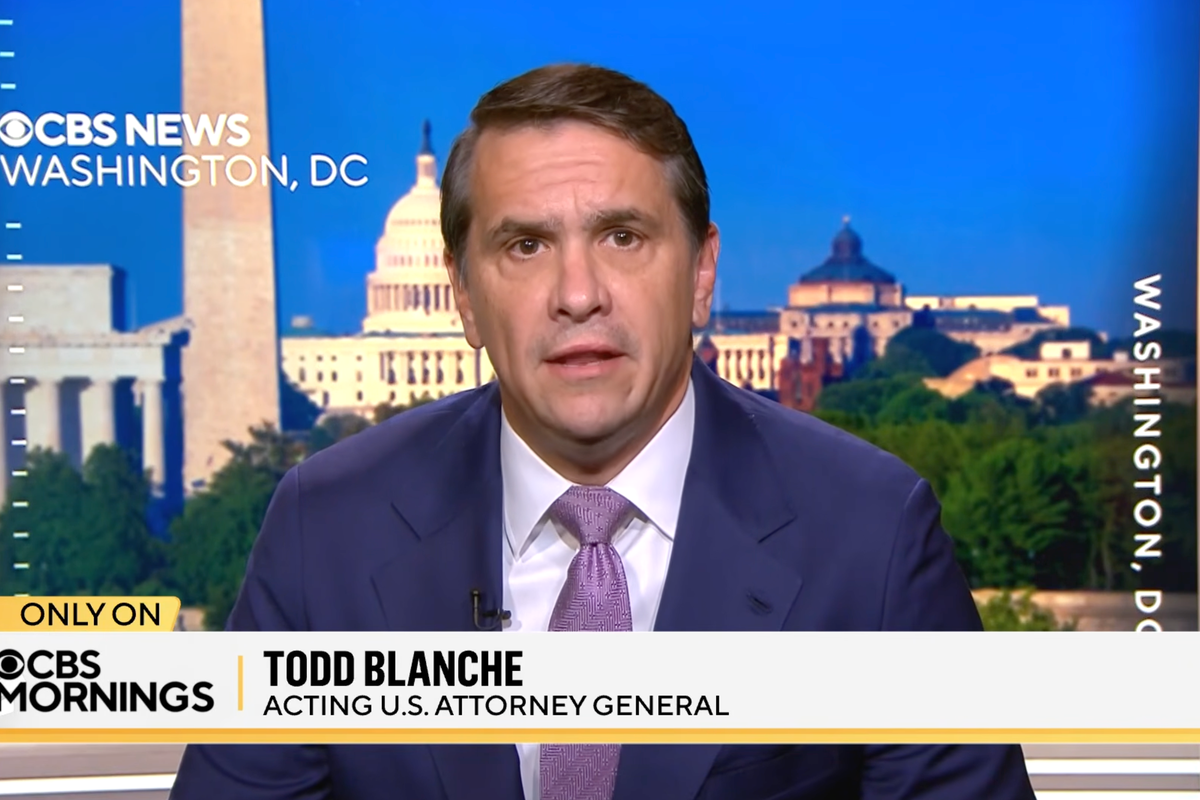
The argument that President Biden or other officials made "similar comments" fails a rigorous legal audit because those comments were largely Tier 1 or Tier 2. The Acting Attorney General’s defense of the Comey indictment relies on the fact that Comey’s statements were Tier 3. Critics who point to Biden’s past misstatements regarding classified documents often overlook the Institutional Shield. Sitting presidents and certain high-ranking officials operate under different evidentiary standards regarding "willfulness" because their public roles necessitate broad, often imprecise, communication.
The Cost Function of Selective Prosecution Defenses
For a defense team to successfully argue "Selective Prosecution," they must meet the Armstrong Standard, established in United States v. Armstrong (1996). This requires proving that the government failed to prosecute others who were "similarly situated" and that the decision was motivated by a discriminatory intent.
The structural barrier here is the "Similarly Situated" requirement. To be similarly situated to James Comey, an individual must have:
- Held a comparable rank within the law enforcement hierarchy.
- Engaged in the exact same conduct (e.g., unauthorized disclosure of memos followed by allegedly false statements to an IG).
- Operated under the same set of evidentiary findings.
The difficulty in applying this to Joe Biden lies in the Classification Delta. Biden’s issues involved the retention of classified material, whereas Comey’s indictment focuses on the deception regarding the handling of materials. In the eyes of the law, the act of losing a document is a negligence issue; lying about how that document was handled is an integrity issue. The latter is far easier to prosecute because it doesn't require proving the technical classification level of the document at the time—only that the defendant lied about his actions.
Data Points: The Success Rate of 1001 Charges
Historically, the DOJ uses 18 U.S.C. § 1001 as a "pivot charge." It is often easier to prove than the underlying crime. In federal white-collar and administrative cases, Section 1001 charges have a high conviction rate because they strip away the complexity of the original incident and focus entirely on the defendant's interaction with the investigator.
- Precedent Factor: Since 2017, the DOJ has increasingly used Section 1001 against high-profile political figures (e.g., Michael Flynn, George Papadopoulos). This creates an "Equitable Enforcement" pressure on the current administration.
- The Documentation Gap: Comey’s own meticulously kept memos, ironically, provide the very data points the prosecution needs to establish a timeline. This creates a Self-Incrimination Loop where the defendant's habit of documentation provides the "smoking gun" for a misrepresentation charge.
The Administrative State’s Immune Response
The prosecution of a former FBI Director by a subsequent administration can be viewed as an Institutional Immune Response. When a leader within the administrative state is perceived to have bypassed standard protocols—such as the unauthorized removal of internal documents—the system seeks to re-establish its boundaries.
The Acting Attorney General’s dismissal of comparisons to Biden is a strategic move to insulate the DOJ from the charge of "Political Weaponization." By framing the Comey case as a narrow issue of Administrative Integrity rather than Political Ideology, the DOJ attempts to preserve its credibility. However, this creates a bottleneck. If the DOJ successfully convicts Comey, it sets a lower bar for what constitutes "Material Misrepresentation," potentially exposing future officials to a cycle of tit-for-tat indictments.
The second limitation of this strategy is the Prosecutorial Discretion Paradox. The more the DOJ insists this is a "standard" case, the more it highlights the cases it chooses not to pursue. This doesn't necessarily make the Comey indictment legally invalid, but it does weaken the institutional trust required for the public to accept the verdict.
Structural Divergence in Executive Immunity Claims
A critical component of this analysis is the role of Executive Privilege. While Comey was a subordinate to the President, his actions in releasing memos were personal, not official. This removes the "Official Act" shield that protects presidents.
The Biden comparisons fail because Biden, as Vice President and later President, possesses a level of Constitutional Immunity and Declassification Authority that a Director of the FBI does not. A President can argue that their public statements are part of their official duties to inform the public, whereas an FBI Director is bound by specific Bureau protocols and the Privacy Act. The "Color of Law" defense—acting under official authority—is significantly stronger for a President than for a Director who has been terminated.
Tactical Implications for the Defense
The Comey defense must transition away from political comparisons, which are legally toothless in a federal courtroom, and toward a Semantic Ambiguity Defense. They must argue that the "false" statements were actually "imprecise" or "subjective interpretations" of Bureau policy.
Key tactical moves include:
- Challenging the Materiality: Arguing that even if the statements were inaccurate, they did not hinder the IG’s ability to reach a conclusion.
- The "Good Faith" Carve-out: Demonstrating that Comey believed he was authorized to handle the memos as personal documents, thus negating the "willfulness" required for a criminal conviction.
- Discovery Exploitation: Forcing the DOJ to reveal internal communications regarding the decision to indict, searching for evidence of "Vindictive Prosecution."
Final Strategic Play
The Comey indictment is not a deviation from DOJ norms but an aggressive application of them to an elite tier of the bureaucracy. The legal path forward for the government is clear: keep the focus on the Transcript of the Interview and away from the Context of the Politics. For the defense, the only viable path is to prove that the IG investigation was a "perjury trap" designed to exploit the natural delta between memory and documentation.
The institutional outcome will be a permanent shift in how high-ranking officials document their internal conflicts. We are entering an era of Defensive Governance, where the fear of a Section 1001 charge will lead to a chilling effect on internal whistleblowing and a surge in the use of "I don't recall" as a standard administrative response. The strategic recommendation for current executive leaders is to formalize all internal "memos to self" through official legal counsel to trigger attorney-client privilege, thereby removing them from the reach of the Inspector General’s investigative jurisdiction.