Mali’s political situation just took a turn that many saw coming but few wanted to admit. The JNIM (Jama'at Nusrat al-Islam wal-Muslimin), the primary Al-Qaeda affiliate in the Sahel, is now openly calling for the overthrow of the military junta in Bamako. They aren't just calling for blood. They’re using the language of "peaceful and inclusive transition." It’s a move that smells like desperate PR, but it’s working on a population tired of endless war.
If you’ve been following the Sahel, you know the script. The military took over in 2020 and 2021 promising security. They kicked out the French, brought in Russian mercenaries, and told everyone the "terrorist" problem would be solved in months. It’s 2026. The violence hasn't stopped. In fact, it’s shifted. The junta is pinned down, and the jihadists see an opening to play the role of the "reasonable" alternative.
The Al Qaeda Strategy of Political Mimicry
I’ve watched these groups evolve for years. They aren't just mountain rebels anymore. They’re sophisticated political actors. Iyad Ag Ghaly, the leader of JNIM, isn't stupid. He knows the Malian public is frustrated with the high cost of living, the lack of electricity, and the constant fear of Wagner Group (or Africa Corps) reprisals.
By calling for a "transition," the jihadists are trolling the international community. They’re using the exact words ECOWAS and the UN used for years. It’s a cynical attempt to win hearts and minds by appearing like the adults in the room. They want people to believe that if the military leaves, the killing stops. Don't buy it. This is a power grab wrapped in a flag of convenience.
The reality on the ground is grim. When the junta invited Russian forces in, they gambled everything on a military-first solution. They broke the 2015 Algiers peace agreement. They alienated the Tuareg rebels in the north. Now, those Tuareg forces and the jihadists are sometimes fighting the same enemy, even if they hate each other. This mess created a vacuum that JNIM is now trying to fill with rhetoric.
Why the Junta Is Vulnerable Right Now
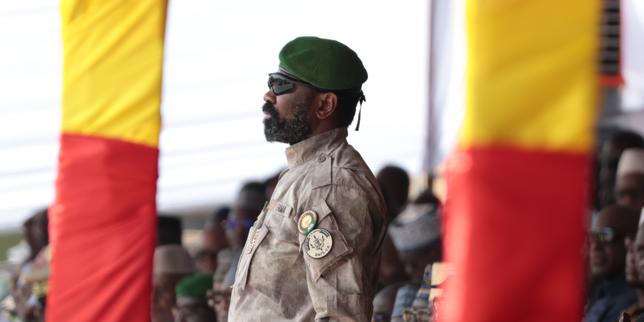
Colonel Assimi Goïta’s government is facing a massive credibility gap. You can only blame "foreign interference" for so long before people look at their empty plates. The economy is struggling. The sanctions from previous years left scars that haven't healed.
The junta’s biggest mistake was promising something they couldn't deliver: total territorial control. Mali is huge. The army is stretched thin. Every time they "liberate" a town in the north with Russian help, three more villages in the center fall under jihadist influence.
I’ve talked to analysts who point out that the junta’s reliance on drone strikes has led to significant civilian casualties. This is JNIM’s best recruiting tool. When a drone hits a wedding or a market, the jihadists show up the next day with food and a promise of "justice." They don't need to win every battle. They just need to wait for the state to fail.
The Russian Factor and the Africa Corps
The presence of Russian mercenaries changed the math. Initially, it was a morale boost for the Malian troops. But the honeymoon is over. The high-profile defeat in Tinzaouaten last year showed that even with Russian air support, the desert is a graveyard for conventional forces.
The jihadists are capitalize on this. They frame the junta as "puppets of a new colonial power." It’s ironic, sure. But in the markets of Mopti or Segou, that message resonates. They say the junta sold Mali's soul to Moscow and got nothing but more graves in return.
The Inclusive Transition Trap
What does an "inclusive transition" actually look like to a group that wants to impose a strict version of Sharia? It’s a contradiction. JNIM wants to lure in local leaders, disgruntled politicians, and traditional chiefs who feel ignored by Bamako.
They’re trying to build a shadow government. In many parts of central Mali, they already are the government. They collect taxes (zakat), they run courts, and they manage land disputes. For a farmer who hasn't seen a government official in five years, the jihadist "judge" is the only authority that exists.
This latest call to topple the junta is an attempt to formalize that local power. They want to convince the urban elite in Bamako that a deal with the devil is better than a slow death under military rule. It’s a dangerous game. If the political class in Bamako starts listening, the Malian state as we know it is finished.
A Fragmented Opposition
The problem is there’s no clear alternative. The traditional political parties are decimated. Many leaders are in exile or silent. The "M5-RFP" coalition that helped bring the military to power is fractured.
This silence from the civilians gives the jihadists a monopoly on the "opposition" brand. It’s a disaster for democracy. When the only people calling for the end of a military dictatorship are Al-Qaeda affiliates, you know the situation is catastrophic.
What Actually Happens if the Junta Falls
Let’s be real. If the junta falls tomorrow, Mali doesn't become a democracy. It becomes a free-for-all. You have the JNIM, the Islamic State in the Greater Sahara (ISGS), and the CSP-DPA (the Tuareg rebels) all vying for territory.
The junta’s supporters argue that the military is the only thing holding the country together. They aren't entirely wrong. But their methods are making the eventual collapse more certain. By refusing to negotiate with anyone, they’ve forced everyone else into a corner.
JNIM’s proposal for a "peaceful" transition is a lie, but it’s a lie that sounds like music to a war-weary population. They’re betting that the Malian people are so tired of the junta’s broken promises that they’ll accept any change, even one led by extremists.
Practical Realities for Mali's Future
The international community is stuck. They can't support the junta, but they definitely can't support a jihadist-led "transition." This leaves Mali in a state of terminal limbo.
The only way out is a genuine return to civilian rule that doesn't involve the men with guns—on either side. But with the military clinging to power and the jihadists gaining ground, that middle path is narrowing every day.
If you're looking for a silver lining, there isn't one right now. The move by JNIM to use political language is a sign that the conflict is entering a new, more deceptive phase. They aren't just fighting for land; they're fighting for the narrative.
Watch the protests in Bamako. If the rhetoric of the jihadists starts showing up on the signs of urban protesters, the junta’s days are numbered. The transition won't be peaceful, and it definitely won't be inclusive. It will be a total reset of the Sahel's map.
Stop waiting for a "diplomatic solution" from the outside. The fix has to come from within the Malian military and what’s left of its civil society. If they can't find a way to talk to each other, Iyad Ag Ghaly will do the talking for them. And no one wants to hear what he has to say next.
Check the local reports coming out of the Mopti region. Watch the movement of the Africa Corps. The next three months will decide if Mali stays a sovereign nation or becomes a patchwork of extremist fiefdoms. Stay skeptical of anyone promising a "quick fix" in the Sahel. There are none left.