Jerusalem is supposed to be the world's center of faith, but for a French nun walking near Mount Zion this week, it became a scene of unprovoked violence. You've likely seen the headlines about the arrest, but the video footage is what really sticks in your throat. It shows a 36-year-old man running up behind a 48-year-old woman—a researcher and a sister—and throwing her to the ground with enough force to leave her face badly bruised.
This wasn't a random mugging. This was an assault on a religious identity in a city that's currently boiling with sectarian tension. You might also find this connected article insightful: The Truth About Iran Training Mine Carrying Dolphins to Fight US Naval Blockades.
The suspect, who was wearing tzitzit during the attack, didn't stop after the initial shove. As the nun lay on the rocks near David’s Tomb, he returned to kick her. If it weren't for a passerby jumping in, who knows how much worse it would’ve been. Israeli police moved unusually fast this time, making an arrest on Wednesday and labeling the incident "racially motivated." While the arrest is a win for accountability, it's a small band-aid on a much larger, more systemic wound.
What the official statements don't tell you
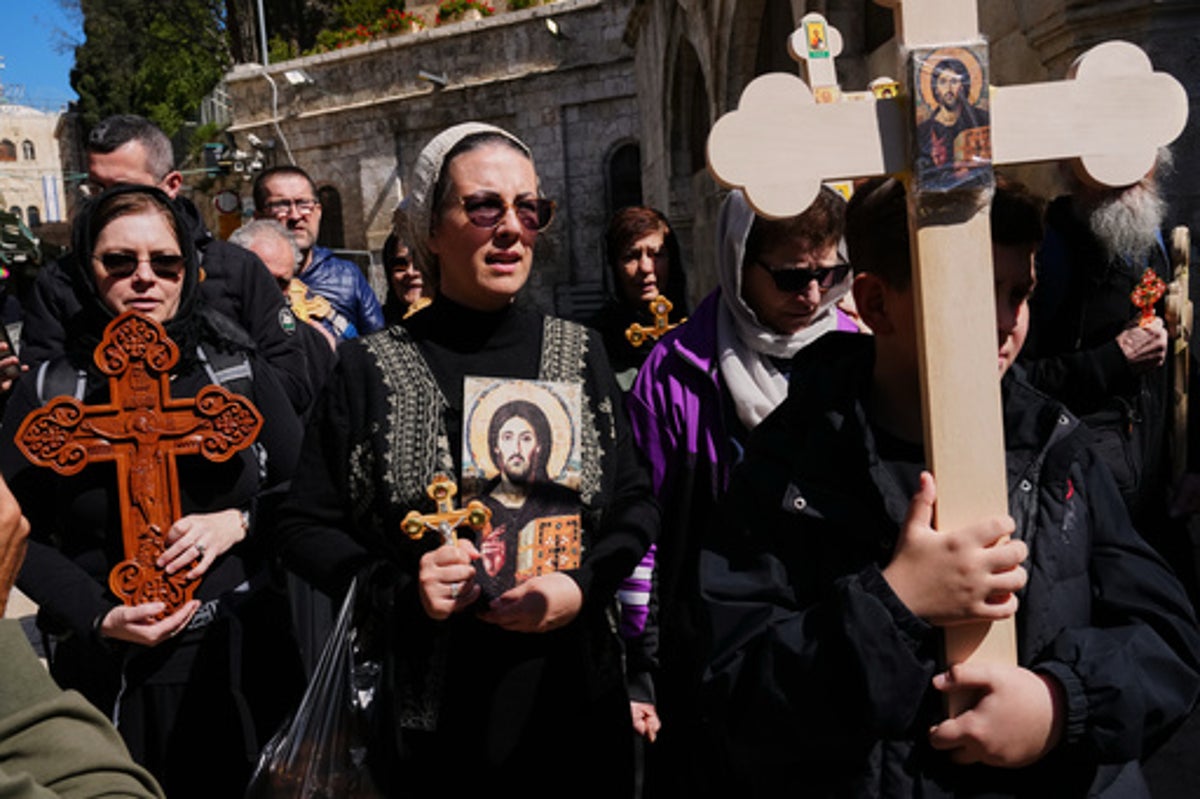
The police were quick to post about "zero tolerance" and their commitment to protecting all faiths. That's the standard PR script. But if you talk to clergy on the ground in the Old City, they'll tell you a different story. They'll tell you about the daily spitting, the verbal abuse, and the feeling that they’re being squeezed out of a city they’ve called home for centuries. As reported in recent articles by NBC News, the effects are significant.
Data from the Rossing Centre for Education and Dialogue backs this up. In 2025 alone, they documented 155 incidents of harassment and violence against Christians. That includes 61 physical assaults. Think about that number. That’s more than one physical attack every week in a city that prides itself on religious freedom.
The experts call it "the tip of the iceberg." Most of these incidents don't get caught on camera. Most don't result in a viral police video or an arrest. This specific attack only gained traction because the footage was undeniable and the victim was a researcher at the prestigious French School of Biblical and Archaeological Research.
The Mount Zion flashpoint
Location matters here. The attack happened near the Cenacle and David’s Tomb. This isn't just any street corner; it’s one of the most contested patches of dirt on the planet. To Christians, the Cenacle is the Room of the Last Supper. To Jews, the floor below is the burial place of King David.
When you have that much historical and religious weight in one building, tensions don't just exist—they're cultivated. Over the last few years, radical fringe groups have become more emboldened. They view the presence of "crosses and habits" not as part of the city’s pluralistic fabric, but as an intrusion.
Former Israeli ambassador Daniel Carmon didn't mince words when he called this "Jewish terrorism" on social media. It's a heavy term, but it reflects a growing frustration among some Israeli officials and academics who feel the government hasn't done enough to curb extremist behavior.
Why this is happening now
It's tempting to look at this as an isolated event by one disturbed individual. Don't fall for that. This attack sits in a timeline of escalating religious friction in 2026.
- Political Climate: The current sociopolitical atmosphere is increasingly nationalistic. When leaders use rhetoric that prioritizes one group over all others, extremists at the bottom feel they have a green light.
- Previous Incidents: Just last month, an Israeli soldier was caught on camera smashing a statue of Jesus in Lebanon. While the military punished him, the imagery fed into a narrative of disrespect that travels fast across borders.
- Lack of Deterrence: Until now, many of these "minor" assaults—like spitting at priests—went unpunished. When you don't stop the small stuff, you eventually get a nun being kicked on the ground.
The French Consulate has already stepped in, demanding justice. That’s because this isn't just a local police matter anymore; it’s a diplomatic headache. France has historical ties to Christian institutions in Jerusalem, and they aren't going to let a bruised researcher become "just another statistic."
How to actually fix the safety gap
If you're visiting Jerusalem or live there, don't expect the "zero tolerance" tweets to change things overnight. Real safety for religious minorities in the Old City requires more than just reactive arrests.
First, there needs to be a massive upgrade in surveillance in the "gray zones" outside the main tourist paths. Places like the paths around Mount Zion are notoriously under-policed despite being known hotspots for harassment.
Second, the courts have to follow through. Too often, suspects in these cases are released after a day or two with a "slap on the wrist" or a temporary stay-away order. If the motive is found to be racially or religiously charged, the sentencing needs to reflect the severity of a hate crime, not just a simple assault.
Finally, education needs to catch up. The Faculty of Humanities at Hebrew University pointed out that this stems from a "deeply disturbing rise in Christianophobia." You can't arrest your way out of a cultural shift. There needs to be a top-down condemnation of this behavior from religious leaders within the communities where these attackers come from.
If you’re heading to the Old City, stick to well-traveled routes during peak hours and don't hesitate to report even "minor" harassment. Silence is exactly what these extremists are betting on.