Jeremy Hansen is about to become the first non-American to leave low Earth orbit, but his current focus is on a fictional high-stakes rescue mission involving an amnesiac scientist and an alien engineer. As the Artemis II mission approaches, Hansen has publicly championed Andy Weir’s Project Hail Mary as more than just a hobbyist's read. To the casual observer, this looks like a simple celebrity endorsement of a bestseller. To those who track the psychological architecture of modern spaceflight, it reveals a calculated shift in how NASA and the CSA prepare their crews for the isolation of deep space.
Hansen isn't just reading for fun. He is absorbing a blueprint for problem-solving under extreme duress. Artemis II will take four humans around the Moon and back, marking the first time since 1972 that humans have ventured into the deep void. Unlike the International Space Station, where a quick escape to Earth is possible within hours, the Orion capsule represents a return to "expeditionary" logic. If something breaks, the crew has to fix it with what they have on hand. Weir’s protagonist, Ryland Grace, survives by applying the scientific method to seemingly impossible setbacks—a process that mirrors the exact mental conditioning required for the Artemis generation.
The Mental Rigor of the Orion Capsule
The Apollo missions relied on a "test pilot" culture where "The Right Stuff" meant a lack of visible emotion and a near-suicidal tolerance for risk. Artemis is different. The mission profile for Artemis II involves a ten-day journey that tests the limits of the Orion life support systems. Hansen, a veteran CF-18 fighter pilot, knows that the physical challenges are secondary to the cognitive ones.
The appeal of Project Hail Mary for a mission specialist lies in its granular focus on the "next right move." In the book, the protagonist wakes up with no memory of who he is or why he is on a spaceship, yet he manages to survive by testing hypotheses. This reflects the "Failure is Not an Option" mantra, updated for a century where data is abundant but resources are finite.
Why Fiction Matters to Mission Specialists
Modern astronauts are essentially high-level systems managers. They operate within a framework of checklists and contingencies designed by thousands of engineers on the ground. However, once you pass the Van Allen belts, the lag in communication and the sheer distance create a psychological decoupling from Earth.
- Isolation Training: Fiction provides a mental simulation of social isolation, allowing astronauts to explore the emotional beats of being the only humans in the dark.
- Scientific Creativity: Hard science fiction like Weir’s forces the reader to consider unconventional uses for standard equipment.
- Stress Management: Engaging with a narrative where the protagonist overcomes catastrophic odds acts as a form of "vicarious resilience."
Hansen’s praise for the book highlights a specific trait NASA is looking for in the Artemis era: the ability to maintain intellectual curiosity when the environment is trying to kill you.
Beyond the Technical Manuals
Critics often argue that astronauts should focus strictly on the technical manuals and mission parameters. This is a shortsighted view of human performance. The history of long-duration spaceflight is littered with "third-quarter" psychological slumps—the period during a mission where the novelty has worn off, the danger is constant, and the end is not yet in sight.
Hansen’s public discussion of his reading list suggests a push for "cognitive endurance." By engaging with complex, science-heavy narratives, he keeps the analytical parts of his brain "warm" during the grueling years of pre-launch training. It is an active form of rest.
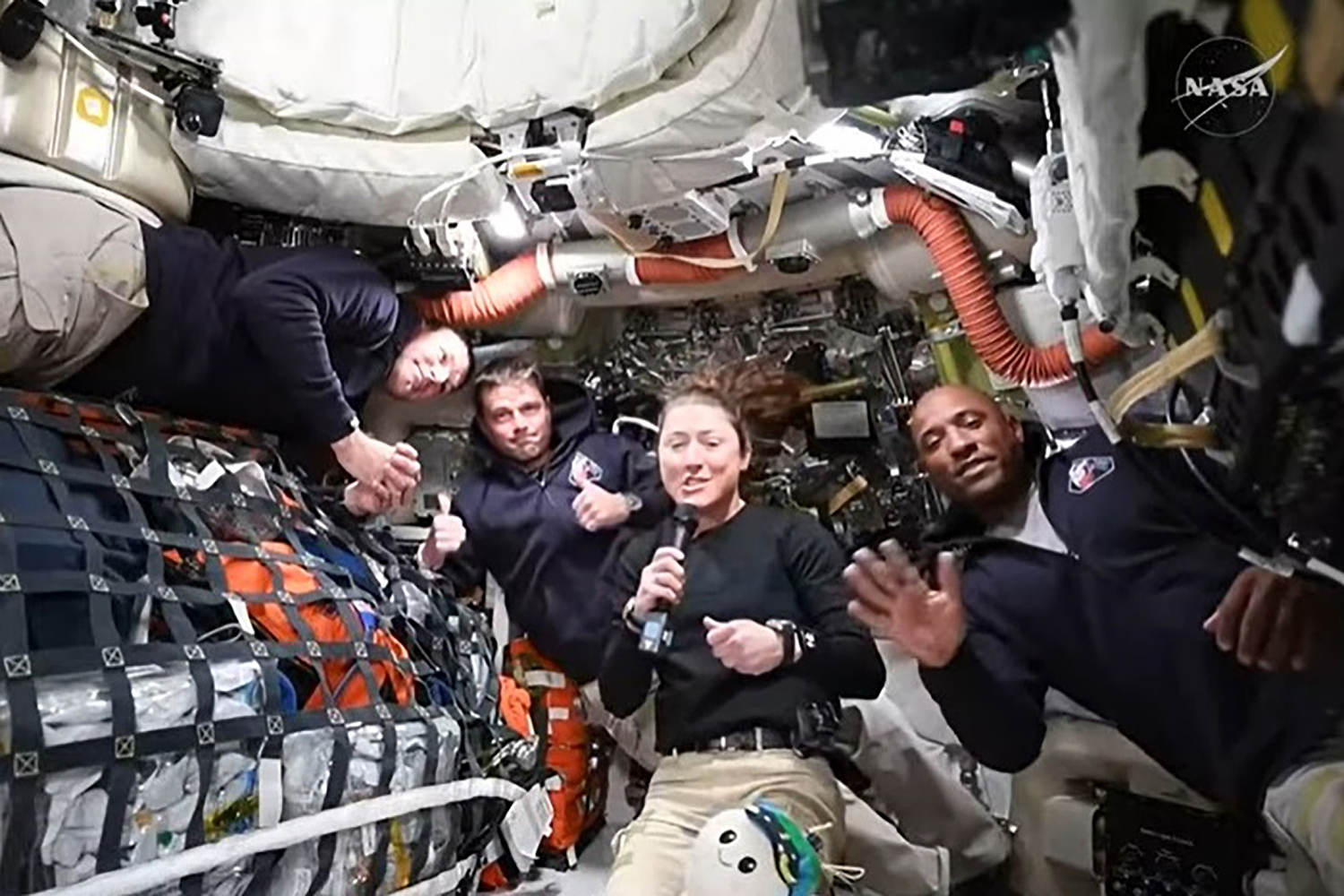
The Artemis II mission is a flight test. It is designed to see if Orion can actually support life during a lunar flyby. There are no docking maneuvers with a lunar lander on this trip; that comes later. This means the crew of four—Hansen, Reid Wiseman, Victor Glover, and Christina Koch—will spend a significant amount of time in a volume no larger than a small SUV. Managing the internal social dynamic and individual mental state is the mission.
The Evolution of the Astronaut Persona
We have moved past the era of the silent hero. Jeremy Hansen represents the new "operational intellectual." He is comfortable discussing the technical specifications of a heat shield in one breath and the thematic resonance of a sci-fi novel in the next. This transparency serves a dual purpose. It makes the mission accessible to a public that has grown cynical about government spending, and it humanizes the terrifying reality of sitting on top of a Space Launch System rocket.
The SLS produces nearly 9 million pounds of thrust. It is a violent, chaotic machine. Finding a "treat" in a book about space survival isn't just a leisure activity—it's an anchor.
The Logistics of Deep Space Literature
Space in the Orion capsule is at a premium. Every gram of weight is accounted for, which means the days of carrying physical paperbacks are largely over. Digital readers and tablets are the standard, but the choice of content remains deeply personal.
Hansen’s preference for hard sci-fi—books where the physics actually work—is telling. It shows a desire for alignment between his professional reality and his private thoughts. He isn't looking for escapism that ignores gravity or thermodynamics; he is looking for stories that respect them.
Risk Mitigation through Narrative
There is a concept in psychology known as "narrative transportation." When a reader becomes deeply immersed in a story, their brain processes the experiences of the characters as a form of lived experience. For an astronaut, reading about a catastrophic engine failure in a well-researched novel can serve as a "soft" rehearsal. It triggers the problem-solving centers of the brain without the cortisol spike of a real-world emergency.
Hansen is essentially crowdsourcing his mental preparedness. By looking at how fiction handles the "impossible," he expands his own internal library of responses.
The Canadian Contribution to Artemis
Hansen’s seat on Artemis II is a result of Canada’s commitment to the Lunar Gateway, specifically the development of Canadarm3. But his presence on the mission is also a testament to his individual expertise as a trainer of astronauts. He has spent years managing the schedules and training regimens of his peers. He knows better than anyone where the breaking points are.
His endorsement of Project Hail Mary should be viewed as a professional recommendation for anyone entering a high-stress environment. He is signaling that maintaining a sense of wonder and a sense of humor—traits Weir’s characters are known for—are mission-critical tools.
The Realities of the Artemis II Flight Path
The trajectory of Artemis II is a "free-return" path. If the engines fail after the initial burn toward the Moon, the Earth’s gravity will naturally pull the capsule back home. It is the safest way to test the hardware, but "safe" is a relative term when you are 230,000 miles away from the nearest hospital.
The mission will test:
- Optical Navigation: Using the stars and the Moon's limb to determine position if GPS or ground tracking fails.
- Manual Handling: Wiseman and Glover will manually pilot Orion during certain phases to ensure the fly-by-wire systems are responsive.
- Radiation Shielding: Measuring the impact of solar radiation on the crew outside the protection of Earth’s magnetic field.
During the quiet hours of these tests, the crew will need to manage their "down-time" effectively. In the confined space of the Orion, a book is more than a story; it is a change of scenery.
Tactical Reading in the Final Countdowns
As the launch date nears, the pressure on Hansen and his crewmates will become immense. The transition from "training" to "execution" is where most errors occur. By focusing on the intellectual puzzles presented in high-quality fiction, Hansen is practicing the art of staying calm while the world watches.
He isn't just a pilot; he is a representative of a global effort to move humanity beyond the cradle. If a story about a lonely man in a distant star system helps him stay sharp, then that book is as important as any wrench or computer code in the capsule.
The mission of Artemis II is to prove that humans can survive the trip. Jeremy Hansen is proving that they can also maintain their humanity while doing it. The true test isn't just the re-entry at 25,000 miles per hour; it is the 240 hours spent in the dark, keeping the mind focused on the next problem, the next solution, and the next chapter.
Find the leverage in the narrative. If the lead mission specialist for the most important spaceflight in fifty years says a book is a "treat," he isn't talking about the prose. He is talking about the fuel. Reach for the manual, but keep the story close. One keeps the ship flying; the other keeps the pilot sane.