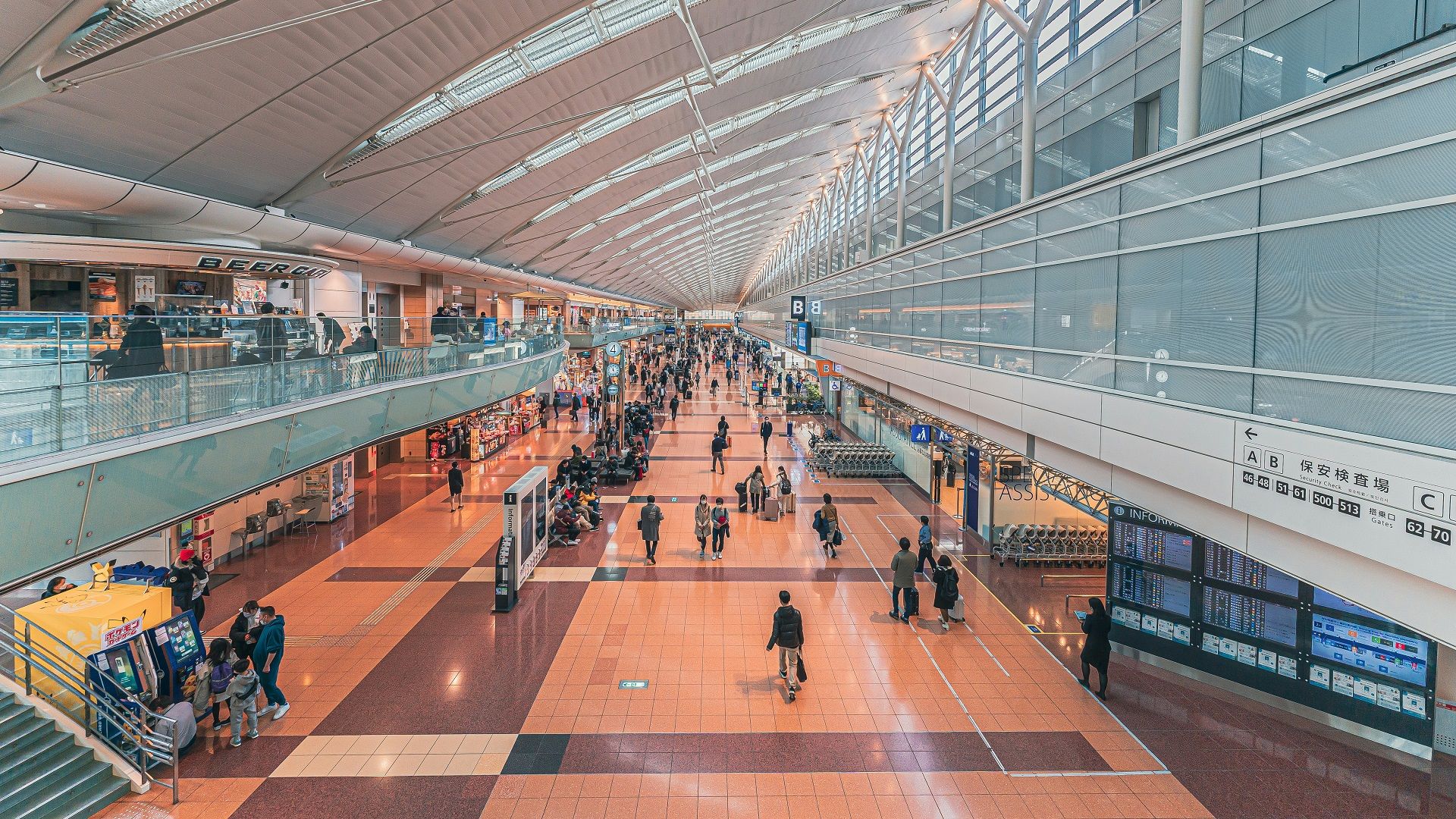
Walk through Tokyo’s Haneda Airport today and you’ll see the usual high-tech polish. Self-service kiosks, biometric gates, and sleek monorails. But step out onto the tarmac, and you’ll find a scene that hasn't changed much in fifty years. Ground crews are still out there in the humidity and rain, manually lugging 50-pound suitcases and maneuvering heavy machinery in cramped spaces.
It’s grueling work. It’s also work that fewer and fewer people in Japan want to do.
Japan Airlines (JAL) just launched a trial that signals the end of this manual era. Starting May 2026, Haneda isn't just getting more "automation"—it’s getting humanoid colleagues. This isn't about those puck-shaped vacuum robots or fixed robotic arms. We're talking about two-legged, two-armed machines designed to mimic human movement in the high-stakes environment of an international airport ramp.
The Labor Crisis Meeting the Tech Boom
Japan’s demographic math is brutal. The working-age population is shrinking while tourism is exploding. In February 2026, the country hit a record 3.46 million visitors. You can’t handle 91 million annual passengers at Haneda—the world's third busiest airport in 2025—if you don't have enough people to put the bags on the planes.
Airlines have tried traditional automation before. The problem? Airports are built for humans. Narrow airplane cabins, oddly shaped cargo holds, and the labyrinth of conveyor belts were all designed for people with joints and fingers. Tearing down an airport to fit a "fixed" robot is too expensive.
The solution JAL and GMO AI & Robotics Trading (GMO AIR) have landed on is simpler: don't change the airport, change the worker. They’re using 130cm-tall humanoid robots—primarily the H1 or similar models from Unitree—to step into roles that were previously "human only."
What a Robot Baggage Handler Actually Does
If you’re picturing an army of robots sprinting across the tarmac, slow down. The reality is more methodical. During the demonstration at Haneda, a 4-foot-tall robot was shown carefully pushing cargo onto a conveyor belt. It’s not just about brute strength; it’s about spatial awareness.
- Baggage Loading: These robots use AI-driven vision to identify different sizes of luggage and place them onto moving belts without crushing them.
- Cabin Cleaning: This is one of the most physically draining tasks for human crews—scrubbing tray tables and vacuuming tight aisles in the 45 minutes between flights. A humanoid form is the only robot shape that can actually fit between seats.
- Ground Support: Future phases of the trial include having robots operate Ground Support Equipment (GSE), the specialized vehicles that service planes.
These machines can currently work for two to three hours on a single charge. That’s enough for a "shift" during a peak arrival window before they need to swap out or recharge. The trial is scheduled to run until 2028, which gives the engineers plenty of time to break things and fix them before a full rollout.
Why a Humanoid Shape is the Secret Sauce
You might wonder why we don't just use a big mechanical arm on wheels. Yoshiteru Suzuki, President of JAL Ground Service, is pretty clear about the "inevitability" of this shift. A humanoid robot doesn't require a billion-dollar infrastructure overhaul. It uses the same stairs, the same doors, and the same handles that people use.
There’s also a safety element. In a crowded environment like a tarmac, a robot needs to be able to "wave" or signal to human colleagues. During the Haneda demos, the robots were seen interacting with staff, ensuring that humans remain in the loop for "safety management" and high-level decision-making.
Honestly, the robots aren't here to take the jobs. They’re here to take the backaches. Ground handling is one of the highest-injury roles in aviation. By offloading the "repetitive force" tasks to a machine that doesn't get a herniated disc, JAL is trying to make the remaining human jobs more sustainable.
The Reality Check on Robot Workers
It’s easy to get swept up in the sci-fi of it all, but there are massive hurdles. Working on a tarmac isn't like working in a climate-controlled Amazon warehouse. You’ve got jet engine exhaust, driving rain, and extreme temperature swings.
- Reliability: Can the sensors handle a summer typhoon?
- Integration: How do you make sure a robot doesn't accidentally wander into the path of a taxiing Boeing 787?
- Cost: While a rental suit like Cyberdyne’s HAL costs around 10,000 JPY ($65) a month, a full-scale humanoid is a massive capital investment.
JAL and GMO AIR are starting small. The first phase is just "visualizing and analyzing" operations. They aren't letting the robots loose on your $3,000 Rimowa suitcase on day one. They’re mapping patterns, simulating accidents in a digital twin, and then moving to real-world tests.
What This Means for Your Next Trip
Don't expect your bags to be handled exclusively by robots by the time you book your summer vacation. This is a multi-year bridge to a different kind of workforce.
However, if you're flying through Haneda or Narita in the next year, keep an eye out the window while you’re waiting at the gate. You might see a 4-foot-tall machine waving back at the ground crew. Japan is betting its entire aviation future on the idea that robots can be more than just novelties—they can be the backbone of the travel industry.
If you’re interested in how this tech is evolving, look into the "First Year of Humanoids" initiative by GMO Internet Group. They’re pushing for 2026 to be the tipping point where these machines move from labs to the real world. The best way to track the progress is to follow JAL’s official "demonstration experiment" updates, as they'll likely be the first to release hard data on whether these robots actually speed up turnaround times or just look cool on the tarmac.