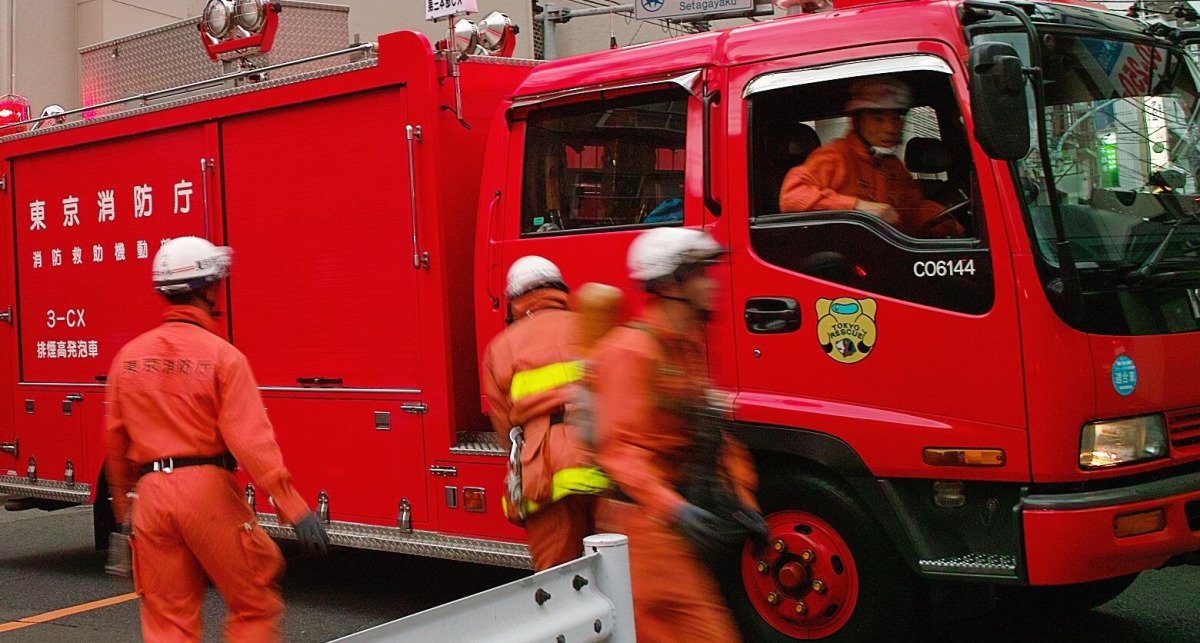
Hundreds of firefighters are currently battling aggressive wildfires across Japan's northern prefectures, a region traditionally known for its damp, cool climate and heavy snowpack. This isn't just a freak occurrence. It's a loud, smokey alarm for a nation that’s been slow to adapt its forestry practices to a warming world. When we see the Self-Defense Forces (SDF) and local fire brigades scrambling to contain flames in Hokkaido and Aomori, we're seeing the result of decades of mismanaged timber land and a shifting climate that makes the "green archipelago" look more like a tinderbox.
You've probably heard the usual talking points about dry spells. But there’s a deeper reality here. Japan’s mountains are covered in dense, man-made forests of Japanese cedar (sugi) and cypress (hinoki). These were planted after World War II to rebuild the country. Now, they're overgrown, under-maintained, and incredibly flammable. When a spark hits these monoculture stands during a spring drought, the fire doesn't just crawl along the ground. It climbs. It jumps. It spreads faster than local volunteer crews can handle.
Why the North is Burning Right Now
The current situation in northern Japan is a perfect storm of meteorological bad luck and structural neglect. Usually, the snowmelt in April and May keeps the forest floor too wet for significant fires. Not this year. We’ve seen record-low humidity levels and unseasonably high temperatures across Tohoku and Hokkaido.
The fire departments in these regions are world-class at handling structure fires and earthquakes. Wildfires? That's a different beast. These teams are facing steep, inaccessible terrain where traditional fire trucks are useless. That's why the deployment of "Firefighting Helis" and SDF aircraft has been so heavy. They're dropping thousands of liters of water, but in a dense forest canopy, much of that water never even hits the soil. It evaporates or gets caught in the needles of the trees.
The Japanese Fire and Disaster Management Agency (FDMA) reports that the number of mountain fires has stayed relatively consistent over the last decade, but the intensity is changing. We’re seeing larger burn areas per incident. It’s a trend that should scare anyone living near the foothills.
The Problem With Post-War Monocultures
If you walk through a forest in northern Japan, you’ll notice something weird. The trees are all the same age. They’re all the same height. They’re packed together like sardines. This is the "Green Desert."
These plantations were meant to be harvested, but the collapse of the domestic timber industry in the 70s and 80s—thanks to cheap imports—left them standing. Without regular thinning, the branches grow all the way to the ground. This creates what firefighters call "ladder fuels." A small grass fire can easily climb these branches and turn into a crown fire, which is almost impossible to put out with ground crews alone.
The Hidden Risk of Bamboo Grass
In the north, specifically Hokkaido, we have sasa (bamboo grass). It grows everywhere under the tree line. When it’s green, it’s fine. When it dries out during a spring drought, it becomes essentially a layer of gasoline on the forest floor. Once it catches, the fire moves with the wind at speeds that would outrun a person on foot.
The Logistics of Fighting Fires in the Mountains
Watching the news footage of hundreds of firefighters in Japan's north, you might think they're all spraying water. They aren't. Much of the work is grueling manual labor.
- Hand-cut firebreaks: Men and women using chainsaws and shovels to clear strips of land.
- Back-pumps: Carrying 20 kilograms of water on your back up a 40-degree slope.
- Coordination: Using drones to find hotspots that aren't visible through the thick smoke.
The SDF plays a role that goes beyond just dumping water. They provide the heavy-lift logistics. Their CH-47 Chinook helicopters can carry massive "Bambi Buckets." But even then, the logistics are a nightmare. You need a nearby water source—a lake or a reservoir. If those are low because of the same drought causing the fire, the helicopters have to fly further, increasing the time between drops. It's a losing game of catch-up.
What the Government Needs to Do Differently
We can't just keep sending more firefighters every time a hill catches fire. That's a reactive strategy that will eventually fail as the climate gets weirder. Japan needs a proactive forestry revolution.
First, the government must subsidize the "harvest and replant" cycle with a focus on diversity. We need fire-resistant deciduous trees—like oaks and maples—mixed into the cedar plantations. These trees have higher moisture content in their leaves and don't burn as easily. They act as natural firebreaks.
Second, we need better access roads. Many of the fires in the north are currently "unreachable" by ground. If you can't get a small 4WD pumper truck within 500 meters of the fire, you've already lost the first 24 hours of the fight.
Real Examples of the Shift
Look at the 2021 Ashikaga fire in Tochigi. It burned for nearly two weeks. It forced hundreds of evacuations and cost a fortune in resources. The takeaway from that disaster was clear: the lack of forest maintenance made the fire's path unpredictable. Since then, some local governments have started "prescribed burns" and aggressive thinning, but it’s not happening fast enough in the north.
Residents in northern Japan often feel safe because "it's cold here." That's a dangerous myth. Some of the most devastating wildfires in history have happened in cold, northern climates like Canada and Siberia. Japan is no different.
How You Can Prepare if You Live Near Forested Areas
If you're living in a town bordered by these mountain forests, don't wait for the local government to act. You need to create your own "defensible space."
- Clean your gutters. Dry pine needles and cedar leaves are the #1 cause of homes catching fire from drifting embers.
- Keep a 10-meter buffer zone around your house clear of tall, dry grass and low-hanging tree branches.
- Check your local "Hazard Map." Most people in Japan check for floods and landslides but ignore the fire risk sections.
The fires currently raging in the north are a reminder that the landscape is changing. The "old ways" of assuming the mountains will stay wet and green are gone. We’re in a new era where the north burns, and our firefighting strategies—and forest management—have to catch up before we lose more than just timber.
Get your emergency bag ready. Know your evacuation route. Don't assume the rain will come in time. The reality of 2026 is that the forest is no longer just a backdrop; it's a living, breathing risk that requires constant attention.


