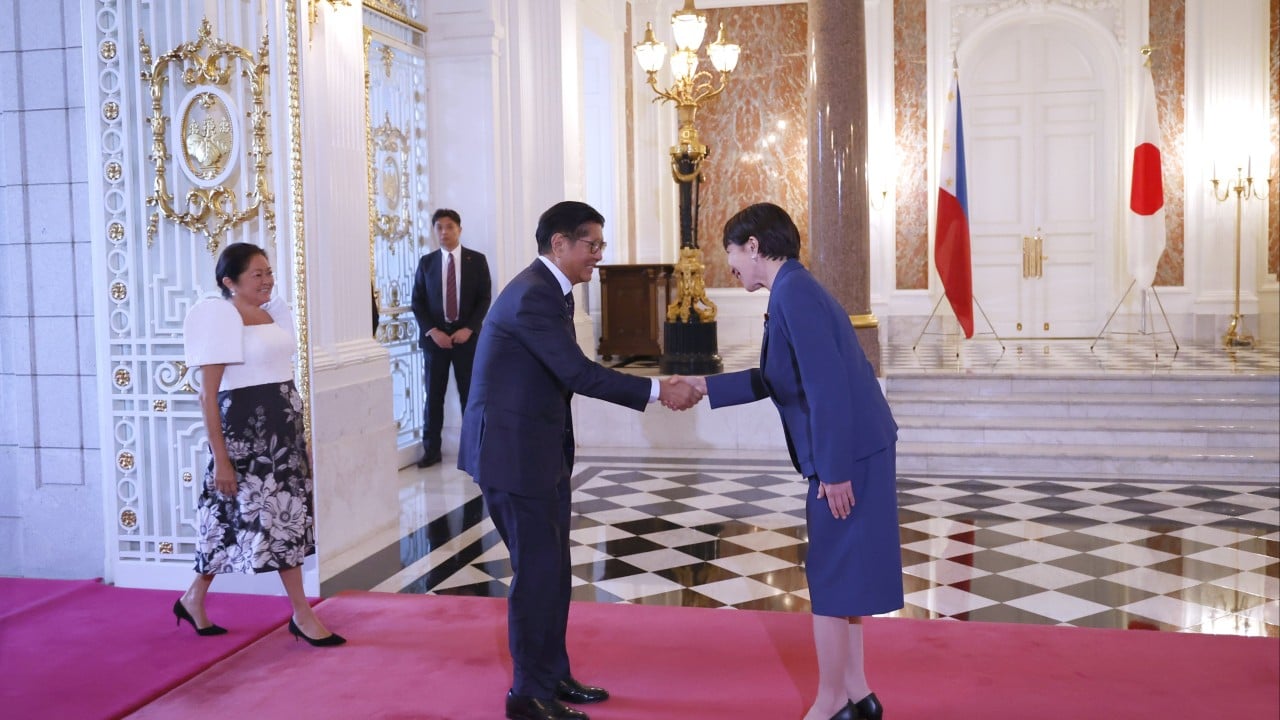
Mainstream geopolitical writers love a neat, comforting narrative. The current media obsession tells a beautiful story: Faced with relentless Chinese gray-zone aggression in the South China Sea and erratic, hyper-fickle policy swings from Washington, Tokyo and Manila have masterfully "future-proofed" their relationship. They point to the newly implemented Reciprocal Access Agreement (RAA), the recently signed Acquisition and Cross-Servicing Agreement (ACSA), and the glitzy May 2026 upgrading of relations to a "quasi-alliance" under Japanese Prime Minister Sanae Takaichi and Philippine President Ferdinand Marcos Jr. as ironclad proof of a new, self-reliant security architecture.
It is a fantasy. Don't miss our earlier post on this related article.
I have spent years analyzing regional supply chains and defense industrial networks, watching bureaucracies burn through billions of dollars on mismatched defense hardware. The comfortable consensus completely ignores the glaring structural fault lines, incompatible tactical realities, and systemic economic vulnerabilities that make this partnership look less like a "future-proofed" shield and more like a fragile diplomatic optics campaign. Tokyo and Manila have not built an independent bulwark against Beijing; they have built a paper tiger that will fracture the moment a real kinetic crisis forces them to choose between economic survival and abstract alliance commitments.
The Interoperability Illusion: Transferring Toys Instead of Teeth
The foundational mistake of the current commentary is treating the transfer of defense hardware as an automatic upgrade in combat readiness. Japan’s recent deployment of combat troops to the Balikatan 2026 exercises and the transfer of decommissioned hulls like the Abukuma-class destroyer are heralded as massive steps forward. They are not. They are logistical headaches wrapped in a flag. To read more about the context here, The Guardian provides an excellent summary.
The Armed Forces of the Philippines (AFP) operate on shoe-string budgets, plagued by decades of internal security focuses and underfunded modernization programs. Japan’s Self-Defense Forces (JSDF), by contrast, operate hyper-advanced, capital-intensive systems designed for integration into the ultra-high-end U.S. military network.
When Japan transfers radar systems, patrol vessels, and communications equipment under its Official Security Assistance (OSA) program, it is not creating a unified fighting force. It is creating a dependencies nightmare.
- The Maintenance Trap: The Philippines does not possess the domestic industrial base or the technical engineering core to service and maintain complex Japanese maritime surveillance and missile tracking tech over a prolonged lifecycle.
- The Supply Chain Choke: In a high-intensity conflict, a navy cannot wait three weeks for a specialized component to ship from a Mitsubishi Heavy Industries plant in Nagoya to a base in Subic Bay.
- The Integration Deficit: Having a shared logistics framework like the ACSA means nothing if your frontline personnel speak fundamentally different tactical languages and operate platforms that cannot securely share real-time telemetry without a U.S. military intermediary.
Without the United States acting as the central data router and structural backbone, the Japan-Philippines RAA is just two nations sharing a common worry but possessing entirely incompatible toolkits.
The Energy and Economic Paradox: Churning the Waters While Courting the Bank
The media paints Manila as a defiant David standing up to the Chinese Goliath, backed by Japanese steel. Yet, the ground reality of early 2026 blew that narrative to pieces. When the sudden closure of the Strait of Hormuz triggered a brutal national energy emergency in the Philippines, what did President Marcos Jr. actually do? He did not call Tokyo for a naval escort. He publicly signaled openness to restarting joint oil and gas exploration talks with Beijing at Reed Bank.
The structural reality is that the Philippines cannot afford a permanent divorce from Chinese capital, nor can it ignore its existential energy vulnerabilities. While Filipino and Japanese diplomats were holding high-level maritime delimitation talks, Chinese Coast Guard vessels were systematically turning away Filipino fishermen from Scarborough Shoal, and the PLA Navy was conducting live-fire drills east of Luzon.
Manila is trapped in an impossible dual-track dance:
| Dimension | The Diplomatic Performance | The Hard Economic Reality |
|---|---|---|
| Energy Security | Pushing for an ASEAN-led Code of Conduct by July 2026. | Courting Chinese state firms to exploit domestic offshore gas fields before Malampaya runs bone dry. |
| Defense Alliances | Hosting 1,400 Japanese troops and firing Type 88 missiles during drills. | Constantly hitting the brakes on escalation because a total trade embargo by Beijing would collapse the Philippine economy. |
| Strategic Focus | Upgrading to a Comprehensive Strategic Partnership with Tokyo. | Managing a highly fragmented domestic political elite that does not speak with a single voice on China policy. |
Japan faces its own version of this paradox. Tokyo’s corporate engine is deeply, inextricably intertwined with Chinese manufacturing and consumer markets. While Prime Minister Takaichi beats the nationalist drum to secure domestic political points, Japanese conglomerates are quietly de-risking, not decoupling. Tokyo is highly willing to sell coast guard cutters to Manila on credit, but it will never risk an overt kinetic confrontation with China over the Second Thomas Shoal—a feature that holds zero strategic value for the defense of the Japanese home islands.
Dismantling the Flawed Premise of "Strategic Autonomy"
The most prominent regional security forums frequently ask variations of this question: Can middle powers like Japan and the Philippines successfully deter China if the U.S. turns isolationist?
The question itself is deeply flawed because it assumes deterrence is a math equation where you can substitute one superpower for two medium powers. It treats "strategic autonomy" as a magic wand. True strategic autonomy requires the capability to project decisive power independently, project a credible nuclear or conventional retaliatory threat, and absorb massive economic retaliation. Neither Tokyo nor Manila can do this.
Imagine a scenario where a localized skirmish breaks out at Sabina Shoal. A Philippine resupply vessel is rammed and sunk, resulting in casualties. Under the current "quasi-alliance," what does Japan do?
Article 9 of the Japanese Constitution, even with modern reinterpretations and the acquisition of counterattack capabilities, strictly limits the JSDF to self-defense operations. The RAA does not contain a mutual defense clause. It streamlines joint training; it does not commit Japanese pilots to die in the skies over the Spratly Islands.
If Manila expects Tokyo to step into the security vacuum left by a wavering Washington, it has fundamentally misread Japanese domestic politics and legal constraints. Japan is using the Philippines as a forward positioning buffer to stretch Chinese naval assets thin and keep Beijing’s focus away from the East China Sea and Taiwan. Manila is not a partner in Tokyo's eyes; it is a geographic shield.
The Actionable Alternative: Abandon the Quasi Alliance Delusion
Stop trying to build a hollow mini-NATO in East Asia. The pursuit of high-profile, symbolic defense pacts only serves to provoke Beijing into accelerating its gray-zone timeline while offering Manila a false sense of security that will vanish in a crisis.
Instead of signing more unenforceable security frameworks, Tokyo and Manila must pivot immediately to a cold, transactional strategy centered on resilient asymmetric denial.
First, the Philippines must stop accepting expensive, prestige military platforms it cannot maintain. Manila should demand that Japanese aid under the OSA program be redirected entirely toward low-cost, highly distributed asymmetric technology: sea mines, mobile anti-ship missile batteries, and swarms of cheap, commercially available aerial and underwater drones.
Second, the structural focus must shift from joint military drills to hard institutional resilience. Japan should invest heavily in the Philippines' domestic energy infrastructure—specifically decentralized liquid natural gas (LNG) terminals and renewable grids—to insulate Manila from the exact type of energy blackmail that forced Marcos to court Beijing during the Hormuz crisis.
True resilience is not found in signing ceremonies or state dinners in Tokyo. It is found in building an archipelago that is too toxic to swallow and too structurally stable to starve out. Until both nations stop chasing the high of diplomatic optics and address their underlying systemic weaknesses, this new quasi-alliance remains a catastrophic failure waiting to happen.