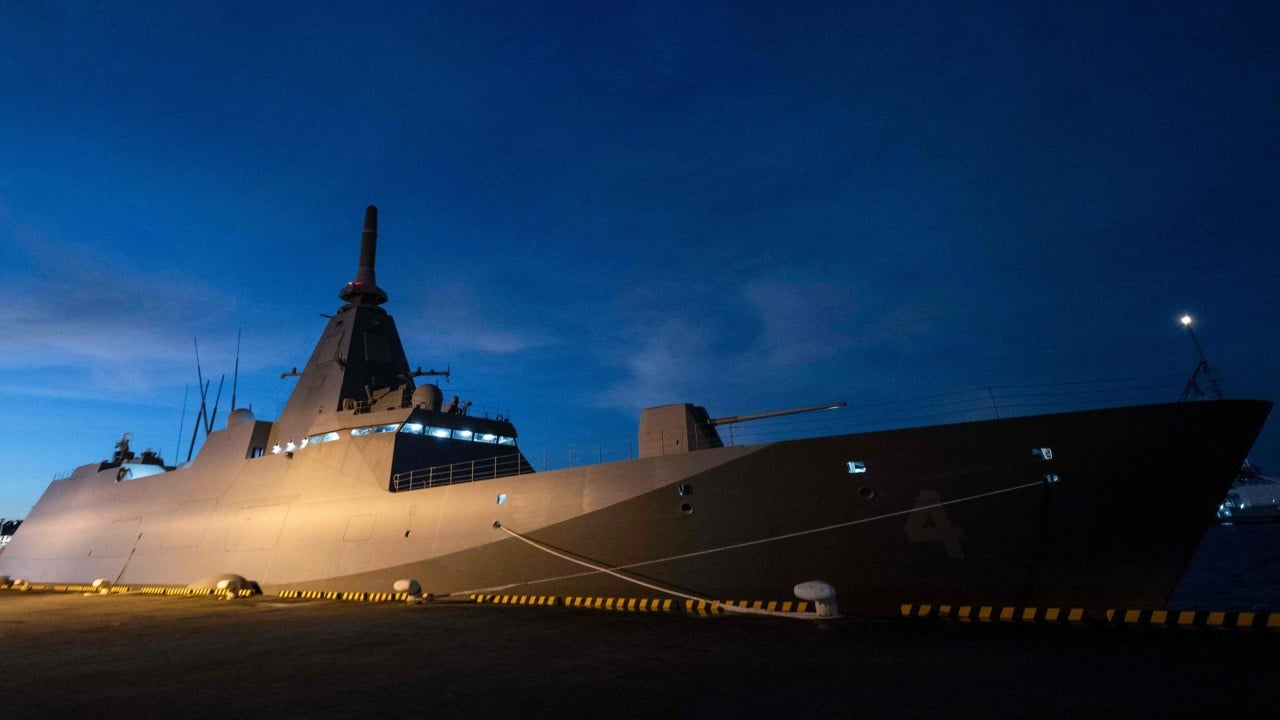
Japan doesn't just give away its crown jewels. For decades, Tokyo has been the quiet kid in the back of the room, sitting on world-class naval technology but refusing to share a single bolt with anyone else. That's why the recent move to offer India the full design of the Mogami-class stealth frigate isn't just a business deal. It's a massive middle finger to the old status quo in the Indo-Pacific.
If you've been following the naval arms race, you know the Mogami-class (the 30FFM) is a beast. It’s sleek, fast, and needs almost no one to run it. Most ships this size require a small village to operate; the Mogami does it with about 90 people. Now, Tokyo wants to let India build these ships in its own yards. This isn't just about selling a boat. It's about Japan deciding that a stronger Indian Navy is the only way to stop the regional balance from tipping entirely toward Beijing.
A Stealth Powerhouse Built in Indian Yards
The Mogami-class is a masterclass in automation and stealth. We're talking about a 5,500-tonne vessel that acts like a 3,000-tonne ghost on radar. The hull is clean, angular, and designed to swallow radio waves. But the real magic is the UNICORN mast.
Instead of a messy forest of antennas and sensors sticking out of the deck—which is basically a "hit me" sign for enemy missiles—the Mogami uses a Unified Complex Radio Antenna. It’s a single, smooth, composite structure that houses everything. India and Japan already signed a deal in late 2024 to co-produce these UNICORN masts through Bharat Electronics Limited (BEL). Taking the next step to build the entire ship in India is the natural, albeit aggressive, progression of that partnership.
What makes this offer different from previous attempts at defense cooperation?
- Total Design Transfer: Japan isn't just selling the "export version." They're talking about transferring the complete design and local production rights.
- Modular Lethality: The ship is built for everything—anti-submarine warfare, surface strikes, and mine-clearing. It even acts as a "mothership" for underwater drones.
- Industrial Speed: India's shipyards are already slammed with Project 17A frigates and destroyers. The Mogami design is built for rapid construction, which is exactly what the Indian Navy needs to hit its 175-ship goal.
Why Tokyo Is Breaking Its Own Rules
You've got to understand how big of a deal this is for Japan. For years, they had a self-imposed ban on exporting "lethal" equipment. That changed slightly in 2014 and then blew wide open in 2024 and 2025. Prime Minister Sanae Takaichi's government basically scrapped the old "five categories" limit that restricted Japan to things like rescue or transport gear.
They realized that sitting on their hands while the Chinese Navy expands was a recipe for disaster. By handing the Mogami blueprints to New Delhi, Japan is effectively creating a secondary production base. If Japanese yards ever get bogged down or targeted in a conflict, India becomes a massive, high-tech backup for maintaining a free and open Indo-Pacific.
It’s also about the money. Japan's defense firms like Mitsubishi Heavy Industries and NEC have been struggling with low margins for years because they only had one customer: the Japanese government. Opening up to India—and Australia, who just signed a $7 billion deal for the same ships—means these companies can finally scale up.
The China Factor in the Indian Ocean
Let’s be blunt. This is about China. The People’s Liberation Army Navy (PLAN) is churning out warships at a rate the world hasn't seen since WWII. They’re increasingly active in the Indian Ocean, and India is feeling the heat.
The Mogami-class is specifically designed to counter the exact threats India faces. It has a high-end sonar suite for hunting submarines and a 16-cell Mk 41 Vertical Launch System for swiping missiles out of the sky. By building these in India, the Indian Navy gets a modern fleet that's 100% compatible with Japanese and US systems. That kind of interoperability is a nightmare for any adversary trying to track multiple allied fleets.
What Happens if the Deal Goes Through
If India says yes—and all signs point to "when" rather than "if"—the impact on Indian shipbuilding will be massive. We've seen India struggle with indigenous projects that take decades to complete. The Mogami is a "plug-and-play" solution. It uses a Combined Diesel and Gas (CODAG) system with a Rolls-Royce MT30 turbine. It’s proven, it’s fast (over 30 knots), and it’s reliable.
Integrating Japanese stealth tech with Indian shipyards won't be easy. There’s always the "bureaucratic lag" to worry about, and Japan still has some jitters about sharing their most sensitive tech. But the UNICORN deal proves they’re past the point of no return.
If you're looking for the next phase of Indian naval power, stop looking at the massive carriers for a second. The real change is happening in the frigate class. A fleet of 8 to 10 Mogami-class stealth ships would give India the ability to patrol the entire Indian Ocean with a skeleton crew and a tiny radar footprint. That’s how you win a modern naval war before it even starts.
If you're in the defense sector or just a strategy nerd, watch the upcoming bilateral talks. The "Atmanirbhar Bharat" (Self-Reliant India) program just found its most sophisticated partner yet. The days of India relying solely on aging Russian tech or expensive European designs are over. The future of the Indian Ocean is looking very Japanese.