Most people treat historical business quotes like wallpaper. They read them, nod politely, and completely miss the point.
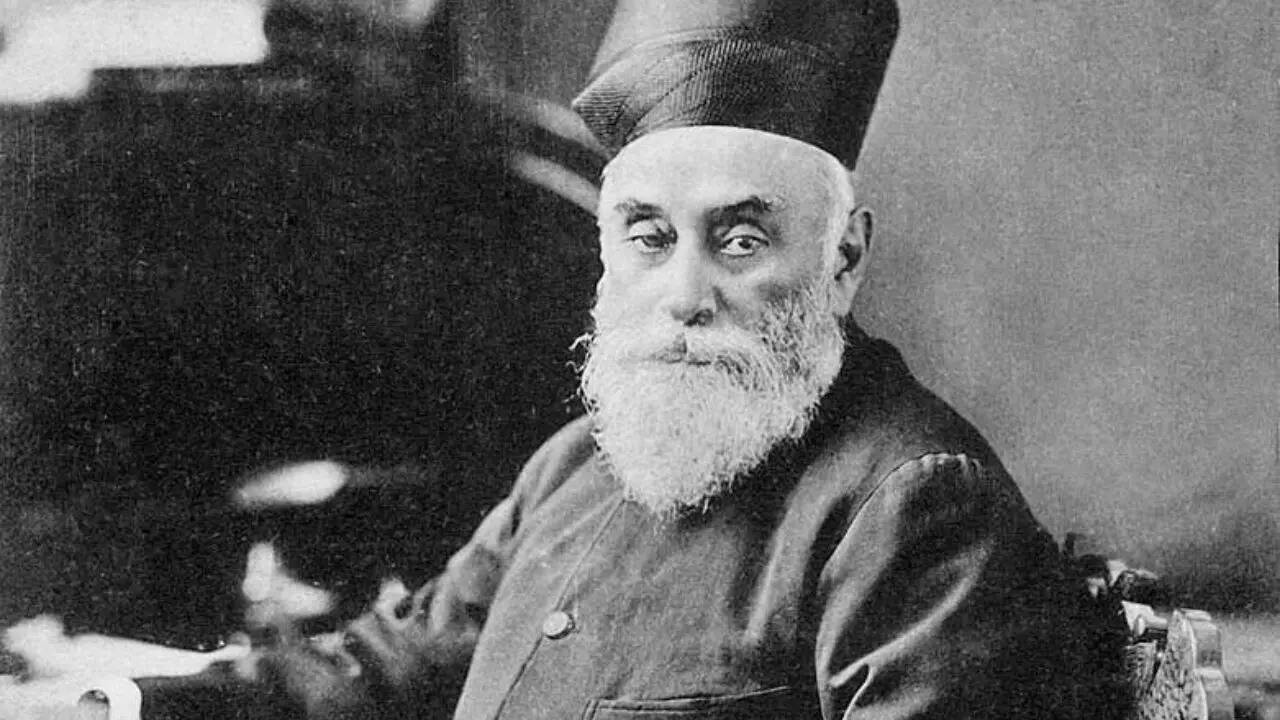
When you hear the Jamsetji Tata quote on uncommon thinkers—"Uncommon thinkers reuse what common thinkers refuse"—it is easy to mistake it for a nice platitude about recycling. It is not. It is a brutal, hyper-practical blueprint for market dominance.
Jamsetji Tata did not build India's largest industrial conglomerate by being polite. He did it by looking at literal garbage, discarded resources, and ignored human capital, then turning them into industrial empires.
In 2026, this mindset is the exact dividing line between stagnant businesses and explosive growth companies. The world is flooded with raw data, talent, and physical materials that lazy leaders throw away because they do not look shiny at first glance. If you want to win today, you have to look where everyone else is turning up their noses.
The Industrial Realism Behind Uncommon Thinkers
Let us look at what actually happened in history. Jamsetji Tata founded the Tata Group in the 19th century. Back then, colonial powers controlled the premium trade routes and the cleanest capital.
Instead of whining about it, Tata looked at what the dominant British merchants refused to optimize. He bought a bankrupt oil mill in Chinchpokli in 1869, converted it into a cotton mill, and sold it for a massive profit. Later, he founded the Empress Mills. He did not import every single piece of logic from the West; he looked at local conditions, local workers, and local waste products, integrating them into a system that out-competed foreign monopolies.
This is not just an old story. It is a repeatable framework.
When common thinkers see a discarded byproduct, they see a cost center. They pay to get rid of it. Uncommon thinkers see raw feedstock.
Look at the modern energy sector. For decades, traditional oil majors treated captured carbon dioxide as an annoying waste product. Today, companies like LanzaTech use proprietary microbes to recycle that exact carbon emissions waste into aviation fuel and consumer plastics. They literally built a business on what the legacy energy market refused. That is the Tata philosophy in action.
Why Common Thinkers Constantly Refuse Goldmines
Why do smart people miss these opportunities? It comes down to cognitive laziness.
Human brains love linear paths. It is easy to buy a fresh, expensive input, run it through a standard process, and sell a standard output. That is what common thinkers do. It requires zero imagination.
Here is what people get wrong about this approach:
- The Status Bias: If a resource is currently cheap or discarded, people assume it has no value. They mistake price for utility.
- The Comfort of Premium Inputs: Managers love spending big budgets on premium tools because it shields them from blame if things fail.
- Short-Term Accounting: Reusing discarded assets requires an upfront investment in system design. Most quarterly-obsessed executives hate that.
Think about corporate data. Global enterprises utilize less than 10% of their unstructured data. The rest—customer service transcripts, server logs, old survey results—sits in digital landfills. It costs money to store. It does nothing.
Common IT leaders refuse to touch it because it is messy. Yet, the most aggressive hedge funds and tech firms regularly scrape these exact data dumps to train custom models, spot macroeconomic trends, and predict customer churn before anyone else. They are reusing digital garbage.
The Playbook for Finding Value in the Trash
You do not need an industrial empire to apply this. You just need to change your vision.
First, look at your own operations. What are you throwing away? If you run a services business, you probably create valuable frameworks, internal training docs, or software scripts that you use once and forget. That is waste. Turn those internal tools into public-facing products or open-source magnets for talent.
Second, look at your industry's blind spots. Who is the customer segment that your competitors think is too difficult, too poor, or too annoying to deal with?
In the early 2000s, traditional banks completely refused to look at unbanked populations in developing regions. They thought the account sizes were too small to matter. Safaricom looked at that refusal and built M-Pesa in Kenya. They reused standard mobile SMS infrastructure to create a massive mobile banking system. It completely transformed East Africa's economy. They did not invent a new cellular network; they reused what was already sitting there dormant.
Stop Buying Your Way to Innovation
True resourcefulness beats a massive budget every single day.
When you rely on expensive, pristine inputs, you are playing the same game as your richest competitor. You will lose that fight. They have more cash.
But when you learn to spot the hidden utility in what others reject, your margins skyrocket. Your cost basis drops to near zero. You build an unassailable competitive advantage because your rivals literally cannot see the value in what you are using. They think you are playing with trash while you are quietly building a fortress.
Shift your perspective immediately. Audit your current project. Find the three things your team recently discarded, paused, or labeled as useless. Look at them again. One of those rejected ideas contains the exact breakthrough you are currently trying to buy your way out of. That is how you think like Jamsetji Tata. That is how you win.