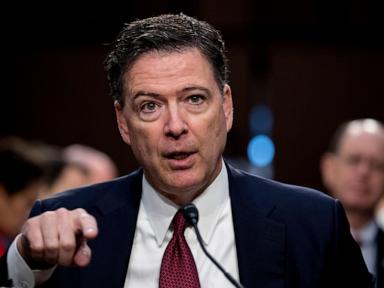
The federal government just spent a massive amount of taxpayer money to tell us that a picture of seashells is a death threat. On Tuesday, the Department of Justice officially indicted former FBI Director James Comey for the second time in a year. The "crime" this time isn't a leaked memo or a mishandled classified document. It’s an Instagram post from May 2025 featuring shells in the sand.
If you haven't seen the photo, it's about as low-stakes as it gets. Comey shared a picture of seashells arranged to form the numbers 86 47. For the uninitiated, "86" is restaurant slang for nixing an item, and Donald Trump is the 47th President. The DOJ argues this is a "serious expression of intent to do harm." Comey says he was just sharing a political message he found on a beach walk. Meanwhile, you can read other developments here: The Steel Handshake Across the North Sea.
This case isn't just about one guy who used to run the Bureau. It’s about how the line between political speech and criminal behavior is being erased in real-time. Whether you love Comey or think he's the reason the country is in this mess, the precedent being set here should make you nervous.
The legal gymnastics of the 86 47 case
The indictment, filed in the Eastern District of North Carolina, charges Comey with two felonies: making a threat against the president and transmitting that threat across state lines via social media. Each count carries up to five years in prison. To see the bigger picture, we recommend the detailed report by The New York Times.
To win, Acting Attorney General Todd Blanche has to prove that a "reasonable person" would see those shells and think Comey was actually planning to assassinate the President. That’s a tall order. Historically, the Supreme Court has set a high bar for "true threats." In cases like Watts v. United States, the court ruled that political hyperbole—even saying you’d like to see a president in your crosshairs—doesn't always count as a criminal threat.
So why is the DOJ pushing this?
It looks like a strategic move by Blanche to prove his loyalty to the White House. Blanche was Trump’s personal lawyer before moving into the DOJ. He’s filling the shoes of Pam Bondi, who was recently ousted. By bringing these charges now, the administration is signaling that they aren't done with their perceived enemies.
Why the venue matters
The DOJ didn't pick North Carolina by accident. Comey's first indictment, which centered on alleged perjury regarding leaks, was brought in Virginia. A judge tossed that case because the prosecutor, Lindsey Halligan, was ruled to have been appointed illegally.
By moving to North Carolina—the place where Comey actually took the photo—the government is trying to restart the clock with a different judge and a different pool of jurors. Judge Louise Wood Flanagan, a George W. Bush appointee, is handling the case.
This isn't just "judge shopping." It's a relentless pursuit. Most prosecutors would walk away after their first case was laughed out of court for procedural incompetence. Instead, the current DOJ is doubling down on a case based on beach decor.
The First Amendment on trial
If arranging seashells is now a federal felony, what’s next? The ACLU has already called this "an abuse of power" designed to silence critics. Honestly, it’s hard to argue with that. If "86 47" is a death threat, then basically any anti-administration slogan could be categorized as one.
Comey deleted the post almost immediately and clarified that he "didn't realize some folks associate those numbers with violence." In his latest video statement, he looked remarkably unfazed. He’s banking on the independent judiciary to save him again.
But here’s the problem: even if he wins, the process is the punishment. The government has unlimited resources to keep dragging him into courtrooms. Most people don't have James Comey’s legal team or his platform. If they can do this to a former head of the FBI, they can do it to anyone who posts a meme that’s "interpreted" as a threat by a motivated prosecutor.
What happens now
There is a warrant out for Comey's arrest. His lawyers are currently negotiating a surrender. Here is what to keep an eye on as this moves forward:
- The Motion to Dismiss: Comey’s team will likely argue that the prosecution is vindictive. They have a strong case given Trump’s public calls for Comey to be jailed.
- The Evidentiary Hearing: The DOJ hasn't shown any evidence that Comey had a plan, a weapon, or any intent to act. They are relying entirely on the "reasonable person" interpretation of the Instagram post.
- The Political Fallout: This is a direct test of the DOJ's independence in 2026. Watch how other Republicans react. Some, like those on the House Judiciary Committee, are already pushing for similar investigations into their own political rivals.
If you’re worried about the state of free speech, don't just watch the headlines. Pay attention to the specific legal arguments being used to turn metaphors into crimes. This seashell case might seem silly, but the outcome will define the limits of dissent for the next decade.
Stop thinking this is just about Comey. It’s about whether the government can decide that your vacation photos are a national security threat. If you want to push back, support organizations that provide legal defense for First Amendment cases. This won't be the last time we see a "threat" manufactured out of thin air.