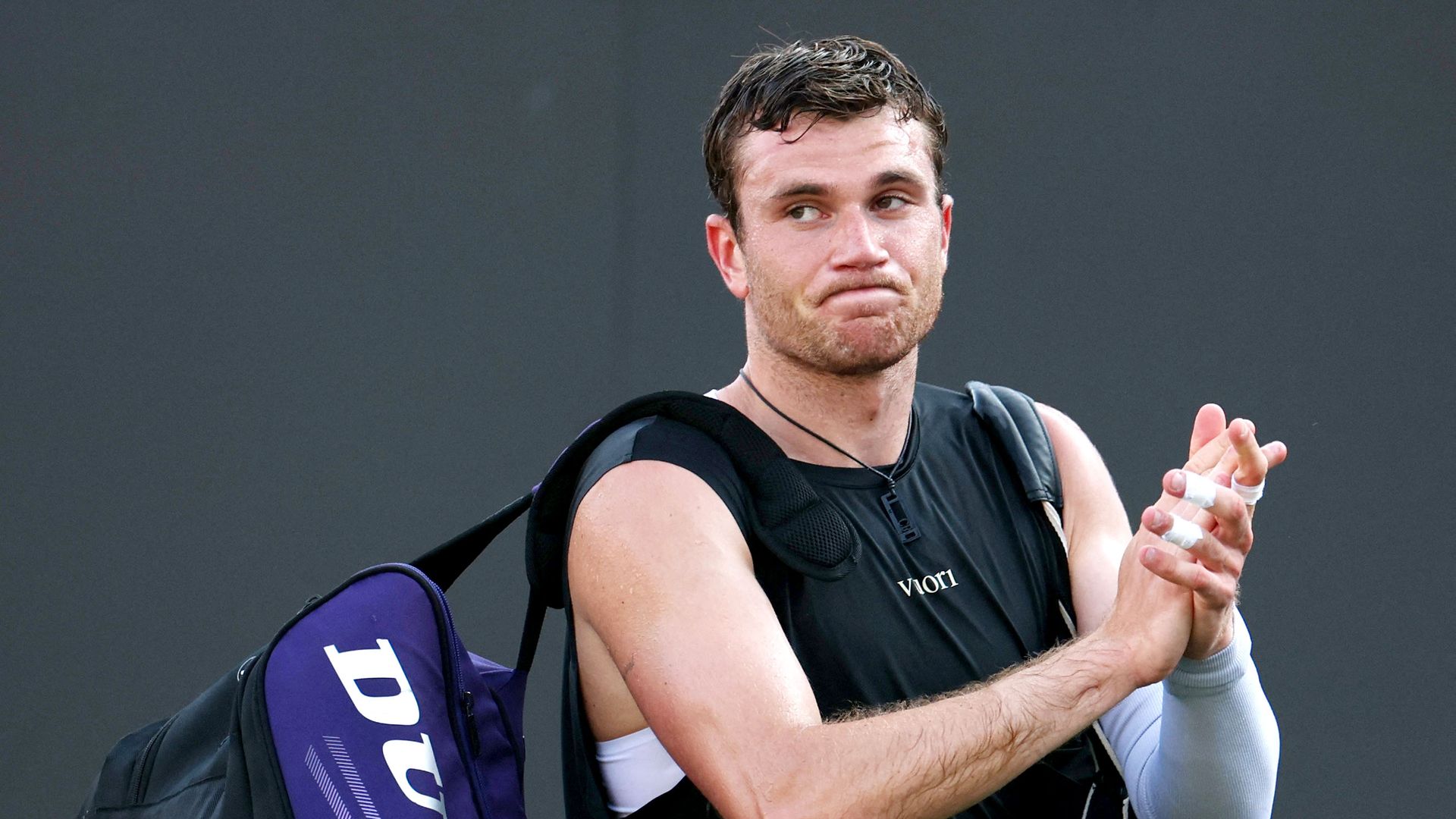
The brutal reality of professional tennis hit home at SW19 before a ball was even struck on Tuesday. British number one Jack Draper pulled out of the 2026 Wimbledon Championships, just 24 hours before he was scheduled to walk onto Centre Court to face American sixth seed Taylor Fritz.
The cause is a familiar, frustrating enemy: a recurrence of the stubborn arm injury that has plagued his 2026 season. It forced him out of both the Australian Open and Roland-Garros earlier this year. For a fleeting moment last week, it looked like the dark clouds had cleared. Draper roared into the semi-finals at Eastbourne, showing the terrifying grass-court form that makes him a genuine threat to the world elite.
Instead, the home crowd faces a bleak fortnight. Draper's sudden exit comes hot on the heels of Emma Raducanu's withdrawal due to a right leg stress fracture. Within hours, British tennis lost its two primary box-office attractions, leaving the home nation's hopes severely depleted.
The Physical Toll of Being Jack Draper
It is heartbreakingly clear that Draper’s body is struggling to cope with the sheer violent athleticism his game demands. At 24, he possesses a massive, modern game built around a punishing left-handed serve and heavy, rotating groundstrokes. When it clicks, it is devastating. But the physical cost of generating that much raw torque is catching up to him.
His social media statement laid bare the emotional wreckage of this latest setback. He called it the "absolute worst" moment in a painful 12 months, noting that there is no greater honor than playing at Wimbledon.
The timing is exceptionally cruel. The British star was not just entering the tournament to make up the numbers. He was meant to be guided through this grass campaign by two-time Wimbledon champion Andy Murray, who had joined Draper’s coaching setup specifically for this stretch. Having Murray’s tactical brain in his corner on Centre Court was supposed to be the catalyst for a deep tournament run. Now, Murray's grand return to the SW19 player box is on ice.
A Bleak Opening Week for the Home Crowd
If you think Draper and Raducanu sitting on the sidelines is bad, the situation on the actual match courts on Monday was a flat-out disaster for local fans. The opening day of the tournament turned into an absolute rout for British players.
Six home athletes took to the grass on Monday. All six lost. The most high-profile casualty was 26th seed Cameron Norrie, a man who usually provides a dependable second-week safety net for British fans. Alongside him, wildcards like Harriet Dart, Mika Stojsavljevic, and Felix Gill were swept aside in the first round.
It leaves British tennis facing an identity crisis. For over a decade, fans relied on Andy Murray to carry the weight of expectation. Then Raducanu’s fairytale New York run shifted the spotlight. Draper’s rise to the top tier of the men’s game was supposed to signal the dawn of a steady, sustainable era for British tennis. Instead, the nation is left relying on lower-ranked journeymen and raw youngsters to fly the flag while the elite talent occupies the treatment room.
What This Injury Tells Us About His Future
We need to talk honestly about Draper's long-term durability. Missing one Grand Slam to a muscle tweak is bad luck. Missing three majors in a single calendar year because your arm cannot handle the stress of elite competitive tennis is a systemic problem.
The transition from a promising young talent to a robust tour veteran requires a physical resilience that Draper’s frame has not yet demonstrated. The modern ATP Tour is an absolute grind. Pounding heavy yellow balls on slick grass or sticky hard courts for five sets demands a body built like iron. Draper has the talent to be a top-five mainstay. He has the mentality. What he does not have, right now, is a body he can trust.
The immediate focus has to shift entirely away from short-term fixes. Chasing ranking points over the next two months is completely pointless if his arm is going to flare up the moment he cranks his serve past 130 mph. Draper mentioned he will continue to persevere, and he absolutely will. He is too competitive not to. But his coaching team and medical staff need to fundamentally look at his mechanical loads and scheduling before he attempts a hard-court comeback ahead of the US Open.
The Actionable Roadmap for Recovery
Draper cannot afford to rush back from this. If you are managing a chronic tennis injury yourself or tracking an elite athlete's recovery path, there are specific, non-negotiable phases that must happen next.
- Enforce total mechanical rest: The arm needs to be shut down entirely from tennis activities for a minimum of three to four weeks to allow the soft tissue to heal without the micro-tearing caused by racket impact.
- Biomechanical assessment: Murray and the technical staff must scrutinize Draper's serve mechanics, specifically looking at the shoulder-to-elbow kinetic chain to see if a slight tweak in kinetic rotation can reduce the sheer force hitting his arm.
- Graduated loading protocols: Returning to the court must look like a slow ladder, starting with soft foam balls, moving to baseline rallying at 50% power, and leaving high-velocity serving until the very final phase of rehab.